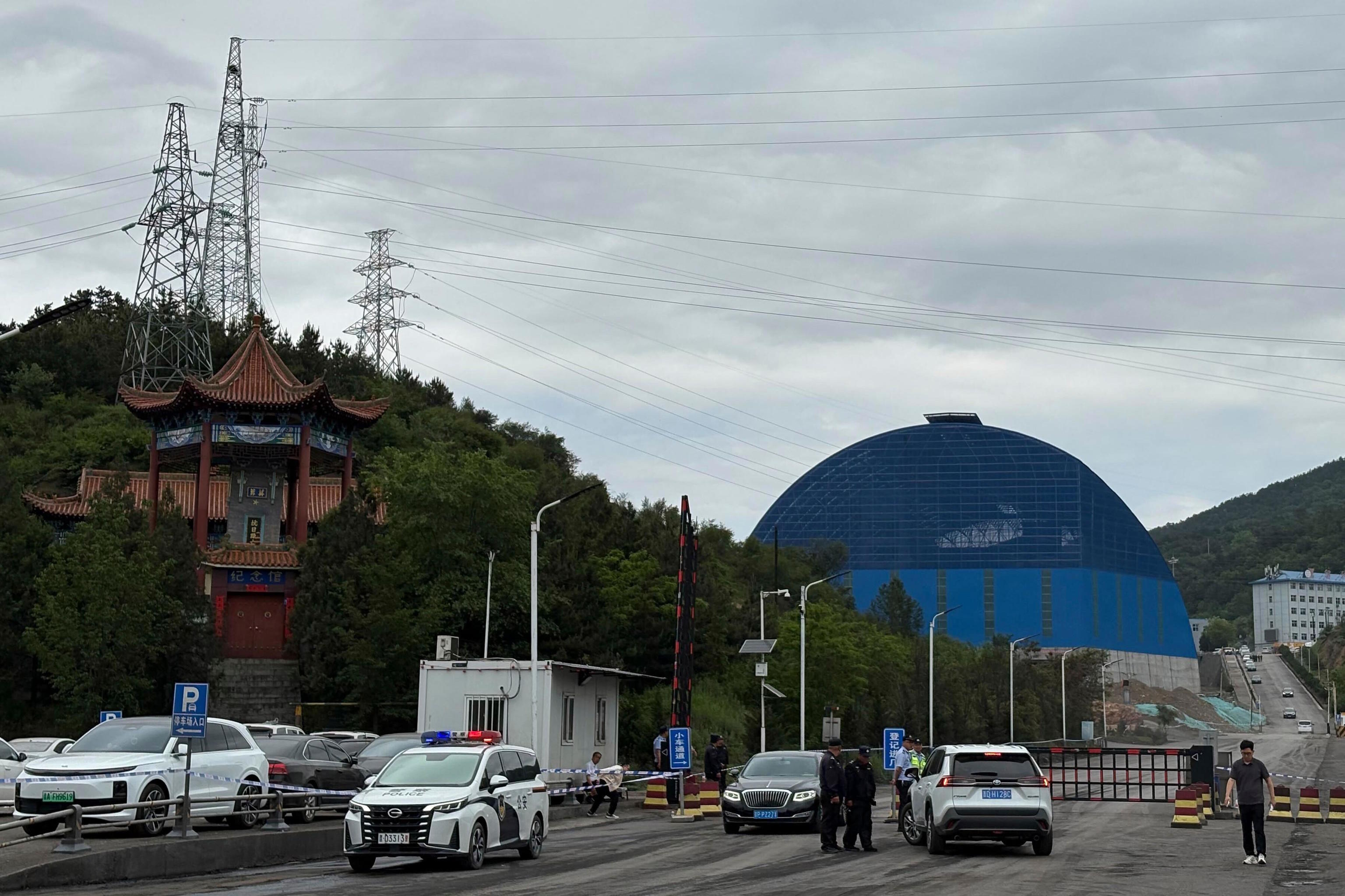
A gas explosion in a coal mine in the Shanxi province, in northern China, has left at least 90 dead, becoming the deadliest mining accident in over a decade in the Asian giant. This incident also reopens a wound that the country has never managed to close: its structural dependence on coal and the deficient safety culture that still dominates much of its industry.
According to the state news agency Xinhua, the blast occurred on Friday afternoon after the mine reported a carbon monoxide alert. There were 247 people working inside the mine when the gas explosion occurred.
Authorities have not yet clarified how many workers remain missing or why the official death toll jumped from eight on Saturday to over 90 in a matter of hours, a common opacity in the initial management of industrial disasters in China.
Several executives from the Tongzhou Group, the mining company, have been detained. President Xi Jinping ordered the deployment of "all possible efforts" for rescue operations and demanded punishment for those responsible, a formula that is repeated after every major labor tragedy. Prime Minister Li Qiang also called for an urgent investigation.
But beyond the official statements, the accident raises an uncomfortable question: why do dozens of miners continue to die in an Asian superpower that has been launching safety campaigns and tightening regulations for years?
The answer begins in Shanxi. This province produces nearly a quarter of the national coal and is the energy heart of the country. For decades, its economy has revolved around mines, fueling industrial growth and supporting the electricity consumption of the world's largest manufacturer. Coal still provides about 55% of the country's primary energy, a dependence that Beijing has not been able to break despite its significant investment in renewable energies.
The pressure to maintain production has historically generated perverse incentives. Small or private mines have hidden accidents, manipulated inspections, or ignored ventilation protocols to reduce costs. Although the central government has closed thousands of illegal operations and consolidated the sector into large state conglomerates, risks persist, especially during periods of high energy demand.
It is true that China has drastically reduced mining mortality compared to the darkest years when news of explosions was almost routine. At the beginning of the century, over 5,000 workers died each year. Official figures show that between 2018 and 2023, just over 3,000 people died in mining accidents, a decrease of over 50% compared to the previous five years. However, experts have long questioned the transparency of some local records.
Major accidents have not disappeared either. In February 2023, a massive landslide buried an open-pit mine in Inner Mongolia and caused the death of 53 people, the worst recent disaster so far. Two years earlier, in 2021, twenty miners died trapped in a mine in Shandong province.
In December 2020, a carbon monoxide leak killed 23 workers in Chongqing. That same year, another accident in a coal mine in Chongqing left 16 dead. The sequence reveals a repeated pattern: gas accumulation, ventilation failures, inadequate supervision, and overproduction.
Every major accident triggers the same political response. Beijing announces extraordinary inspection campaigns, safety audits, and temporary closures. After the Inner Mongolia disaster in 2023, the government launched massive reviews in thousands of operations and ordered urgent inspections throughout the sector. Several provinces suspended operations to examine ventilation systems and emergency protocols. For weeks, local officials visited mines accompanied by state television cameras. But experts point out that the momentum often fades when the need to ensure energy supply increases.
The tension between safety and production worsened after the energy crisis of 2021, when blackouts in different regions forced Beijing to prioritize increased coal extraction. Since then, authorities have simultaneously insisted on producing more and strengthening safety, two goals that often clash on the ground.