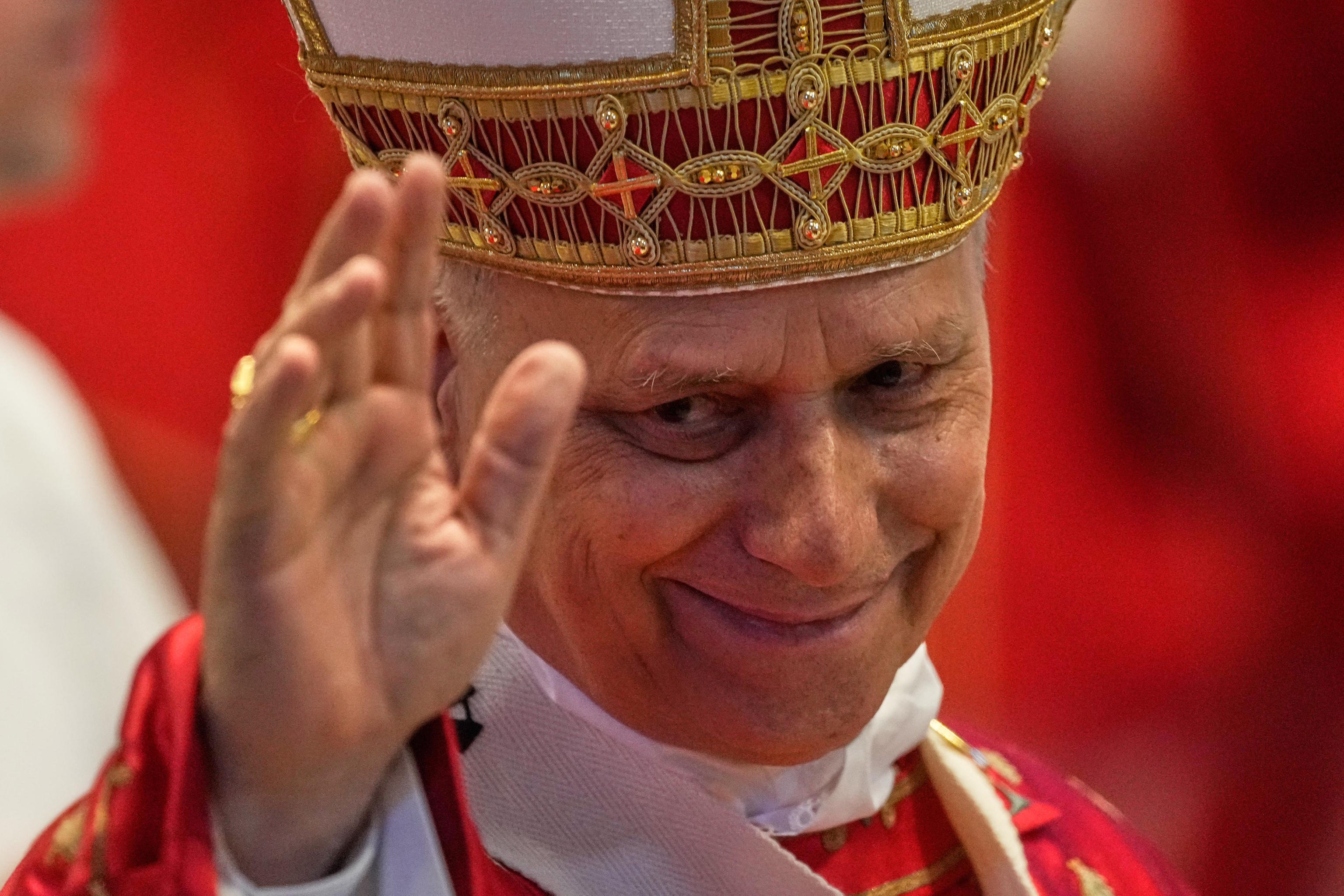
In the most radical libertarian circle of Silicon Valley, Leo XIV is seen as the antichrist. This group led by Peter Thiel, a proponent of absolute deregulation of technology, views him as a dangerous reactionary and Luddite, an appendix with fisherman sandals and a lot of pomp who has a regulatory impulse as protectionist as the European Union.
Surely, this animosity must have grown yesterday as the content of the encyclical Magnifica humanitas arrived in California, even though in it Leo XIV makes the strongest defense of technology ever made by the highest representative of the Catholic hierarchy.
Technology is not an "antagonistic force towards the person" nor "evil in itself," Prevost describes it as hopeful, as a "gift that can alleviate suffering and open new possibilities." Let's not forget that the Pope is a mathematician and has even programmed web pages.
"The Pope has taken a stand," says Ricardo Mejía, a priest and international doctor in Logic and Philosophy of Science from the University of Salamanca. "And a strong one," he adds. Sharing his opinion on the strength of the document is Sara Lumbreras, co-director of the Chair of Science, Technology, and Religion at the Pontifical University of Comillas. "It is a very courageous text that is in line with Antiqua et nova and reflects a great effort to continue building the social doctrine of the Church in the face of a new problem, AI, but in continuity with its foundations. These foundations are the common good, the universal destination of goods, the principles of subsidiarity, and solidarity."
Like what happened with Leo XIII and the Industrial Revolution, his successor is fully aware of the importance of the impact, still unknown in its entirety, of AI on humanity.
"The Pope has taken a big step by defining technology as a revolution, which is a further step from what Francis had said, linking it to a change of era," points out Mejía, author of the essay Integral Transhumanism (Ed. Encuentro).
His approach is not at all reactionary: support for AI for humanity, but with limits and not in the hands of a few.
These limits should be red lines for its developers: "Private actors, often transnational, endowed with resources and capacity for action superior to that of many governments. Technological power thus takes on an unprecedented face, predominantly private, and therefore even more difficult to discern, govern, and guide towards the common good."
He has identified them and sees them as the most influential and powerful industry in history.
Therefore, Leo XIV makes a decisive point in his thinking, which goes against the happy mantra that digital platforms have been selling this century: the principle of neutrality that supposedly governs their activities. A value that studies on the addictive design of social networks and recent judicial rulings have debunked. The Pope is clear on this: technology is not neutral.
"It takes on the face of those who conceive it, finance it, regulate it, and use it," he explains. In other words, it is subject to biases, created by people, and therefore subject to interests. Especially in a sector where the user is seen as a product to exploit. Hence the Pontiff's call to "build in the good" and to "remain human."
Regarding responsibility and control, his opinion may have more significant consequences than it seems given his influence on the Catholic voter, which should not be underestimated in a world where governments are increasingly tempted to take regulatory measures, as can be seen in the growing number of countries facing dilemmas such as banning social networks for users under 16, as is the case in Spain.
The Holy See calls for regulation. And something very important: "Hold service providers accountable - without placing the burden of limitation on families - and provide specific protections against all forms of exploitation and sexual violence on the internet, so that childhood and adolescence are truly safeguarded as precious assets entrusted to our care." This, at the same time, emphasizes the need to educate children and young people so that they "learn to recognize manipulations, defend their own dignity, and respect that of others, even in digital environments."
The big question is what the effects of this technological thinking will be. Will this encyclical influence Silicon Valley? Will it provide ammunition for lawmakers who want to pressure tech companies?
"The encyclical will have a significant impact," believes Ricardo Mejía. "Its interest goes beyond religion. Proof of this is the encyclical Laudato si', signed on May 24, 2015, by Pope Francis, dedicated to ecology. We are talking about a text of great influence, which attracted many non-believers outside the Catholic sphere of influence and is cited in many works. People not only want to be talked to about technology devices and apps, they want reflection."
The 'informant' parish priest of Silicon Valley
There is a church anywhere in the world. And, of course, also in Silicon Valley. The news portal of the Holy See, Vatican News, yesterday featured the testimony of Brendan McGuire, a former engineer and priest in the Bay Area of California, who recounted how over the last decade, former colleagues from these companies spoke to him about their concerns about the future of technology and the tension of their jobs. With the support of his bishop, he created dialogue groups in search of ethical solutions to the technological challenges they faced, which have been key to reaching this encyclical.