The document, whose Latin name means "Magnificent Humanity," marks the programmatic starting point of his pontificate and specifically focuses on "the care of the human person in the era of Artificial Intelligence."
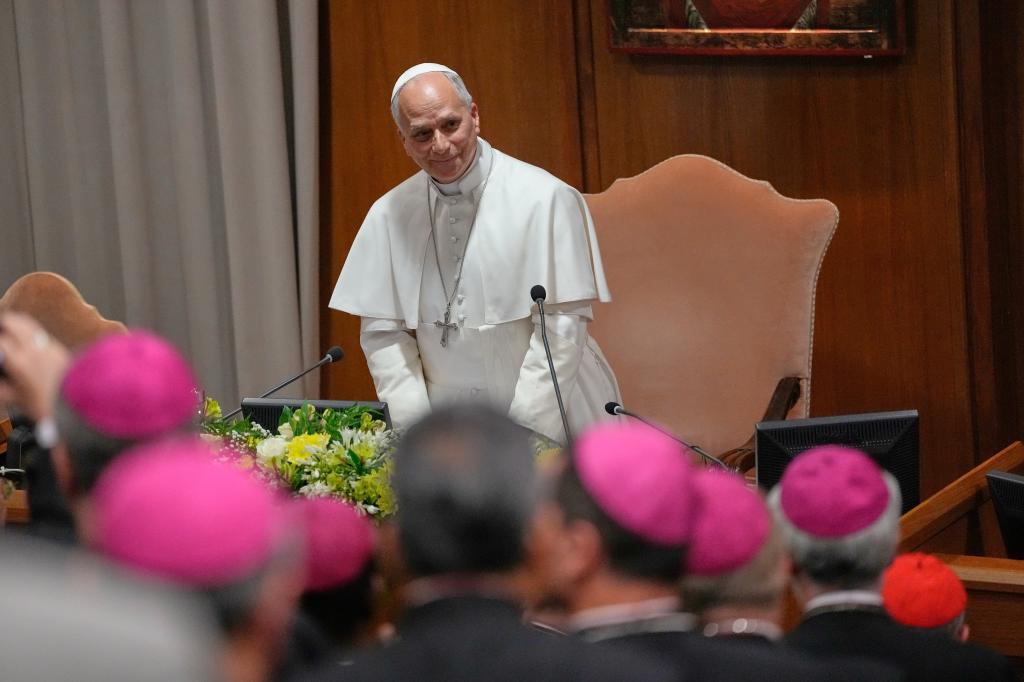
It is the first time a pontiff has been present at the public presentation of one of his magisterial documents. During his address at the Synod Hall, Robert Prevost was firm in stating that "Artificial Intelligence must be disarmed." The Pontiff emphasized that this tool needs to be "freed from the logics that turn it into an instrument of domination, exclusion, or death."
The Pope acknowledged that the choice of the term is deliberate to "awaken consciences" to a transformation he compares to the industrial revolution during the time of Leo XIII. The text warns about the drift towards a "violent culture of power" and calls for abandoning the theory of "just war," which he believes is invoked too frequently to justify conflicts.
In this regard, he expressed concern about "increasingly autonomous weapon systems, practically beyond human reach for effective control" and how AI is changing "the way conflicts are being carried out." The encyclical focuses on protecting dignity against the risk of humans becoming mere resources to be "used and exploited."
Leo XIV denounced the existence of "algorithms that can block access to healthcare, employment, and security based on biased data." For the Pope, technology is not neutral, as it reflects "the face of those who conceive, finance, regulate, and use it." The document also warns about dangers for minors, denouncing phenomena of "recruitment, blackmail, and sexual exploitation of minors, which become more insidious through the use of fake profiles, algorithms that amplify dangerous contacts, and AI tools capable of manipulating images and videos."
Faced with the advance of the "technocratic paradigm," the Pontiff reminds that "humanity should not be replaced or surpassed." Despite the warnings, the Pope has called for hope and not to succumb to fear. "Let us not fear Artificial Intelligence but always keep the human question in mind," he emphasized. The Church expressed its desire to participate in international dialogues by providing a "wisdom about humanity urgently needed in our time," arguing that technical progress must learn to "serve human life." The ultimate goal is for AI to be a field to build a history from a "horizon of communion" where each person is treated as a unique and irreplaceable subject.