Three months have passed since Iran fulfilled its worst threats: closing the Strait of Hormuz. Since then, US President Donald Trump has announced several times on his social media an "imminent" agreement after having "ravaged" the Iranian army, whose leaders "desire" peace. The reality is different, although the marine fog that often affects this natural passage sometimes hinders a clear view of what is happening.
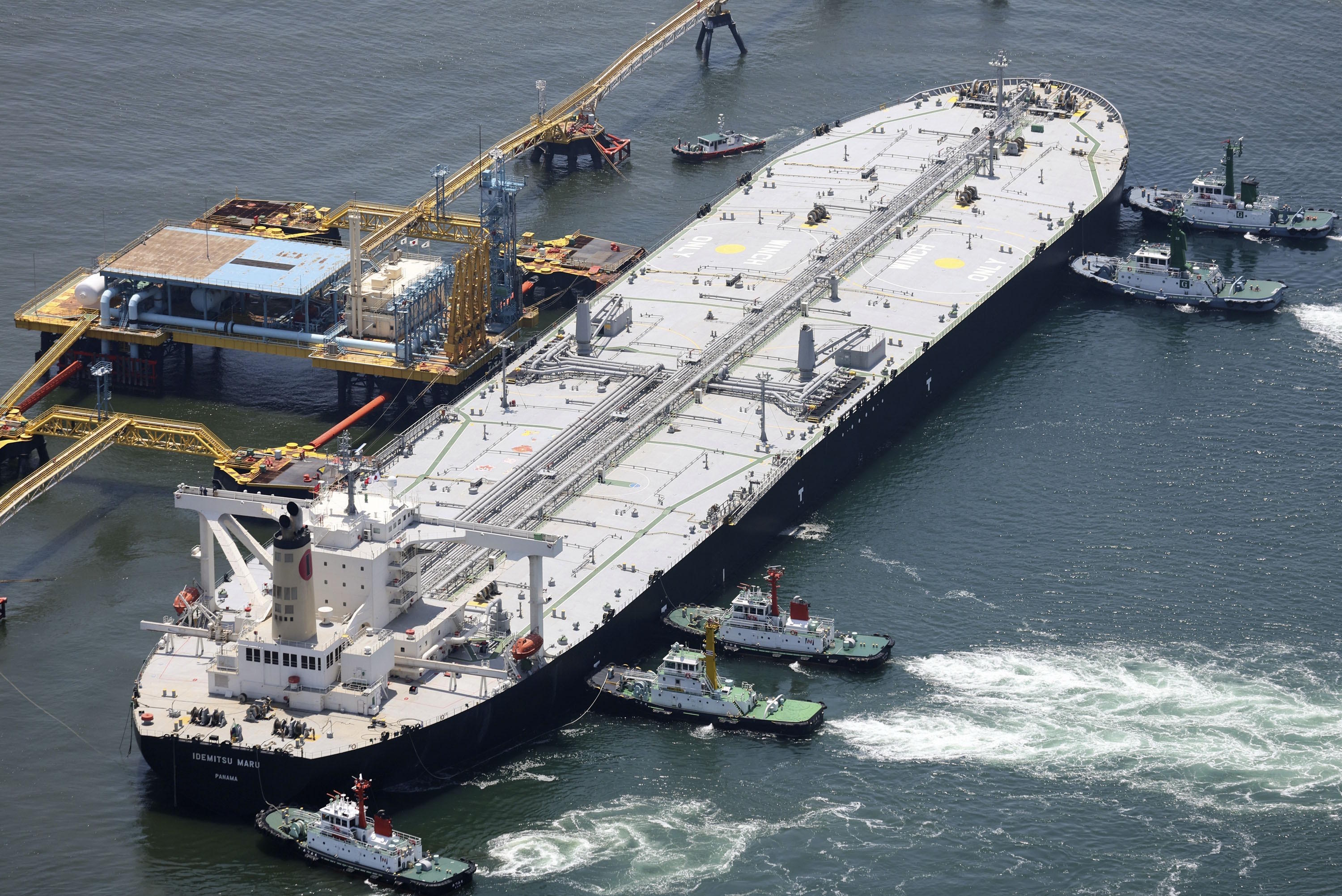
Is it true that Hormuz remains closed to maritime traffic despite the continuous references to that peace agreement by the White House? Yes, the Strait remains militarily closed for oil tankers, cargo ships, bulk carriers, and other transport vessels, which remain waiting inside the Persian Gulf to depart or in the Gulf of Oman to enter. The few ships that managed to cross it, with Tehran's permission and after paying customs fees at the maritime customs that the ayatollahs improvised on the east shore, no longer do so due to the external blockade by the US navy, which forces them to turn back.
What are the prospects for a near opening for this global energy hub? The situation is a ceasefire but the truce tends to be broken every few days without completely dissolving, in a gray area that fluctuates between war and peace. Judging by what has happened in the last few hours, few. Yesterday, both armies exchanged fire again in the strategic maritime passage. The Iranian Revolutionary Guard claimed to have shot down and repelled US drones and a fighter jet that had entered its airspace, according to the official Iranian news agency Mizan. On the other hand, the US claimed to have attacked Iranian warships present in the Strait.
Although Washington and Tehran have come closer on some issues such as frozen assets or radioactive material, the reopening of the Strait of Hormuz could take weeks or even months. About 1,500 ships of all types and sizes have been stranded in the Persian Gulf for three months, and before they can move, complex logistical issues need to be resolved: which ships leave first, which routes they should take, which authorities to ask for permission, and how to coordinate traffic in a strait that measures just 21 nautical miles (38 kilometers) at its narrowest point.
After the incident, the US navy resumed assisting ship crossings through the canal closest to Oman (which Trump dubbed "Freedom Project" weeks ago). It is the same route used in the 1970s, with ships sailing close to the west coast of the canal. US military officials informed The Wall Street Journal that a Greek supertanker loaded with two million barrels of crude oil was guided by their warships to avoid the central area full of mines.
That is the biggest obstacle to the immediate reopening of Hormuz. The British armed forces confirm that Iran has allegedly planted underwater mines in the strait at least three times, generating gas bubbles capable of seriously damaging ship hulls. The International Energy Agency warns that the mine-clearing vessels from the US, UK, France, and Germany would need several weeks just to deploy in the area, keeping maritime insurance premiums at very high levels for an extended period.
While diplomats negotiate and markets monitor the evolution of oil prices, there is a story that remains almost invisible: that of the 20,000 sailors trapped on 1,500 ships stranded in the Persian Gulf since February. The UN's International Maritime Organization has described it as an "unprecedented" humanitarian crisis. "We have never faced a situation like this before," said Damien Chevallier, director of its Maritime Safety Division. Conditions on board deteriorate week by week: unpaid wages, shortage of drinking water, food rationing, and growing psychological exhaustion among crews mostly composed of workers from Pakistan, India, Bangladesh, and Egypt, countries with little diplomatic pressure capacity and whose governments have barely spoken up. Many captains claimthat their men are going crazy on board after months without activity at sea and without setting foot on land.
Fear is the most common thread in the testimonies of these sailors. During the most dangerous days, some sleep fully dressed out of fear of emergency evacuations. Others have gone months without being able to contact their families due to electronic warfare and communication breakdowns. In the most extreme cases, crews have resorted to reusing water from air conditioning systems to wash clothes or prepare food. "I am not a warrior. I am a sailor," said Captain Isdik Alam to CNN from one of the stranded ships. "I am not afraid of the sea. I am afraid of missiles and attacks." And he added, with bitterness that summarizes the situation of thousands of people: "No one cares about sailors. With or without a ceasefire, this is not for us."
The stranded ships themselves pose another problem. After months adrift in the warm waters of the Gulf without maintenance, the hulls are covered with barnacles, algae, and marine organisms that reduce their speed and maneuverability. Hapag-Lloyd, the world's fifth-largest container shipping company, managed to pull one of its ships out and found that its maximum speed was "significantly below normal." The CEO of Wallenius Wilhelmsen estimated to The New York Times that it will take between 30 and 45 days for the situation to return to normal, if all goes well.
Even if a political agreement were signed tomorrow, traffic through Hormuz would not normalize overnight. The insurance market does not follow Trump's messages: war risk premiums, which before the conflict ranged between 0.1% and 0.25% of the hull value per trip, have skyrocketed to between 5% and 10%, reaching in some cases a 1,000% increase.
For a large oil tanker valued at $100 million, this means going from paying around $150,000 for transit to shelling out between five and 10 million. Companies like Maersk have already warned that the ceasefire does not yet offer "complete maritime certainty" and have suspended reservations to several ports in the Gulf. "Even with a definitive ceasefire, premiums will take time to decrease until insurers perceive a real reduction in risk," warned maritime insurance expert Wong. This is compounded by an unprecedented Iranian move: Tehran has launched its own maritime insurance service, called Hormuz Safe, for ships willing to transit the strait under Iranian supervision, with payment in bitcoin, outside the international financial system.
The problem is far from being resolved.