Trump warns Oman about controlling the Strait of Hormuz: "They will behave or we will have to blow them up"
EL MUNDO
Updated
The President of the United States, Donald Trump, has shattered any hope of a quick resolution to the conflict in the Middle East by categorically denying a report suggesting that Iran and Oman would jointly manage maritime traffic in the Strait of Hormuz as part of an agreement to end the war
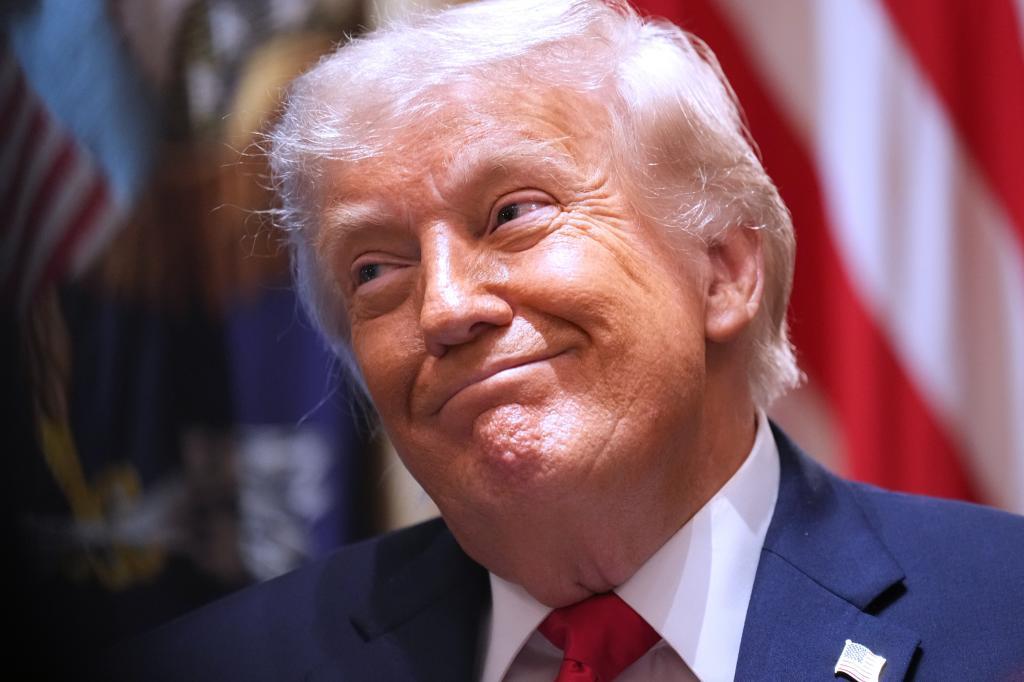
In a tense appearance before his cabinet, Trump was firm in stating that "no one will control the strait" and issued a direct warning to Oman, a country with which the U.S. has historical ties: they must behave according to international norms or Washington will have to "blow them out of the water".
This diplomatic clash comes after Iranian state television aired a supposed draft that would restore maritime trade to pre-war levels in less than a month. The leaked document proposed that the U.S. government lift the blockade on Iranian ports and withdraw its military forces from the area in exchange for shared management of the waterway. The White House has dismissed this information as a "complete fabrication," reaffirming that it will not allow any nation to take control of these international waters, crucial for the transit of a fifth of the world's oil and gas.
From Iran, Ebrahim Azizi, head of the parliament's national security committee, responded by labeling Trump's words as mere "rhetoric" stemming from a strategic stalemate. Iran insists on its authority over the strait and its right to uranium enrichment, while Secretary of State Marco Rubio has declared that Iran "will never have a nuclear weapon".
The war, which began on February 28, has resulted in thousands of deaths and a massive escalation in energy prices. Traffic through Hormuz has dramatically plummeted; only 23 commercial vessels crossed under Iranian permission on the last day, a negligible number compared to the previous 140 daily ships before the conflict. Pressured by the growing unpopularity of the war ahead of the upcoming midterm elections, Trump has unsuccessfully tried to persuade Arab allies such as Saudi Arabia or Egypt to join the Abraham Accords as part of the final negotiation.AP
In a tense appearance before his cabinet, Trump was firm in stating that "no one will control the strait" and issued a direct warning to Oman, a country with which the U.S. has historical ties: they must behave according to international norms or Washington will have to "blow them out of the water".
This diplomatic clash comes after Iranian state television aired a supposed draft that would restore maritime trade to pre-war levels in less than a month. The leaked document proposed that the U.S. government lift the blockade on Iranian ports and withdraw its military forces from the area in exchange for shared management of the waterway. The White House has dismissed this information as a "complete fabrication," reaffirming that it will not allow any nation to take control of these international waters, crucial for the transit of a fifth of the world's oil and gas.
From Iran, Ebrahim Azizi, head of the parliament's national security committee, responded by labeling Trump's words as mere "rhetoric" stemming from a strategic stalemate. Iran insists on its authority over the strait and its right to uranium enrichment, while Secretary of State Marco Rubio has declared that Iran "will never have a nuclear weapon".
The war, which began on February 28, has resulted in thousands of deaths and a massive escalation in energy prices. Traffic through Hormuz has dramatically plummeted; only 23 commercial vessels crossed under Iranian permission on the last day, a negligible number compared to the previous 140 daily ships before the conflict. Pressured by the growing unpopularity of the war ahead of the upcoming midterm elections, Trump has unsuccessfully tried to persuade Arab allies such as Saudi Arabia or Egypt to join the Abraham Accords as part of the final negotiation.