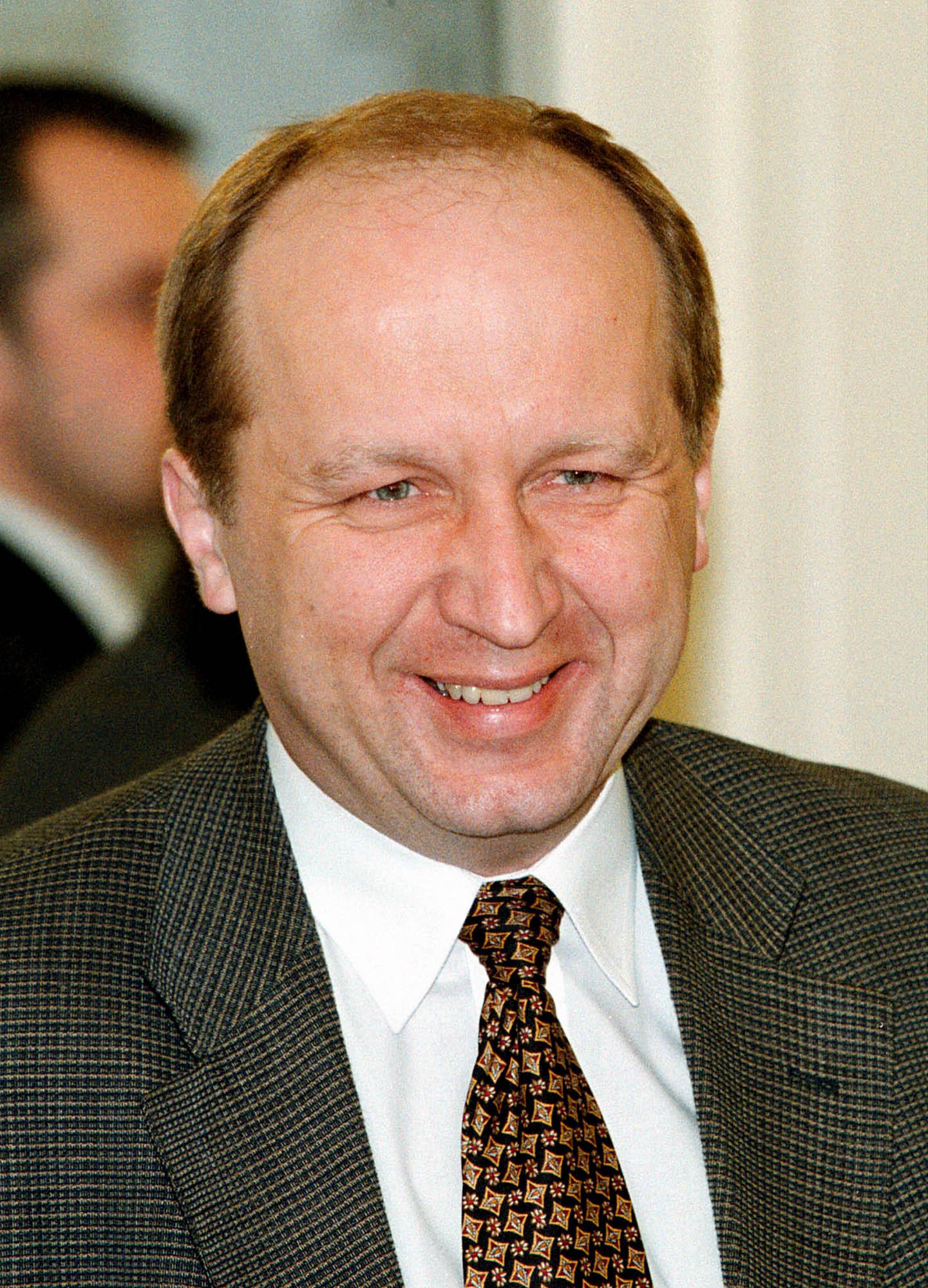
Andrius Kubilius (Vilnius, Lithuania, 1956) is the European Commissioner for Defense and Space, and in the exclusive interview with EL MUNDO, he warns that Russia could be preparing to start another war. One against NATO and the EU. He believes that the movements of the United States leaving the Alliance "should not come as a surprise" and argues that this sharpens the need to form a European army.
You have argued on several occasions that a European army is necessary, but last week NATO military leaders were against this option. What is your opinion on the Alliance's stance and why do you consider it so vital?
The European army is the natural consequence of the plans of the United States published in its National Defense Strategy, in which they announce that they will begin to reduce their presence in the European continent. The Americans have just under 80,000 soldiers in the European continent who play an important role because they are a cohesive permanent army. A single unit with all the capabilities to act as a rapid reaction force and that can move from one region of Europe to another. The question is: how do we replace it? There are two possible answers. One is: no problem, we have 1.5 million soldiers in our armies and we can, as if it were a 27-piece Lego set, build the same force. But experts say that this would not achieve the same capability as provided by the Americans. The other answer is to create a European rapid reaction force as a single body. What response the European leaders will give remains to be seen.
What is your impression of that possible response?
I don't know, it will take time and debates. And we also need to discuss the European Security Council. This idea, proposed 10 years ago by Macron and Merkel, seems very necessary to me because European defense is based on national sovereignty: each country decides on its own defense, and the EU does not play a significant role in it. But when we talk about our readiness and our defensive capabilities, many times we need to develop pan-European projects.
Do you fear or suspect that NATO may eventually disappear?
No, I don't believe so. The Americans very clearly state that they will remain in NATO, but they ask us Europeans to take primary responsibility for conventional defense in Europe.
The European pillar of NATO.
Yes. We have lived for a long time after the end of the Cold War with the so-called peace dividend in mind: that the Americans would take care of our defense forever and we could spend our money on other things. This is coming to an end.
The troop movements, not deploying Tomahawk missiles in Germany... Do you not feel in any way that Trump is leaving Europe alone against Putin?
Should we be surprised by those decisions? As I have already said, if we read their National Defense Strategy from earlier this year, if we listen to what Elbridge Colby said about the so-called NATO 3.0... We should not be surprised. What we should do is start talking about how to build the capabilities that we now get from the United States. There is a very interesting document prepared by German experts, the Sparta 2.0, which estimates that the cost of this process will be around 500 billion euros. We need to start asking ourselves how we are going to implement it: 500 billion is not a small amount. Although if we look at how much the Member States will spend, if they fulfill the promise made to NATO to increase pure Defense spending to 3.5%, the figure reaches around 6.8 trillion euros in the next ten years. National budgets will be crucial.
The problem is no longer so much the money as the industry. Europe is not able to produce what countries demand.
It is a truly challenging situation. Russia continues to outpace us in production, and we are putting more and more money and wanting our industries to scale up, but we are not progressing as fast as we would like. As Mario Draghi pointed out, our Defense industry is very fragmented, we do not have a single market. If you produce in one country and want to sell in another, your certification is not valid, the tests are not valid. Intra-EU transfers are a nightmare. Industries also complain that they still do not have long-term contracts and guarantees. And I understand: if you expand your production and invest a lot of money, and suddenly in two years everyone says "thank you, we no longer need it"... And there is another problem with what is called haute couture production: technologically very sophisticated production and very difficult to scale. Ukrainians or Russians mass-produce what they call good enough production. Our industry needs to pay much more attention to that cheaper production.
What do you expect from Putin in this context? Is it feasible that he may try some kind of peace agreement with Ukraine and then even attack the European Union?
What our intelligence services say is that Putin could be ready for military aggression against neighboring NATO member countries. Not everything produced by the Russian industry goes to the fighting in Ukraine: they are stockpiling reserves. And if peace comes, and we want it to come, their military production will not stop. And we must understand that if Russia initiates aggression against our countries, we would face a Russian army tested in combat, capable of using millions of drones. And our experience in that area is quite limited. Only Ukraine has it, that is why integration with Ukraine is so important.
What do you think of the possibility that has been discussed in recent weeks in Brussels that Draghi or Kaja Kallas themselves try to negotiate with Putin?
The most important thing is to truly apply the formula of peace through strength, and that strength must be on the Ukrainian side. Force Putin to come to the negotiation, and once this happens, it would be good to appoint a European envoy, yes. And if peace comes, the next question is: what should our relationship with Russia be? We can normalize relations if Russia returns to a normal state: without aggression, domestic peace...
But you don't believe that is very likely, do you?
I see the possibility, but it will take time. I don't think Putin can transform into a different person.
Let's end with Spain, if you allow me. Have you discussed with the Spanish Government their decision not to exceed military spending beyond 2.1%? What are the threats that the country must face?
In Europe, we face threats from all directions. Some countries face Russian aggression and others the consequences of the war with Iran. For Spain, the Middle East is not far away. But we must always remember that our defense is based on the principle of collective defense. If some countries do not invest in their defense capabilities because they believe they do not have threats at the moment, they are weakening the power of collective defense. And that makes us all weaker. Spanish investment directly matters to Lithuania.