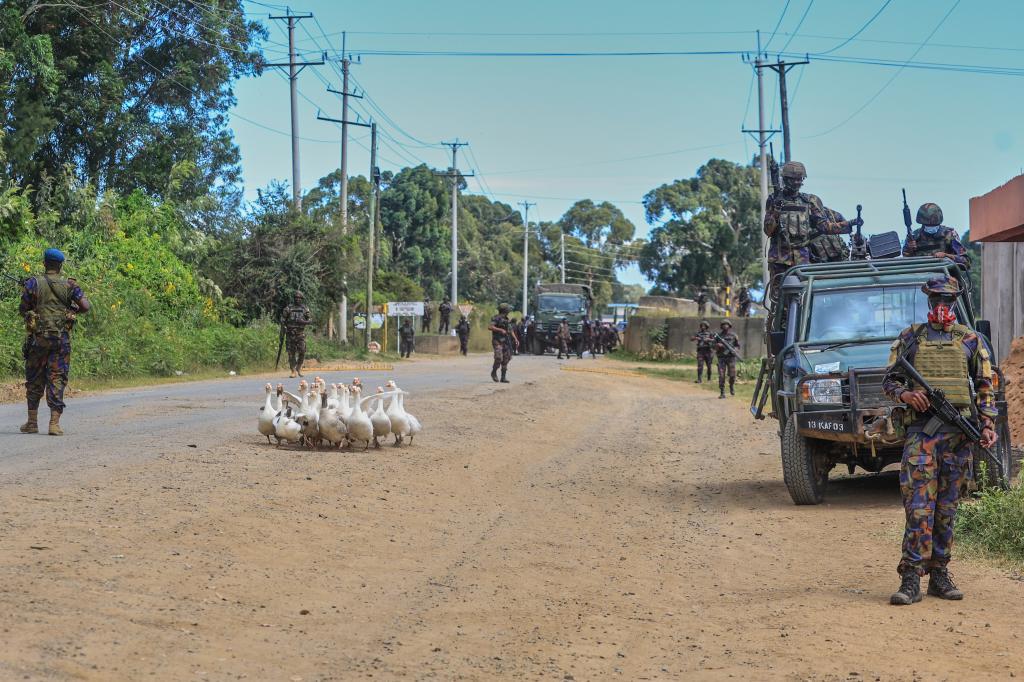
Hundreds of young people and local residents have protested to demand the total cancellation of a project that aims to set up an isolation center at Laikipia Air Base. The facilities are intended for American citizens exposed to the Ebola virus due to the outbreak declared in the Democratic Republic of Congo (DRC).
The protest, which included marches to the military base gates with Kenyan flags and banners, reflects the fear of a population that considers their healthcare system too fragile to accommodate foreign patients. The rejection sentiment is deep: "This will expose our people to Ebola," warned local leaders, pointing out that many residents work within the airbase and could be exposed to the virus.
The citizens' outrage was evident in statements from protesters reported by local media: "We do not want Ebola, and those who do should take it to the State House (Kenya's Presidential residence in Nairobi). The United States should take care of their people; we are not interested. They should take them back to Congo or the United States." The conflict has reached the courts.
The High Court of Kenya issued an order to temporarily block the installation of the center following demands filed by the Law Society of Kenya (LSK) and the Katiba Institute. These organizations denounce that the country's infrastructure is "insufficient" to safely manage the containment risks associated with the disease. Despite the court ruling, the Kenyan government seems determined to collaborate with Washington.
Health Minister Aden Duale defended the project by ensuring that the quarantine center was for "everyone" and not exclusively for Americans, framing the initiative within international obligations of assistance. On the other hand, U.S. Secretary of State Marco Rubio confirmed in a statement that his government will contribute $13.5 million to Kenya's preparedness efforts against the virus. From a legal perspective, the Law Society of Kenya has proposed that these centers be located near outbreak epicenters.
Its president, Charles Kanjama, was firm: "We have a debt of human solidarity with the patients, but public health demands that facilities be located near outbreak epicenters." The regional situation exacerbates concerns. While Kenya has not reported any cases, the DRC has already recorded "246 suspected deaths" and "1,077 suspected cases" in what is the seventeenth epidemic in its history. The virus spread, especially the Bundibugyo variant —which has no approved treatment or vaccine— has already reached neighboring Uganda, raising alerts across East Africa.