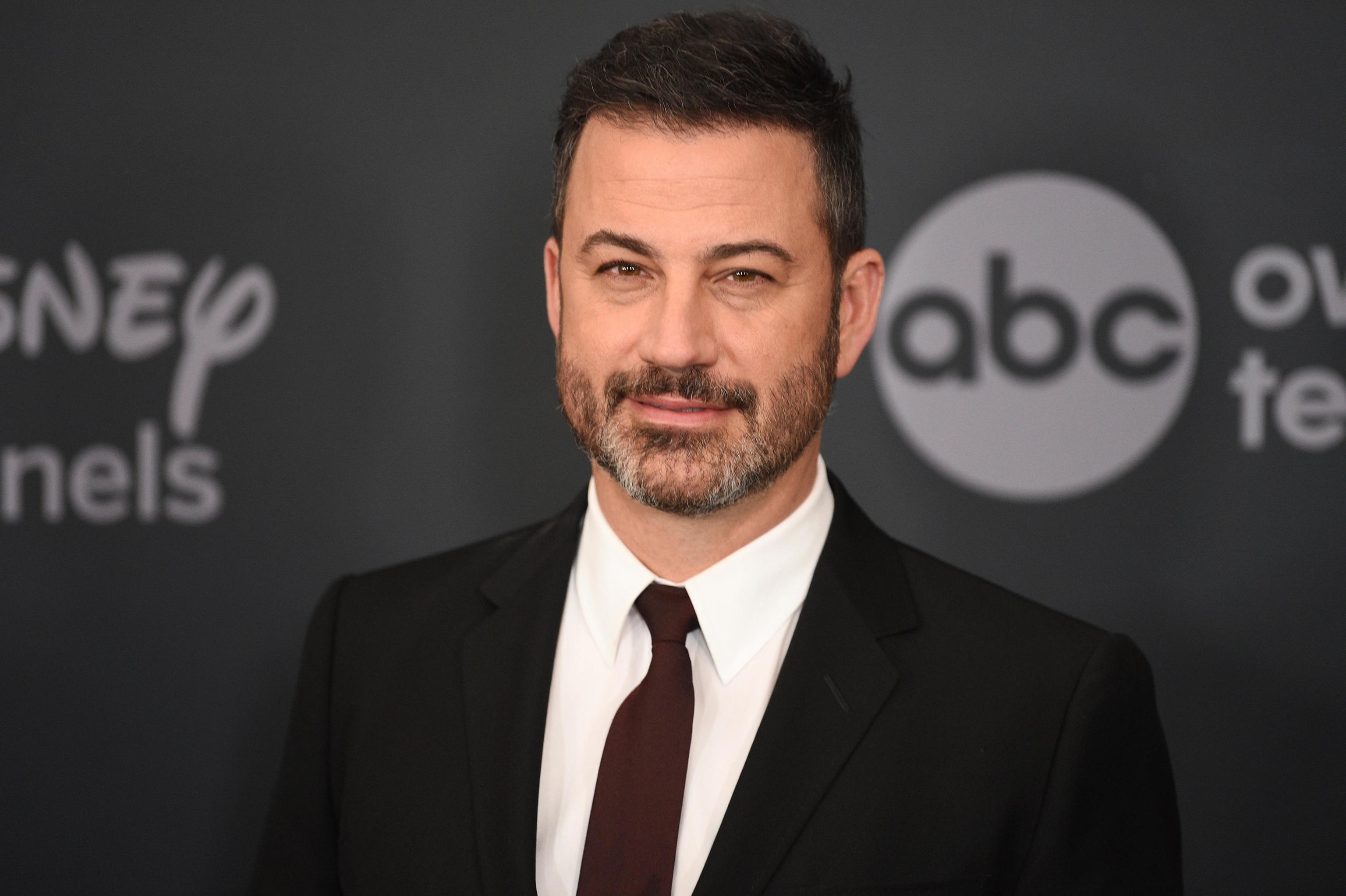
For decades, the United States has checked its pulse every night around 11:30. Not through the news, newspapers, or talk shows, but with millions of people faithfully sitting in their pajamas in front of the small screen, waiting for funny men in suits, ties, and a live band to explain what had happened and why they should take it seriously, but not too seriously. Sullivan, Carson, Letterman, Leno, O'Brien, Maher, Stewart, Kimmel, Colbert. A long list of lay priests of humor and irony, with increasingly harsh and political sermons, for a desperate America eager to laugh at itself before being able to fall asleep.
People appreciated the hosts, but above all the format, the stability, the routine. The same type of stages, colors, curtains. The order of monologues and guests, the musical performance. The secret lay in the ritual and predictability in a world that still had a beginning and an end, and was not a perpetual scroll. The phenomenon of the late show is still alive and has been exported very successfully worldwide, but it is not the same anymore. The legendary programs, with budgets of 50, 70, or over 100 million dollars a year for just 60 minutes of broadcast, now barely attract between one and two million viewers, audiences smaller than El Hormiguero, Pasapalabra, or Sálvame Deluxe in their heyday.
"The format is far from dead. It remains so relevant in American politics that The New York Times publishes a daily column about late-night programming. But the programs that existed before the internet boom are not coming back because the huge audiences that Leno and Johnny Carson had no longer exist, mainly due to the various platforms we have today, where many more people can make themselves heard," says Stephen Farnsworth, a professor at the University of Mary Washington and co-author of the book Late Night With Trump: Political Humor and the American Presidency.
The classic model of the sofa, table, and, in the best cases, some performances and games, has survived several apocalypses. It withstood the advent of cable (pay television), the rise of the internet, stood strong against YouTube, and challenged TikTok. But it is suffering. They have gone from being extremely profitable businesses, the emblems and symbols of the networks, to becoming less profitable or even deficit products. Especially if the White House has you in its sights.
When its rise and fall are studied in history books, it is likely that the symbolic moment that encapsulates the transition is the one experienced on Thursday, May 21, when Stephen Colbert turned off the lights at the Ed Sullivan theater marking the end of The Late Show. It was not due to the likely conclusion of the host's career and the reasons for his abrupt departure. Not even due to the closure of an institution that CBS launched 33 years ago, with David Letterman, and helped transform the television business by breaking molds. Colbert's farewell, surrounded by friends and all his direct competitors, after an interview with Paul McCartney and the usual jokes and monologues, can be interpreted as the beginning of the end, the first major step in the decline of a golden era. "I'm Seth Meyers, although the regulator calls me next," jokes the comedian these days, not the most hated by Donald Trump, but in the top 5 of the sector.
CBS announced Colbert's cancellation almost a year ago, in July 2025, officially for "financial reasons," stating that the show was losing tens of millions of dollars each year. While this is true, the decision-makers did not seek to reduce costs but made the drastic decision just days after their star harshly criticized on air the $16 million deal reached byParamount, the parent company of his network, with the Trump Administration to settle one of the most absurd lawsuits imaginable.
The president, with daily insults, sued the network, as he did with ABC, or with the social media platforms that closed his accounts after the Capitol riot in 2021, demanding huge sums of money. The legal path did not seem very promising for him until he won the elections and returned to power. At that point, CEOs and executives considered it more advantageous to pay a small fortune to fund Trump's future presidential library (which he said will actually be a hotel to monetize it) than to go against the most vengeful White House of contemporary times. On July 24, the same Administration pleased with the cancellation approved the Skydance-Paramount merger, an $8 billion deal.
The pressure from the president cannot be underestimated. It is brutal and spans all sectors. Disney was on the verge of firingJimmy Kimmel, another of the president's enemies, and only pressure from their own subscribers made them back down. Tens of billions of dollars are at stake in mergers, acquisitions, and contracts. As well as broadcasting licenses, which Trump and his followers constantly threaten to withdraw.
In the United States, there are five major networks: Fox, ABC, NBC, CBS, and CNN (the latter, although cable, is much more influential than CW). Until recently, only the first, owned by Rupert Murdoch, was clearly conservative and openly pro Trump. But in a few months, the president's allies, through Larry Ellison (Oracle) and his son David, managed to acquire Paramount and Warner Bros, thus already controlling CBS and soon CNN. The editorial line has drastically changed in the first, with historic programs like 60 Minutes undergoing changes, layoffs, impositions, censorship. And we are only a year and a half into the presidency.
But all this is just part of the story. Perhaps the most serious, the most dangerous, but only part of a longer story that began long before and is marked by a sharp drop in ratings, revenue loss, and the emergence of a million alternatives. The audience is leaving, but advertisers have reduced their investment at an even faster rate. Last year, the entire U.S. late-night market generated approximately $209.1 million in advertising revenue, according to Guideline data, compared to $519.7 million in 2017. This represents a nearly 60% drop in just the last decade. Since 2022, The Late Show has lost 20% of its audience in the coveted 18 to 49 age group, according to Nielsen data.
Perhaps the most surprising abstract fact for a European is that CNN, a giant that forever changed television and news coverage, a network with 3,500 employees and over 200 journalists covering wars, famines, elections, and natural disasters around the clock worldwide, has a daily average primetime audience of less than 700,000 viewers. Its flagship program did not even reach 900,000 in May, and the number of viewers in the most desired age group for advertisers, people aged 25 to 54, barely exceeds 150,000. Yet, it has around a dozen hosts with contracts above a million dollars, and some above 5 and 10 million.
The Late Shows have long been a mix of entertainment and politics. A release valve for a democracy that processed its crises through jokes and mocking its leaders. It's where Clinton campaigned playing the saxophone, where Obama recited his economic achievements with great seriousness while Fallon and The Roots turned it into a Barry White-style soul song. Where Gore tried, with little success, to appear human, where John McCain tried to seek forgiveness from a resentful Letterman for a betrayal with the competition, where George W. Bush tried to joke about his host's heart operation and messed up. Where Trump is hammered night after night without perhaps costing him a single vote. "People age, the country changes, but there is still a huge desire for figures who laugh at the powerful. In its soul, American society is purely iconoclastic, and we like to see people being ridiculed when they make a fool of themselves," says Professor Farnsworth.
Before, to enjoy a politician in trouble, or simply a relaxed interview for promotion with an actor, director, or musician, the late-night format was essential. Now the market is saturated. There are more interview podcasts than stars in the sky. You can cross the internet from clip to clip, from fragments, from relaxed chats and celebrity gossip, and youtubers also make the new stars, especially the younger ones, do things they would never do on television, limited by classic structures, more constrained by cowardly and boring executives.
"People age, the country changes, but there is still a huge desire for figures who laugh at the powerful"
"The decline of late-night shows is another symptom of the transition of television from a mass broadcast model to an individualized streaming model. It is a genre that has long been based on the habit of the audience staying awake after the local news. Now, however, television moves in the same flow of content as social media, video games, and is offered to us in the same fragmented way. Why watch a pre-recorded audio clip of a Hollywood star or a politician when you can hear them much more vulnerable in an extensive podcast interview? Some late-night hosts adapted their shows to be easier to cut and share online; Colbert never did. He was also openly partisan, which was part of his appeal. Unfortunately, on broadcast television, a broad audience is needed, so that was not sustainable. I fear we will begin to see the decline of the liberal television satire that Colbert and his mentor Jon Stewart made famous," explains Nick Marx, director of the Center for Democracy, Art, and Popular Culture at Colorado State University and an expert in film and media.
The late shows still have a great cultural influence: their hits go viral, the media cover what happened the night before. Their clips generate hundreds of millions or even billions of views and have allowed their faces to become global icons, literally. But the business is not working, and their influence is no longer what it used to be. Because a viral clip generates only a fraction of the money that a much smaller linear audience used to produce on NBC or CBS. And because in a world where attention is the most precious commodity, a joke lasts only a few seconds in the retina.
The Late Show, CBS's flagship program, was born in 1993 as a result of a retirement. One of the great references in the genre, The Tonight Show with Johnny Carson, which at one point gathered an average of 16 million viewers per show for NBC, came to an end, sparking a real war between two factions: Jay Leno, more vanilla, who would end up keeping the show, and David Letterman, more irreverent, who lost. At that moment, CBS decided to create its own alternative and hired the rejected one, and it worked very well. It seemed that there was room and pie for everyone. Colbert took over in 2015, almost at the same time as Trump's arrival. The initial stages were not good until a producer from the news world, not entertainment, arrived, the program shifted towards constant political criticism, and attracted a bit more audience.
Benjamin E. Alba, a Law professor at DePaul University and author of a biography of Steve Allen, the father of late-night shows, says that the theory that late-night shows used to be more politically neutral doesn't make sense. And he recalls that taking positions has always had consequences. "Allen constantly spoke out on controversial issues, from organized crime to nuclear war and the death penalty. In the early hours of May 2, 1960, for example, he went with Marlon Brando and Shirley MacLaine to San Quentin State Prison to protest the imminent execution of a rapist in an attempt, in vain, to persuade the governor of California to grant clemency. Allen's frankness undoubtedly contributed to a drop in his audience ratings. They were respectable, but that probably influenced the sponsor's decision not to renew his contract. What's interesting is that when his wife expressed concern about the effect his positions had on his audience ratings, Allen responded with a quote for the history books: 'Jayne, I care much more about the audience ratings of humanity than those of my television program,'" explains Alba.
Colbert, like his mentor Stewart, decided for different reasons that he could not host a neutral show. For better or for worse. The last episode of Johnny Carson, aired on May 22, 1992, on the aforementioned NBC, had approximately 50 million viewers, one of the most-watched television finales in history. The last episode of The Late Show with Stephen Colbert, an event amid unprecedented political pressure, gathered around 6.74 million viewers. An extraordinary figure, the most-watched episode of Colbert's entire tenure and more than double his recent average audience, but light-years away from his predecessors.
"Polarization and politicization of late-night shows have not been a blessing or a curse, but a reality"
Networks still measure success with 20th-century parameters —real-time share, the 11:30 pm slot— while the audience, especially the younger one, has long since migrated to other screens and rhythms. Watching a show live, at a fixed time, has become as anachronistic a habit as rewinding a videotape. Many more millions watched videos and summaries of Colbert's farewell the next day on their social networks, but without being counted. Without attracting money for advertisers. Young people turn to people like him, as they did with Stewart, Oliver, Trevor Noah, or Samantha Bee to understand current politics, a kind of ideological and emotional filter of public life, but one that does not generate income. "It's a kind of backdoor entry into the drug of politics for those who (still) are not news junkies," suggests Farnsworth.
In 2006, there was still a relatively concentrated television ecosystem. Leno and Letterman together had nearly 10 million viewers each night. Today, you have to combine the loyal viewers of practically all the shows to reach that number. Colbert, the standout leader in his time slot, had around two and a half million viewers (one million less than a decade ago). Jimmy Fallon has between one and one and a half million, a third of what he had in 2016. Jimmy Kimmel, the only one from Los Angeles and the longest-running, with 2.2 million, is the only one remaining stable and even gaining viewers.
And those are the successful ones. In recent years, programs have failed and been canceled like The Late Late Show, Patriot Act with Hasan Minhaj; The Break with Michelle Wolf; Chelsea with Chelsea Handler. TBS canceled Full Frontal with Samantha Bee, Hulu canceled I Love You, America with Sarah Silverman; Comedy Central ended The Nightly Show with Larry Wilmore, and Facebook Watch suspended Red Table Talk with Jada Pinkett-Smith. To which can be added The Rundown, The Amber Ruffin Show on Peacock, or A Little Late With Lilly Singh on NBC. The king of the night is undoubtedly the least known outside the United States, the least popular, the only openly Trumpist and conservative: Gutfeld, on Fox. Also the only one surpassing three million viewers, in the 10:00 to 11:00 pm slot, before the rest, and the president's favorite.
"The polarization and politicization of late-night programs have not been a blessing or a curse, but a reality. These are programs driven by the pursuit of audiences. If politics is more combative and the country is more polarized, it is inevitable to expect that the programs reflect that dynamic. Gutfeld is the only one surpassing three million viewers. Conservatives have long been looking for an alternative in the evening, and this is the first real success, largely because he is able to laugh at himself and his own. It's easy to make fun of Trump but it's tough to succeed if the editorial line is against the homeless or immigrants. Gutfeld has managed to develop humor by redefining elites for his audience and associating them with voices from pop culture, celebrities, or Democrats. But his success comes from laughing at himself, something that Sean Hannity would not have been able to do," concludes Professor Farnsworth, who documented hundreds of thousands of jokes and sketches for his book over a decade.