"The future of the island is within the island". With this statement, journalist Gina Montaner summarized the work that lies ahead for the Cuban people starting from the day after a possible intervention by the US. A long and complex path to travel, which is being debated today and tomorrow in the third edition of the 'Diario de Cuba' forum, titled 'For Tomorrow's Cuba.' Around 30 Cuban and Latin American experts, as well as activists and representatives of civil society, are discussing strategies and democratic solutions, drawing on other cases in the region, specifically Venezuela. These are the main axes around which the future of Cuba revolves.
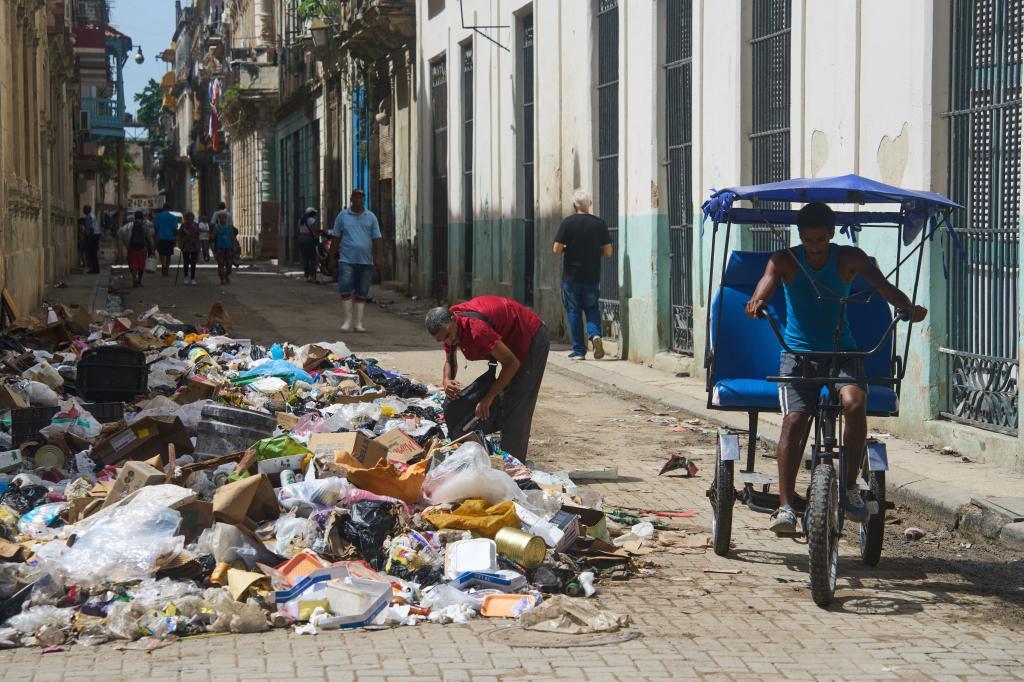
It is difficult to pinpoint a starting point, especially when listening to the words of 'Diario de Cuba' director, Pablo Díaz Espí: "The country's crisis is already systemic, it has metastasized in every aspect of life: from the economy to public services, from food to health, from education to culture. Faced with this, the regime's ability to offer credible responses is practically non-existent."
The first step in this new 'home' is the unity of all, as emphasized by two dissident figures: Alina Bárbara López and Rosa María Payá. "Let's listen to each other," said the first via video conference, referring to all political sectors in Cuba. "Either we organize ourselves and provide a democratic alternative to the people, or history will pass over us," warned the second about this "crucial moment" facing the island. Payá is one of the signatories of the Liberation Agreement, a document signed by opposition groups seeking to establish a framework for transition.
"The way out of the crisis involves the end of the dictatorship. For the first time, there is a foreign government, the US, willing to exert specific pressure," emphasized in the forum and elaborated on the words spoken by Montaner: "The future of Cuba is in Cuba, but the support of the exile is crucial".
A diaspora that is unlikely to return because "99% of those who have been abroad for more than five years will not come back to establish themselves in the country," noted political scientist Juan Antonio Blanco, but thanks to the "omnipresence" offered by new technologies, they can enrich Cuba with their acquired knowledge. Social fabric is a priority since, as highlighted by sociologist Elaine Acosta: "Our island has silently suffered wear and tear. It has been drained of projects and dreams, of its sons and daughters." Additionally, it is an aging society, with "over 25% of the population over 60 years old". Precisely, the elderly are the ones most affected by the crisis. "In tomorrow's Cuba, the diaspora can be the driving force," proposed as a solution to help with the demographic vacuum.
Experts emphasized the need to learn from history. "The recovery of historical memory and civic rights of Cubans is essential to show the people the path that should not be taken," proposed journalist Dimas Castellanos. While political scientist Enrique Patterson focused on the discrimination against the Afro-descendant population, which has always faced unfavorable treatment, stating that "what Castroism did was extend the barracks to the entire citizenry."
Disaffection with the system is a reality, evidence that "change exists," according to data from Cubadata explained by researcher Arístides Vara-Horma. 71.8% are dissatisfied. "There is an irreversible break in totalitarian control," analyzed, and hence, "the challenge is to move from latent dissent to articulated dissent." For political scientist and historian Armando Chaguaceda, "without the end of Castroism, there is no democratic consolidation or security in Latin America."
In building a new country, lawyer Edel González pointed out that "the transition does not consist of replacing a government but of writing the rules for a new one." "Neither absolute demolition nor absolute continuity. Falling into extremes would be absurd," he clarified. As a suggestion, he supported the creation of a "Statute or Constitutional Transition Law."
The ultimate goal, as in Venezuela, is to "reach a democracy with free and multi-party elections", according to Yaxys Cires from the Cuban Observatory of Human Rights. "In the first month of the transition's start, there must be a party law, which should enhance political participation while having certain controls to prevent fragmentation," cited as a significant step, along with the need for "State pacts" in certain areas. He also noted the fundamental role of economic conditions.
"Releasing political prisoners is urgent, but it cannot be done at any cost; real freedom requires nullifying sentences, restoring rights, and prohibiting exile; and memory and archives are part of justice, destroying them protects impunity," summarized Laritza Diversent, director of the Cubalex organization. Examples of justice and reparation from Argentina and Colombia can serve as reference points. "Memory must be at the center of the transition. There can be no society without granting a place for the memory of the victims," concluded Rubén Chababo, a professor at the National University of Rosario.