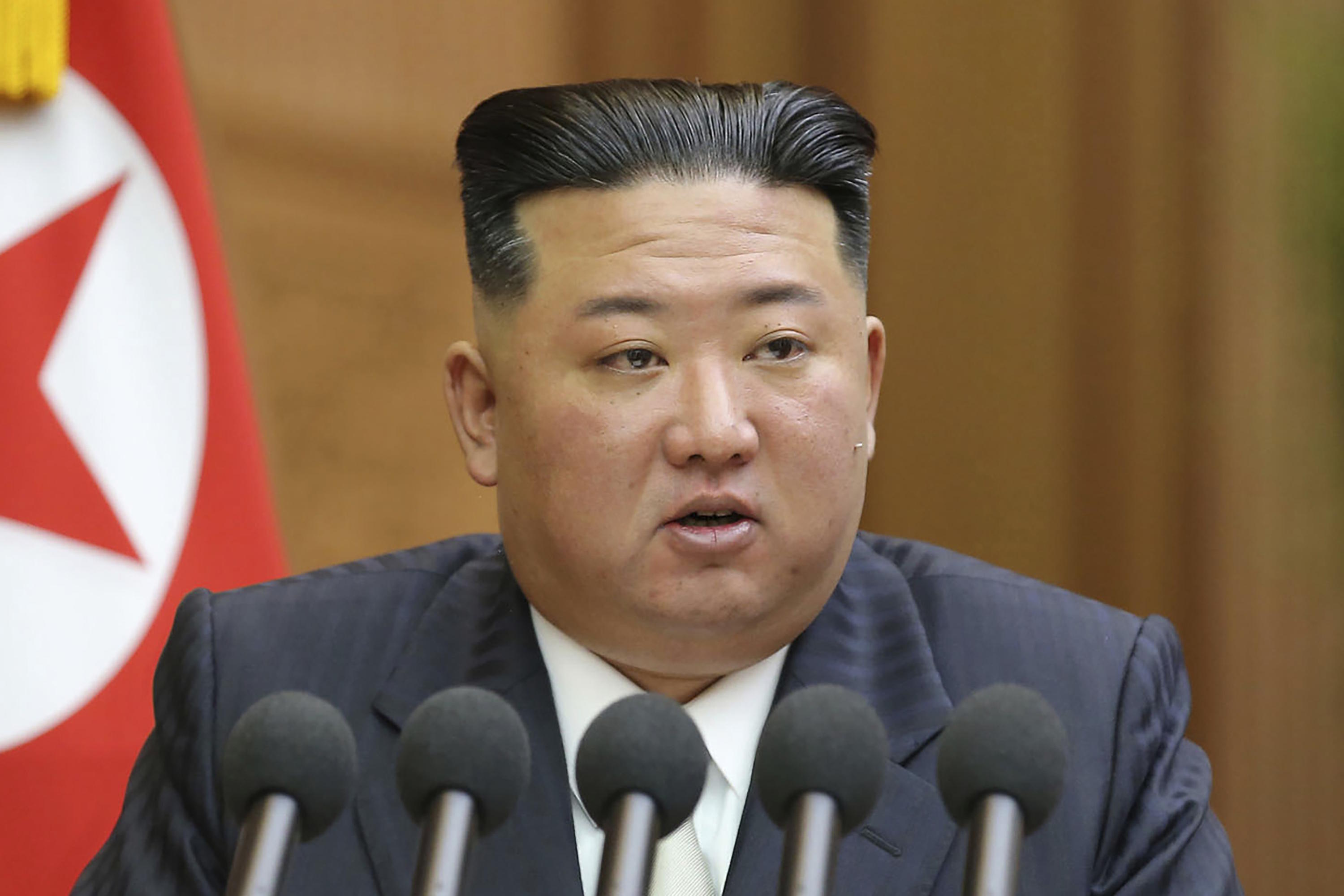
Kim Jong-un's smile takes center stage in the photograph. On both sides, forming a corridor amidst applause, cheers, and raised arms, the North Korean footballers welcome him as if they had just returned from a victorious war. The image, published this Tuesday by the official newspaper Rodong Sinmun, shows the supreme leader walking among the players of Naegohyang FC and the women's youth national team. The image carries more political weight than sporting. In a North Korea that remains completely isolated, women's soccer has become one of the few scenarios where the regime can showcase some success to the outside world.
For decades, Pyongyang used missiles, military parades, and the nuclear program as its main tools to project strength. But in recent years, another much friendlier form of influence has emerged: the soft power offered by its female footballers. While the country remains subject to international sanctions and keeps most of its diplomatic doors closed, North Korean women's teams accumulate titles with unusual regularity.
The latest demonstration came just a few days ago. Naegohyang, founded in 2012 in Pyongyang, was crowned champion of the Women's Asian Champions League after defeating Japanese Tokyo Verdy 1-0 in the final held in Suwon, South Korea. It was the first time a North Korean team had won the top continental club tournament in Asia.
That victory had added symbolism. The North Korean delegation, consisting of 27 players, became the first sports team from the North to visit South Korea in eight years. A scene that contrasted with the current tense political reality.
For the past two years, Kim has officially abandoned any reference to Korean reunification and has redefined the South as a "hostile state." The North Korean Constitution was amended to reflect the doctrine of the "two enemy states," burying decades of rhetoric about a potential national reunification. Meanwhile, South Korean President Lee Jae Myung has expressed his intention to restore dialogue channels with Pyongyang.
In this context, women's soccer has become one of the few spaces where both countries still coincide. South Korean media have highlighted the paradox. While diplomatic relations are going through one of their worst moments in decades, thousands of South Korean fans flocked to stadiums to watch the North Korean team's matches. Tickets sold out quickly, and civilian groups even organized welcoming events for the visitors.
However, the North's female footballers maintained the characteristic discipline of any delegation from their country at all times. They arrived from China, avoided public statements, and maintained a distant attitude. Images later disseminated by state media celebrated the victory but even avoided mentioning that the competition took place on South Korean soil.
Earlier this month, North Korea also won the U-17 Women's Asian Cup, securing a fifth continental title, more than any other team. This adds to an impressive record in youth categories, where North Korean women have won multiple U-17 and U-20 World Cups.
Behind these triumphs lies a state sports policy. Various analysts recall that the regime began seriously investing in women's soccer in the late 1980s. In a country where resources are limited and competing with major sports powers is challenging, women's soccer became a strategic bet. Observers explain that the North Korean system identifies talent from an early age, integrates sports into specialized schools, and channels the best players to high-performance centers linked to the military.
The result is that one of the most closed dictatorships on the planet has built one of the most successful structures in women's soccer worldwide. For Kim, these victories serve as propaganda and reinforce the official discourse - as reported by North Korean media this week - about the "superiority of the North Korean socialist system." The massive receptions organized these days in Pyongyang, with streets crowded with citizens waving flags and flowers, precisely convey that idea of collective national pride.
While diplomacy remains frozen, North Korean footballers have opened a small showcase to the outside world. These victories on the field also serve to offer a different image of a country usually associated with nuclear tests, ballistic missiles, and threats.