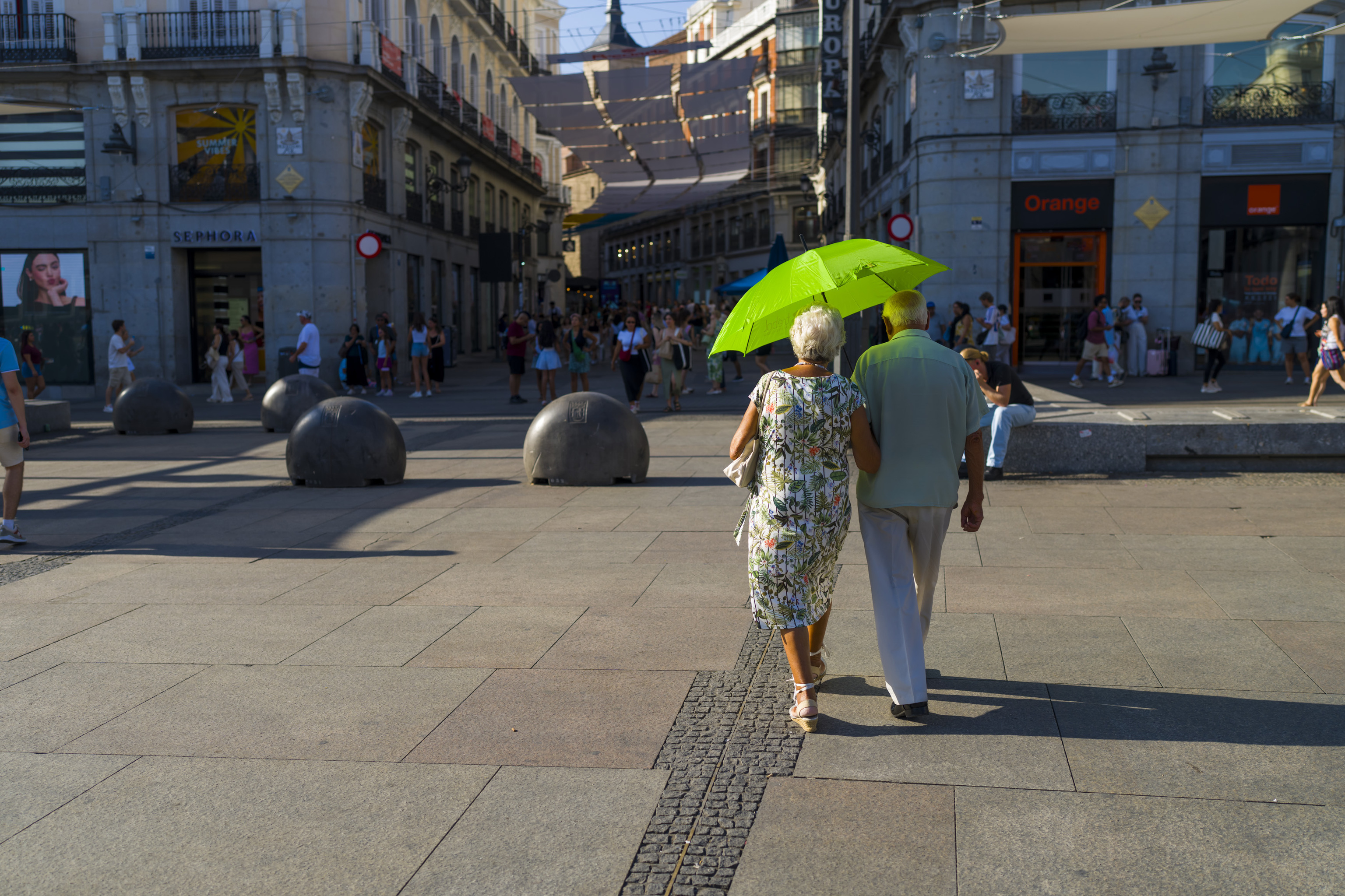
Last May has been marked in Spanish records as the deadliest by heat in the entire historical series: 101 people died in Spain due to high temperatures during that month, mainly in the northern part of the country —Asturias, Galicia, and the Basque Country— with a special impact on older women.
The figure triples the average of the last decade and comes even before the official start of summer. This was highlighted by the Minister of Health, Mónica García, and Héctor Tejero, responsible for Health and Climate Change in the ministerial cabinet, during the presentation of the new Plan of Measures against High Temperatures.
The data from May is part of a trend that both have described as alarming. According to the Ministry's daily mortality monitoring system, between 2015 and 2025, more than 27,500 people died in Spain due to heat. Just last year, the number rose to 3,832 deaths, the second-worst record in history.
In addition to these deaths, there is a broader health impact: hospitalizations due to heat increase by 10% during heatwaves, and work accidents increase by up to 17% when extreme temperatures are recorded. "Climate change and extreme heat make people sick and kill them," Tejero stated.
Temperatures are advancing earlier than usual
However, it is the data from May that best illustrates the changing scenario. "The problem is not only that it is getting hotter," explained the minister. "The problem is that heat is arriving earlier, and when it arrives earlier, our bodies have not yet acclimated, and that's when we have the social perception that the risk does not yet exist."
The first episodes of extreme heat of the season have a particularly high health impact precisely because neither physiology nor social perception have adjusted their sense of risk. During the last week of May, temperatures were recorded between 10 and 15 degrees above normal, and the forecasts from the State Meteorological Agency (Aemet) indicate that summer will again be warmer than usual in much of the territory, as detailed by the minister. The meteorological summer is now almost six weeks longer than in the 1980s.
New ways to measure heat
Technically, as Tejero explained, the main novelty of this year's plan is the update of temperature thresholds and health risks. The system works with 182 defined climatic zones throughout the territory, each with its own adaptation conditions.
The thresholds have been recalculated with data from 2012 to 2023, excluding pandemic years, and the result is an average increase of 0.58 degrees. According to Tejero, this "could indicate that in some areas of Spain, we are adapting better to temperatures." However, the territorial differences are very marked: in areas like A Coruña, the risk temperature is around 7-8 degrees above average, while in Córdoba, with a greater tradition of heat adaptation, that margin is considerably higher.
The warning system is articulated through the portal meteosalud.es, updated daily before 10 in the morning with the risk prediction for the next three days. The risk is presented using a traffic light code —yellow, orange, and red—, although Tejero warned that these levels do not have the same meaning for everyone.
The most extreme case, he described, is that of "a 75-year-old woman who lives alone, in a humble neighborhood, in a non-air-conditioned home": for that profile, a moderate risk warning can become a serious threat. Advanced age and low income are, according to scientific evidence, the two factors that most increase vulnerability to extreme heat.
This social dimension has been central in the minister's presentation, who has linked climate adaptation with social justice and has pointed out children as another of the most urgent areas. "Thousands of schoolchildren are still spending hours in classrooms that exceed 35 degrees," an issue that, as emphasized, "would not be tolerated in any other public building."
"Perhaps it is time to ask ourselves why we continue to tolerate in childhood what is considered unacceptable for adults," García stated, making a direct appeal to the autonomous communities to promote their climate adaptation plans in educational centers. The minister expressed her displeasure with administrations that respond passively, specifically mentioning the former Health Councilor of the Community of Madrid, who had suggested in the past that children could use a fan.
"When we talk about climate change, we are also talking about health, and when we talk about health, we are talking about protecting lives," García emphasized. That, she said, is the goal of the plan.