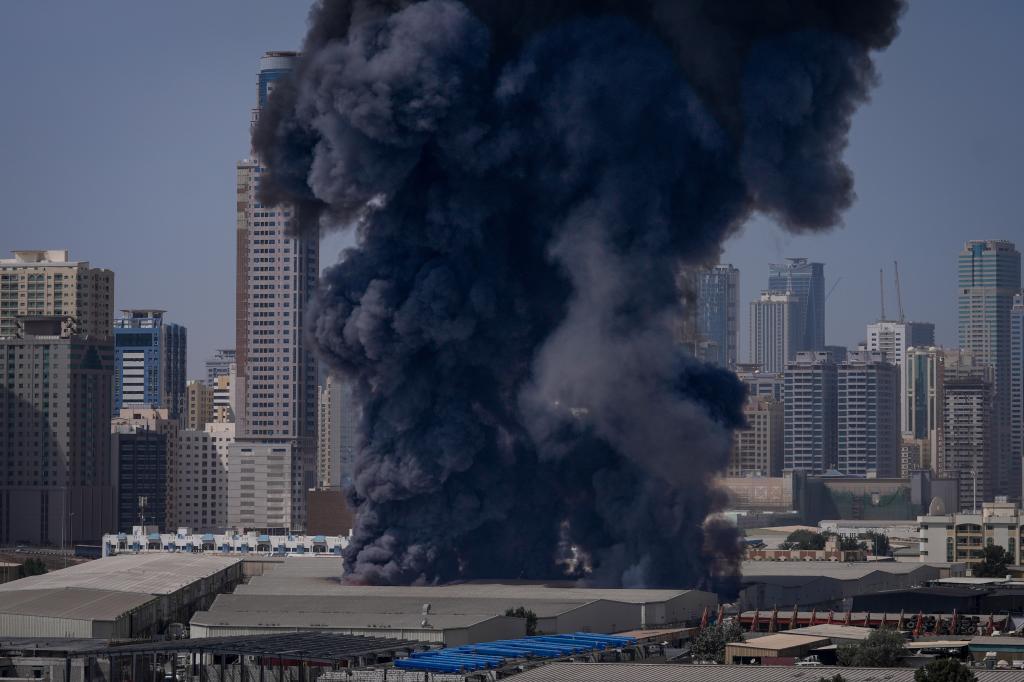
On February 28, when Iranian missiles and drones began to fall on the futuristic city of Dubai, a heated debate erupted on social media about whether this war meant the death of the largest business center in the Middle East. For some, Dubai was dead, as the aggression broke "the bubble of security and prosperity" on which it had been built. The other side claimed that nothing was happening, that the missiles and drones posed no danger, and that everything was "under control." Both views were exaggerated and were mostly defended by people who were not in or had never been to the emirate.
The reality, 100 days after the start of the war, is that Dubai is recovering faster than expected in the real estate and aviation sectors, thanks to its agile government response and a diversified structural base. The strongest evidence to support this claim is the housing market in Dubai, which regained momentum in May, with weekly transactions from the Dubai Land Department regularly exceeding 14 billion dirhams (3.2 billion euros), with some weeks nearing 15 billion. "Capital did not leave Dubai, it just paused," noted an industry analyst.
Axel Costa, one of the Spaniards involved in the real estate business in Dubai, states that the market has awakened after the months of March and April, where there was a total paralysis due to the war. "Subjectively, because we do not have the data for this month yet, we are already closing sales at a good pace. The perception is different. Before, people were very afraid of Iran's attacks. But the missile strike on Kuwait's airport this same week had no effect on the security perception." Costa affirms that real estate projects have not stopped: "There are more people wanting to buy homes in new developments right now than there are available units, even having to pay a deposit in advance."
Francisco Almansa, a Spanish real estate entrepreneur in Dubai, states: "I don't like the word resilient much, but that's how the market in Dubai has behaved. We expect a significant rebound effect when the war definitively ends, including the return of many families with children who left for safety reasons. There is still some skepticism internationally, but there is also a fairly active market among residents. There have been no fire-sale prices, but rather quite a few significant transactions. Still, I want to be cautious. I believe there is not yet a super rebound, but I do have a positive outlook on the Dubai market."
Why did Dubai not collapse while losing almost all its tourists and 70% of its expatriate residents fled the country? The main measure was the economic support package of 1 billion dirhams (272 million dollars) approved on March 30 by Sheikh Hamdan bin Mohamed, which included fee exemptions for all hotel establishments. The Central Bank of the United Arab Emirates launched a five-pillar resilience package on March 17 to maintain financial stability, prevent tightening of credit conditions, and ensure that banks continued to lend to businesses and individuals affected by regional uncertainty.
Does this mean that Dubai's economic project is far from "dying"? The UAE's real GDP increased from $127 billion in 1990 to $462 billion in 2024. Dubai's economy relies almost exclusively on non-oil sectors, with oil accounting for less than 2% of the GDP. A combination of trade, tourism, high-value real estate, and financial services, built on a regulatory framework that mirrors London and New York, has replaced it. This means that the closure of the Strait of Hormuz does not directly impact Dubai's revenues as it does with Saudi Arabia or Kuwait.
During the 40 days of Iranian attacks, the government promised to defend its population and residents without retaliation or escalation. Emirati forces intercepted 563 missiles and over 2,256 drones, demonstrating even greater effectiveness than Israel. High-performance companies maintained their operations. The market adjusted, but it was far from collapsing as many had predicted.
However, it is not yet time to talk about full recovery as long as the Strait of Hormuz remains closed, maritime insurance rates are soaring, and electronic warfare and drones have eroded the perception of absolute security that was the city of skyscrapers' main intangible asset.