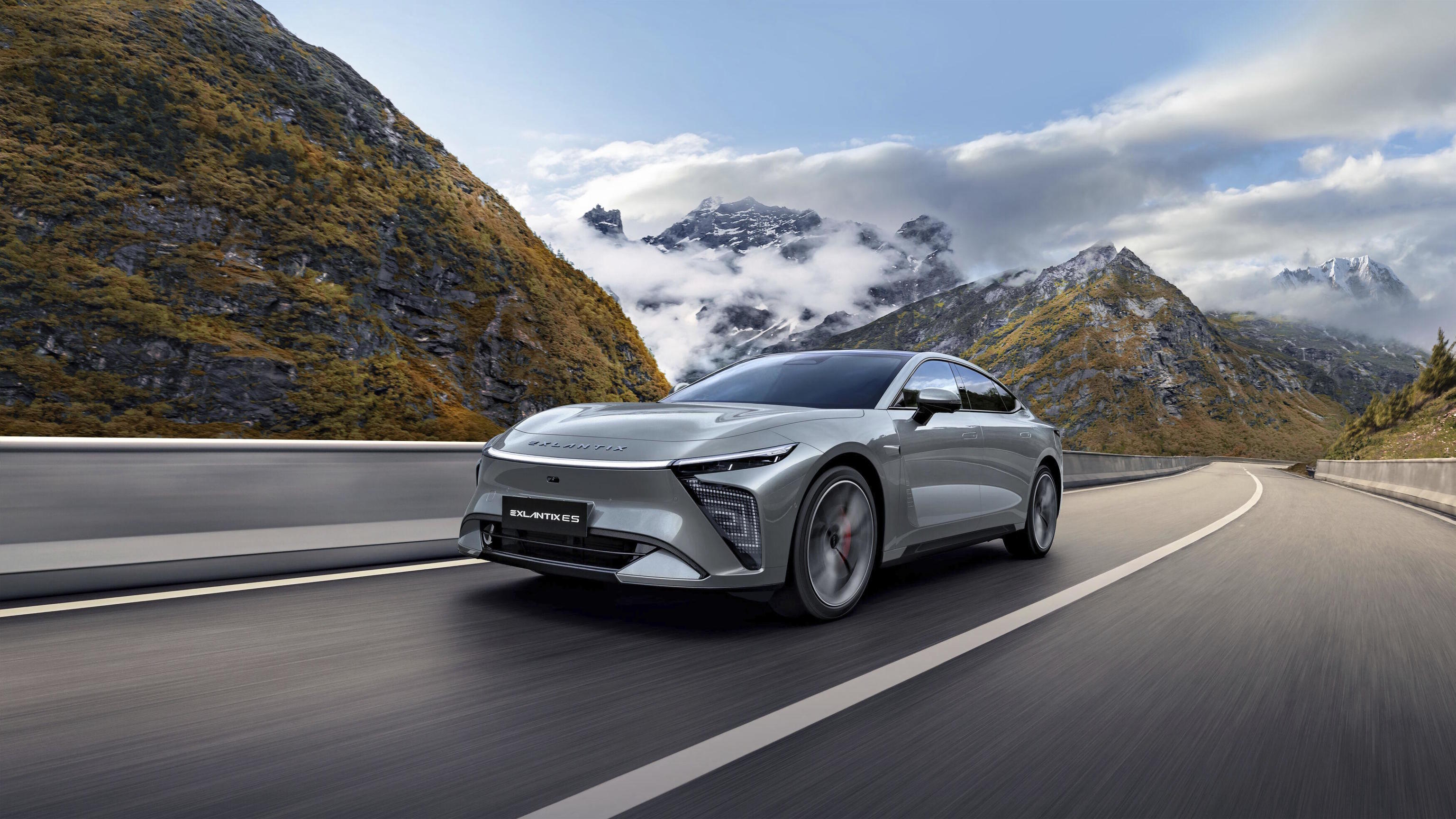
The great Chinese industrial relocation has already begun. For decades, the Asian giant turned its territory into the world's factory. Now it is exporting that very factory, and Spain has become one of the main entry points for the new industrial offensive.
From Zaragoza to Barcelona, passing through Cáceres and Málaga, investors are disembarking, promising employment and a second life for old factory facilities. It is a new phase of Beijing's economic expansion: it is no longer enough to sell products manufactured in China in Europe. Now, to avoid tariffs, especially, manufacturing directly within Europe is necessary.
"China, 30 years ago, needed to sell cheap labor to obtain capital. Western companies began to arrive in the Asian country to produce cheaply and make a lot of money by exporting. And with these transfers, new companies were created in strategic and high-value sectors in China that are now reversing the cycle," explains economist Alberto Lebrón, a researcher at the University of Beijing. "The paradox is that now, even producing more expensively in our countries, Chinese products remain very competitive. That's why there is a lot of fear that Chinese brands will take over our market."
MG, the historic British brand controlled by the Chinese automotive giant SAIC, is finalizing the opening of its first European factory in Galicia, with Ferrol as the main candidate. The move would allow the company to avoid the tariffs of up to 45% imposed by Brussels on electric vehicles imported from the Asian country.
The automaker Chery has already revived the former Nissan plant in Barcelona alongside the Ebro brand. Leapmotor will manufacture models at the Stellantis factory in Figueruelas. Another manufacturer, Changan, is considering building its own plant in Spain. Hongqi, the luxury brand linked to the state-owned FAW group and a symbol of Chinese political power for decades, is also negotiating to produce vehicles in Spanish facilities.
The offensive goes far beyond the automotive industry. The energy transition has opened a second highway for the arrival of Chinese industrial capital. CATL and Stellantis are building a battery gigafactory in Zaragoza valued at over 4 billion euros. Envision is developing another in Extremadura. Hygreen Energy plans investments worth billions linked to green hydrogen in Andalusia. In Málaga, the future plants of Hygreen and Sermatec aim to replicate production capacities that were previously concentrated only in China.
Spain offers exactly what many Chinese companies are looking for: relatively cheap energy, direct access to the European market, and an existing industrial base. In response to this, there is increasing talk in Brussels about the need for strategic autonomy.
"One measure that could be considered in Europe is what China did with Western companies: forcing production with a local partner, with a high percentage of mandatory local employment and local producers. It is a way to stimulate the receiving economy," says Lebrón. "But many wonder if Chinese companies are not trying to precisely avoid this, seeking to forever dominate industries without the cycle reversing again. A wave of protectionism in Europe is likely on the horizon."
One of the first to warn of this phenomenon - that of Chinese products manufactured in the West - was Jörg Wuttke, former president of the EU Chamber of Commerce in China: "European tariffs are precisely accelerating what many governments intended to avoid: the Chinese industrial implantation within Europe. Chinese manufacturers will increasingly choose to locate production in European territory to maintain access to the European market."
Furthermore, the combination of weakened domestic demand in China and a fierce price war in sectors such as automotive is pushing companies to seek production abroad. From electric car manufacturers to producers of household appliances and solar panels, they are setting up plants all over the world.
BYD, the world's largest electric vehicle manufacturer, has become a symbol of this expansion. The company is building factories in Hungary, Turkey, Thailand, and other strategic markets. CATL is simultaneously developing projects in Southeast Asia and Europe. Midea, one of the world's largest appliance manufacturers, has opened facilities in Brazil and Thailand and has reached industrial agreements with Western groups to produce in the United States.
In Latin America, Brazil has become one of the main entry points. There, BYD even occupies former industrial spaces abandoned by Western manufacturers. In the city of Camaçari, in the state of Bahia, the Chinese company took over from Ford, whose closure had symbolized the decline of an industrial era. For thousands of local workers, the Chinese arrival represented a great opportunity. But it also showed a darker side.
At the end of 2024, Brazilian inspectors reported that more than 160 Chinese workers employed in the construction of the BYD plant were living in conditions that authorities described as "analogous to slavery." According to investigations, some employees had their passports withheld, endured grueling workdays, and lived in unhealthy accommodations. BYD subsequently cut ties with the contractor involved and stated that it maintains a zero-tolerance policy towards any labor violations.
The allegations have fueled concerns among Western governments, unions, and local competitors. The fear is not limited to labor conditions. There is also a growing concern about the possibility of China exporting abroad the same model of hyper-industrial competition that has revolutionized its domestic economy.
In Europe, where the automotive industry represents around 7% of the EU's GDP and sustains millions of jobs, some officials argue that many Chinese investments bring employment, but keep the real added value within China because components, technology, and much of the supply chain remain Chinese.
In response, Brussels is preparing new rules. The so-called Industrial Acceleration Law seeks to demand higher percentages of European content, technology transfer, and local hiring for certain foreign investments in sensitive sectors such as batteries, electric vehicles, or renewable energies. The goal is to prevent Europe from simply becoming an assembly platform for products designed and controlled from Beijing.