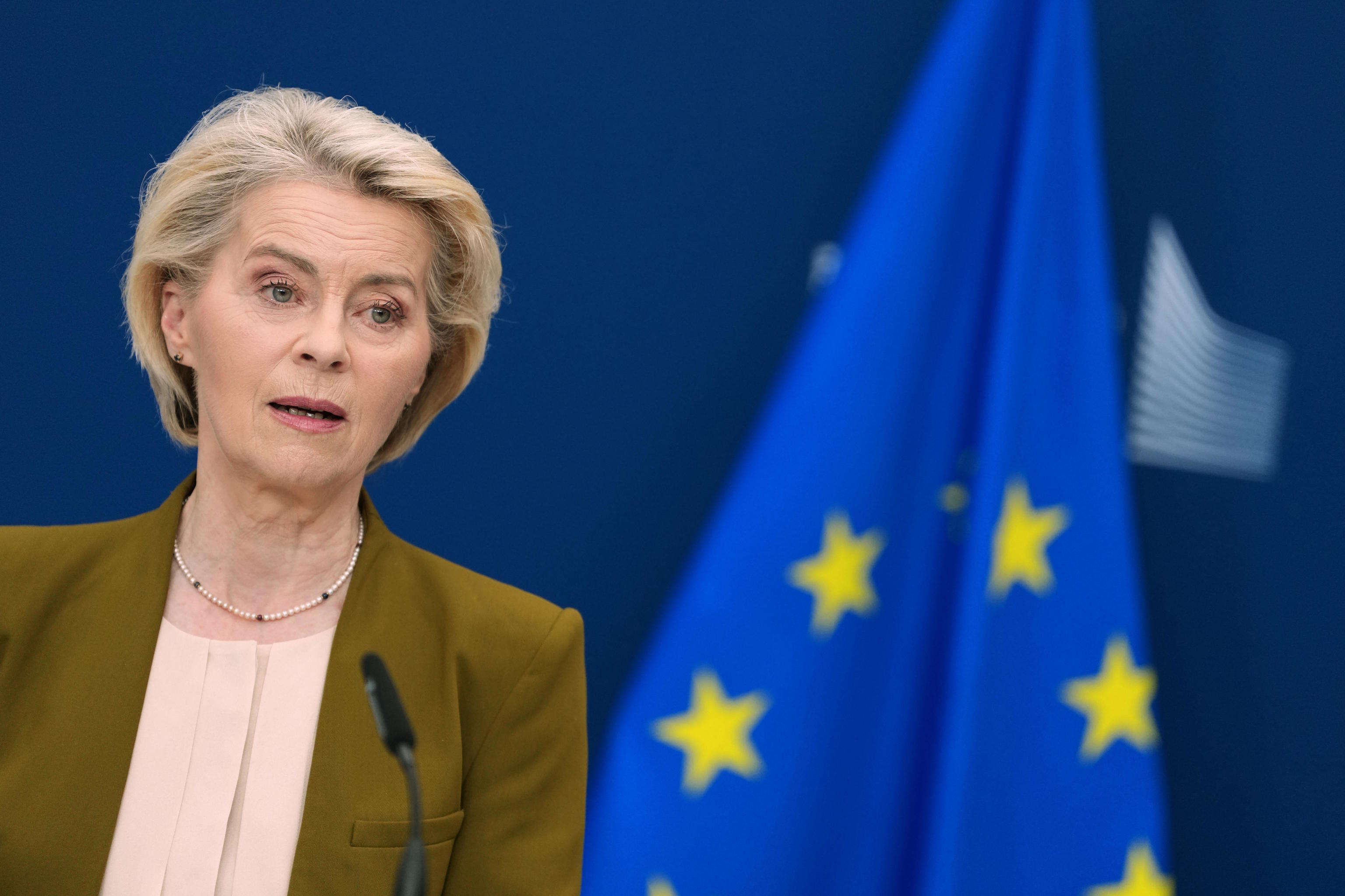
The European Commission will "formally start negotiations" for the accession of Ukraine and Moldova to the EU. It will be in the coming days, as officially announced by President Ursula von der Leyen. More specifically, in the ministerial meetings that will take place in Luxembourg on June 15th, the day when the first negotiation block or cluster will be opened, as known in EU jargon.
"Ukraine is carrying out reform after reform while its cities are under attack, while the sky above them is filled with smoke, while anti-aircraft sirens sound throughout the country," the President pointed out.
"They are making extraordinary progress in their reforms. It is clear that Ukraine has delivered. That is why it is time for us to deliver as well. We now have the historic opportunity to do so. In the coming days, we will open the first cluster with Ukraine and Moldova, which basically opens the door to the next phase of the accession process: the formal start of negotiations. And I don't need to tell you that the Commission is fully committed to supporting Ukraine on its path to our European Union, where it belongs," she emphasized to close the press conference where she presented the 21st package of sanctions against Russia.
This new round of actions against Moscow targets "energy, the financial and crypto sector, trade, and for the first time fishing," as explained by Von der Leyen. It plans to freeze the cap imposed on Russian oil, so that Russia does not benefit from the strong market fluctuations resulting from the closure of the Strait of Hormuz.
Von der Leyen also aims to permanently ban the entry of Russian soldiers into the EU: of anyone who has fought in favor of Russia and Vladimir Putin in Ukraine.
All these actions, of course, will now have to follow the lengthy EU approval process. But, unlike before, Brussels will no longer face the constant veto of Viktor Orban's Hungary. In fact, this is what will also enable the start of negotiations for Ukraine's accession, although this does not mean that the country will immediately join the European Union. Far from it.
Numerous countries believe that, like other candidates, Ukraine must go through all the exams and processes that the EU demands. That doing otherwise would be unjust and that shortcuts cannot be taken. And that translates into years.