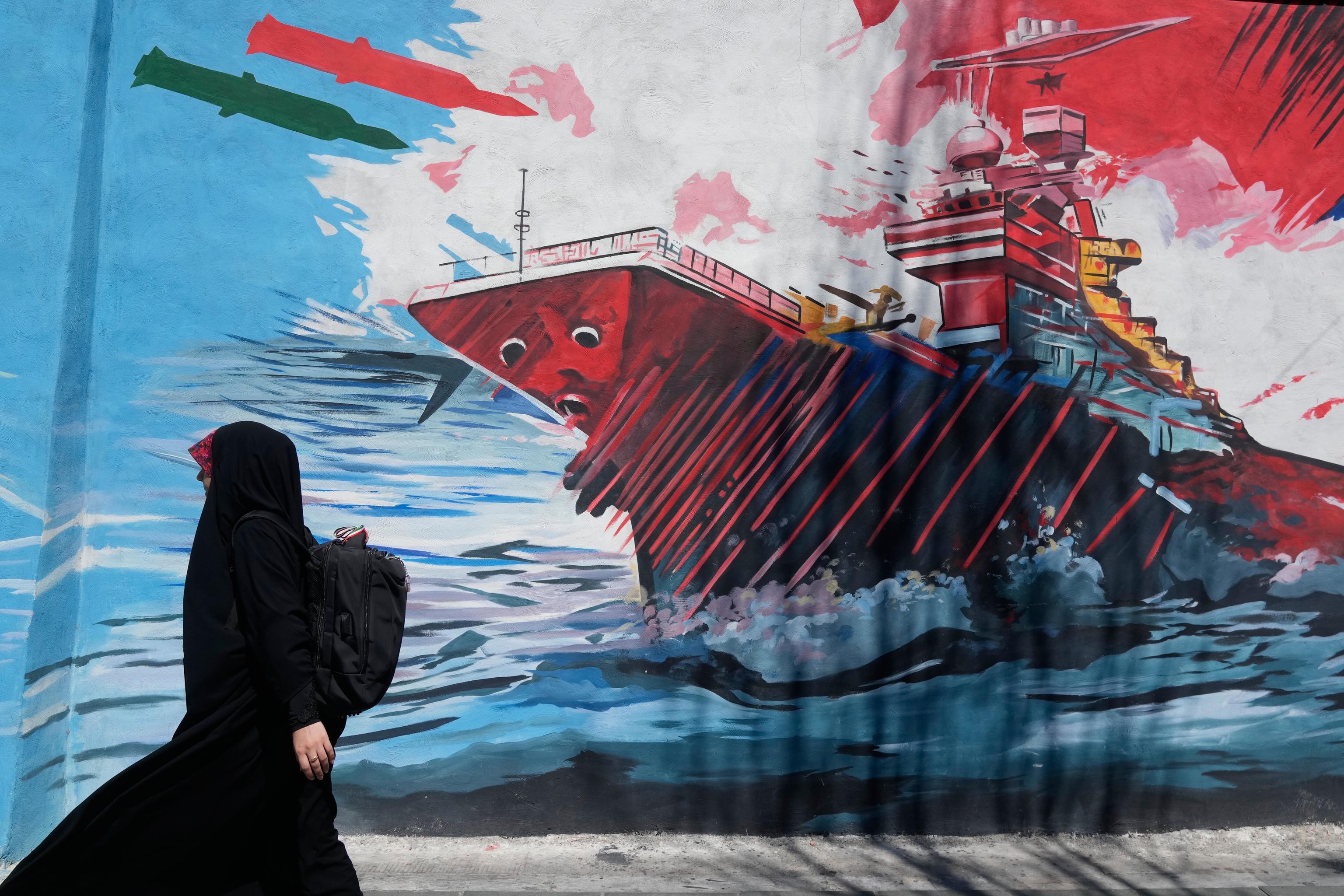
The United States bombed Iran on Wednesday after blaming the Islamic Republic for the downing of a US military helicopter. Iran responded with attacks against Bahrain, Kuwait, and Jordan, threatening to derail talks to end the US and Israel's war against Iran.
Bahrain and Kuwait fired anti-aircraft defenses in response to the Iranian attack. Jordan also reported that it downed five missiles launched by Iran against an airbase hosting US forces.
The downing of the Apache attack helicopter and US military attacks further strained the ceasefire, a day after Iran and Israel exchanged fire for the first time since the truce took effect. Iranian state television reported on Tuesday that Israeli attacks killed two members of the country's air defense units.
Explosions on Qeshm Island
According to available information, the Iranian agency Mehr News reported that explosions were heard near Qeshm Island, in southern Iran, although the cause has not been immediately clarified.
Qeshm Island has been the scene of episodes related to attacks, military activity, and tensions in the Strait of Hormuz route, so these reports usually attract special attention until there is official confirmation.
A new Saudi airline starts operations amid the Middle East war
Saudi Arabia launched Riyadh Air on Wednesday, its second national airline, after months of delay amid the economic turmoil caused by the war in the Middle East and stiff competition from more established Gulf companies.
A Boeing 787 Dreamliner in Riyadh Air's white and lavender colors departed for London at 02:30 (23:30 GMT on Tuesday). This is a new Saudi project to reduce its economic dependence on oil.
With Riyadh Air, the country aims to turn the capital Riyadh into a global flight hub to rival Dubai, the world's busiest in terms of international passengers.
Iranian Foreign Minister speaks with Saudi and Turkish counterparts after exchange of attacks with the US
Iranian Foreign Minister, Abbas Araqchi, held telephone conversations on Wednesday with his Saudi and Turkish counterparts following the new exchange of attacks with the United States in the Persian Gulf.
In the talks with Saudi Foreign Minister, Faisal bin Farhan Al Saud, and Turkish Foreign Minister, Hakan Fidan, Araqchi defended the "inherent right to legitimate defense to provide a reciprocal response" to US attacks, as reported by the Iranian government.
The Iranian diplomacy chief also condemned US bombings against several points in the south of the Persian country, carried out in retaliation for the alleged downing of a helicopter in the Strait of Hormuz.
Merchant ship exchanges fire with armed vessel off the coast of Yemen
A merchant ship reported on Wednesday that it was approached by a small vessel with six armed individuals on board while sailing about 88 nautical miles southwest of Balhaf, off the coast of Yemen, as indicated by the British maritime security agency UKMTO.
An exchange of fire occurred between the vessel and the ship's armed security team. Subsequently, the small boat moved away from the area, added UKMTO.
The dollar remained stable against major currencies on Wednesday, as markets continued to monitor the latest clash between the US and Iran, while investors awaited key US inflation data for clues on the Federal Reserve's future interest rate trajectory.
Asian stocks fall as oil rises
Asian stocks mostly retreated on Wednesday following a wave of tech stock sell-offs on Wall Street, and oil prices rose after new US bombings against Iran.
The US military launched attacks early on Wednesday after the crash of a military helicopter near the Strait of Hormuz, which President Donald Trump attributed to Iran. Iran promised to respond and stated that it "will not leave any attack or threat unanswered."
Peace agreement seems increasingly unlikely
The Iranian Foreign Ministry stated on Wednesday that its Gulf neighbors have a "legal and moral responsibility" to prevent US and Israeli attacks from their territories.
Earlier, the US military said it had "completed" what Trump described as a retaliatory attack against Iran for the downing of a military Apache helicopter.
The US Central Command in the Middle East (Centcom) claimed to have targeted "Iranian air defense systems, ground control stations, and surveillance radar sites near the Strait of Hormuz."
Iranian Foreign Minister, Abbas Araqchi, warned shortly before that Iranian military forces "will not leave any attack or threat unanswered."
Iran launches attacks against Bahrain, Kuwait, and Jordan in retaliation for US bombing
The United States bombed Iran on Wednesday after blaming the Islamic Republic for the downing of a US military helicopter. Iran responded with attacks against Bahrain, Kuwait, and Jordan, threatening to derail talks to end the US and Israel's war against Iran.
Bahrain and Kuwait fired anti-aircraft defenses in response to the Iranian attack. Jordan also reported downing five missiles launched by Iran against an airbase hosting US forces.