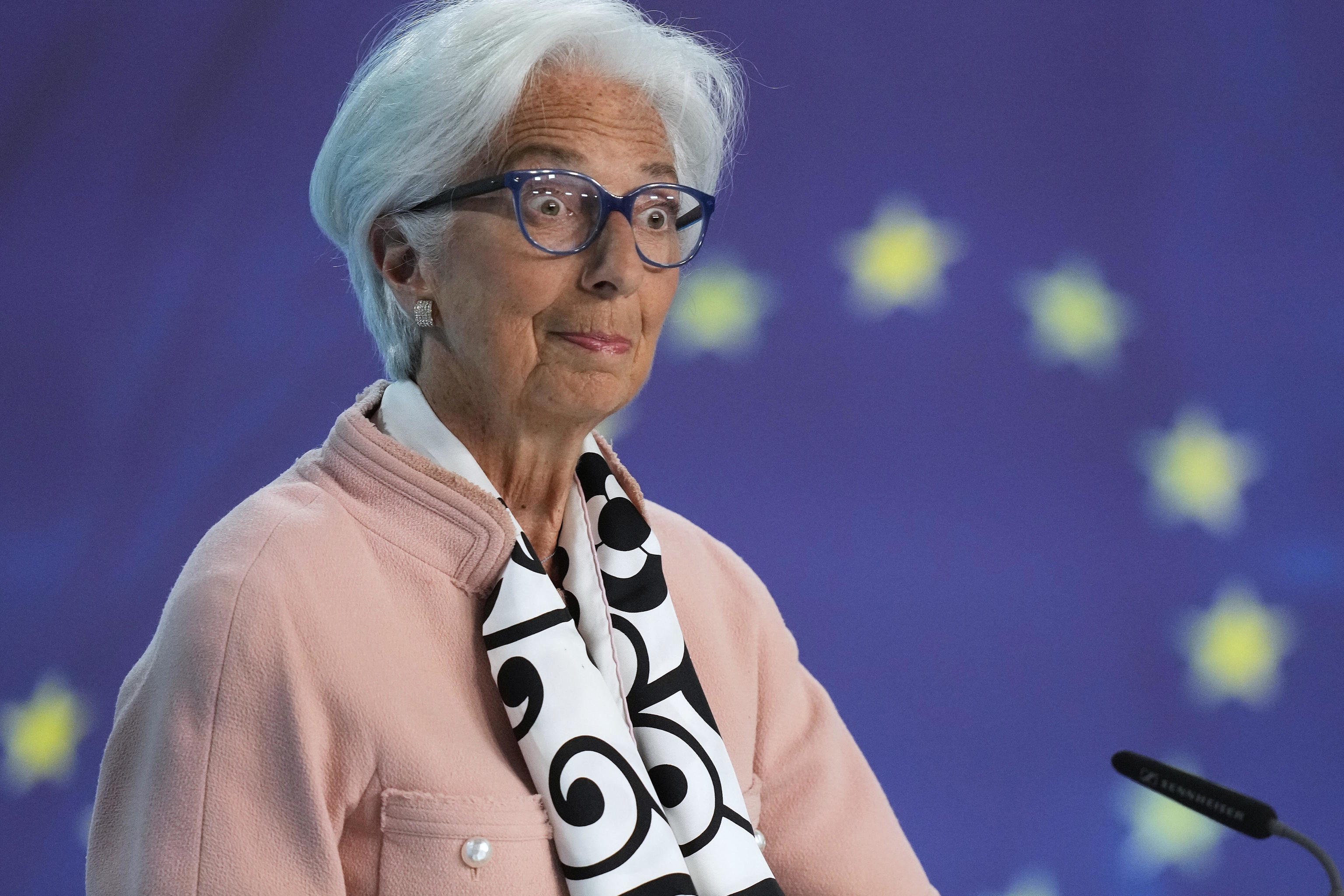
Ten increases and eight decreases later... the European Central Bank (ECB) is getting ready to climb again, although this time the goal is different. Interest rates will rise again in the Eurozone starting next Wednesday by 0.25 basis points, marking the first increase in three years and just two years after the central bank decided to put the brakes on and start decreasing when the cost of money, crucial in determining the cost of mortgages and other loans that citizens request from their bank, reached historical highs at 4.5%.
The significant difference in returning to a more restrictive monetary policy compared to the summer of 2022 is that this time the inflation being targeted has a different origin, one more oriental and bellicose, than the one that disrupted the pockets of Europeans five years ago due to skyrocketing gas and fuel prices, with the war in Ukraine as a backdrop, and an inflation rate growing in double digits. Thus, the ECB has decided to increase by 0.25 points the three reference rates of the euro area, bringing the deposit facility rate to 2.25%; the main refinancing rate back to 2.4% and the marginal lending facility rate to 2.65%. At stake is its credibility, as pointed out by various analysis firms and investment banks, in an orchestrated dance where the institution based in Frankfurt finds it challenging to take a step without the markets anticipating it. It is a lesson learned from the Draghi era and the need to calm investors in a context as complex as the Eurozone debt crisis 14 years ago.
"The war in the Middle East is generating inflationary pressures, and the decision to raise interest rates remains firm in various scenarios analyzing how the crisis could evolve and affect the medium-term prospects of the euro area," states the ECB after the monetary policy meeting held by the council between yesterday and today in Frankfurt.
The big question is how far the institution led by Christine Lagarde will take the increase in official rates, which will largely depend on the impact of the war in the Middle East on prices. What is already on the table are data that support its decision: one of them is the May CPI, which rose to 3.2% in the euro area; while the Euribor, an index used in mortgage lending to reference its price, closed around 2.8% and is on track to climb even higher in June. Yesterday it was at 2.84%. It is the highest level since September 2024.
The other big question was the quarterly macroeconomic outlook that the ECB unveiled this Thursday. It is the first revision since March, when it already reflected the impact of the first weeks of the conflict initiated by the US against Iran, and after several ceasefire announcements and the end of talks, this week the attacks have intensified following a US offensive launched this Wednesday against Iranian territory after the attack by the ayatollah regime on an American helicopter. The central bank has once again increased its price expectations for this year by another 0.4 tenths. In fact, since the war began, the ECB has raised its CPI expectations for 2026 by 1.1 percentage points to the current 3%, when previously it was understood that this would be the peak between April and June. Now the central bank talks about higher prices for a longer period.
For 2027, the inflation forecast increases from 2% to 2.3% and remains at 2% for 2028, which is the organization's target.
It also downgrades its estimate for the euro area economy once again. It will grow at a rate of 0.8% compared to 0.9% in March and 1.2% in December, in pre-war times. "Estimates remain uncertain with risks of rising inflation and pressures on economic growth. The implications of the war in the medium term will depend on the intensity and duration of the energy shock," the ECB points out in its note this Thursday.
"We are facing an environment marked by an supply shock that is difficult to correct through a tightening of monetary conditions", state from Banca March, who believe that in 2022 the magnitude of the energy shock was significantly greater —at that time, Russia accounted for approximately 40% of gas and 23% of oil imported by the EU, compared to a much smaller current exposure to the Persian Gulf (3.3% and 12%, respectively)—".
Already in March, with the war in the Middle East as a backdrop, the ECB had raised its estimates for the European oil barrel price by more than 30 dollars to $81.3. Today it trades around $86, in a session of declines, while investors anticipate prices for Brent above $90 for the months of August and September, according to futures trading on the European ICE. By the end of the year, the barrel is trading at over $86 in Europe.