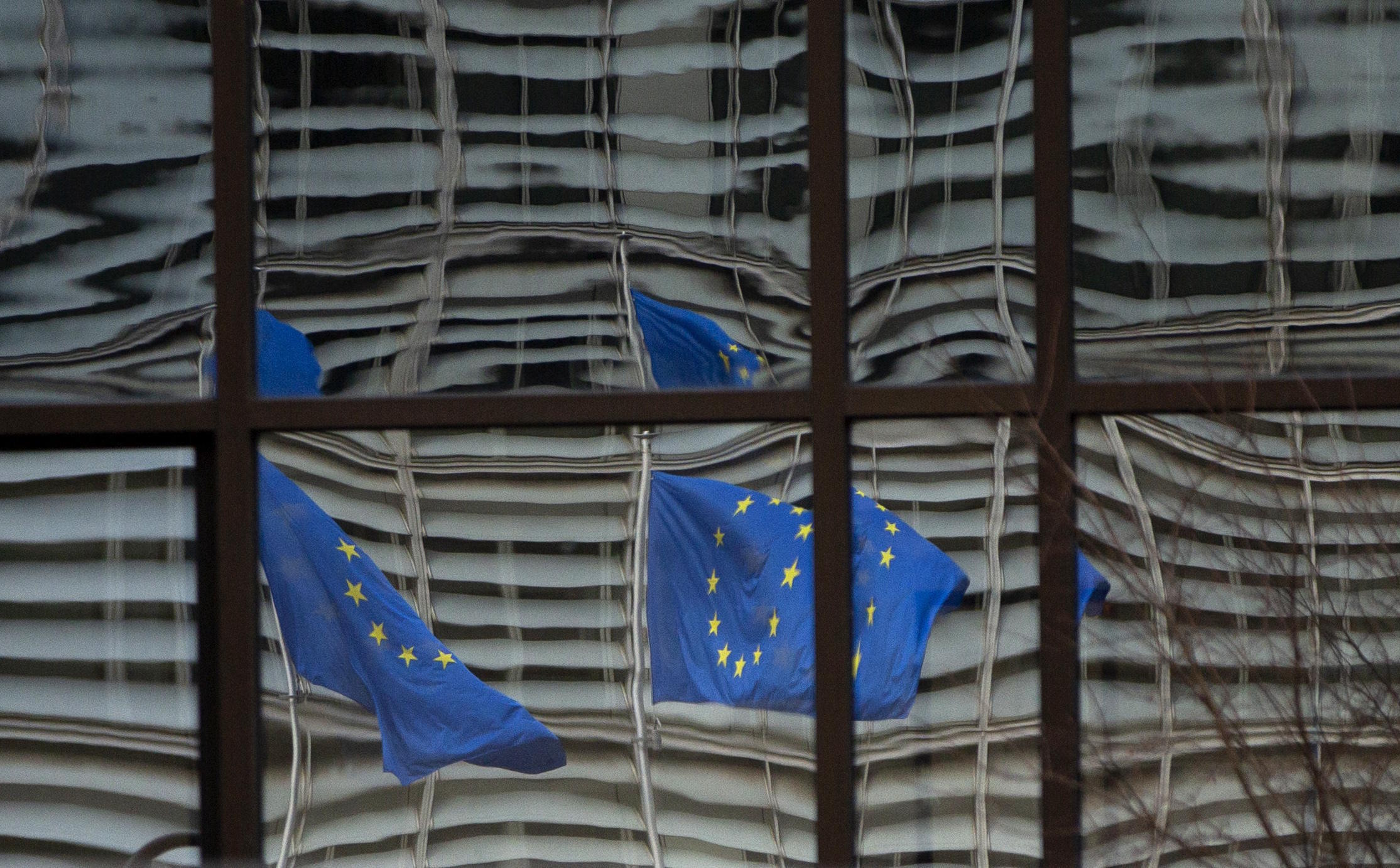
When looking at pop culture, which captures attention much faster than any convoluted narrative about historical milestones and geopolitical influence, one realizes something obvious: the United States has its comic book heroes, Superman, Spider-Man, and the great Captain America; India has Bollywood; Japan has anime and video games; and Korea has K-pop warriors. But what does Europe have?
Well, everything else. Which is not insignificant.
Europe has been convincing itself for years that it is a continent in decline, an old power disillusioned with itself and unable to keep up with the frenetic pace of China or the US. It seems, at times, condemned to become a comfortable museum of the past. For a long time, a large part of the European discourse has been immersed in a kind of permanent melancholy: the feeling of living after something.
The question is, while Europe laments, millions of foreigners still want to live here.
"Europe has made rights and civil liberties that are still aspirations in many parts of the world the norm. We are pioneers in areas such as social protection, digital regulation, the movement of people and goods, sustainability, or the defense of fundamental rights," points out Alberto Cuena, a journalist and expert analyst in economic and EU affairs. "Sometimes we focus so much on the problems that we forget to appreciate all that we already have. Many of the things we consider normal are, in fact, true privileges," adds Victoria Velasco, a student of International Relations and International Communication. "The existence of public systems for healthcare, education, pensions, or social assistance provides a difficult-to-quantify peace of mind."
For decades, the European lifestyle was measured against the American dream, the great global reference. The dominant model was one of speed, innovation, entrepreneurship, and time optimization. That almost cinematic imagery blurred Europe's own identity, which perceived itself as lagging behind. Rest and slow living were for losers. In short, we have normalized families mortgaging themselves to the hilt to pay for their children's university education. Or that the line between life and death of a loved one is defined by a checkbook on the other side of the Atlantic.
And why do we assume all that? Because, while other global superpowers promised to conquer the future with their cutting-edge technologies, Brussels was busy drafting regulations. Some more or less useful, like the cap attached to the bottle that drove Mariano Rajoy crazy, the single USB-C charger to avoid various tangles, or the roaming that allows us to watch TikToks and reply to WhatsApp messages outside our country. Also, the world's first legal framework on artificial intelligence.
"Although the EU is not at the forefront of the race for AI development, it has managed to step onto the podium by being the pioneer in regulating it. It is a very significant milestone," says Rocío Sánchez del Vas, a predoctoral researcher in misinformation and a professor at the Carlos III University of Madrid. "We will see if the Brussels effect manages to turn that legislation into an international standard." Coined by the Finnish-American jurist Anu Bradford, this Brussels effect is nothing but the European influence superpower on the rest of the planet. A convergence of dynamics that drive a gradual process of Europeanization - often imperceptible - in areas such as international trade, data protection, environmental conservation, antitrust legislation, and online hate speech.
In 2025, 45% of the laws passed in Spain by the General Courts originated in European institutions. "European influence is so deep that it often goes unnoticed. It is present when we go to study or work in another European country, but also in the supermarket, with consumer protection standards and food safety indices," lists María Andrés, director of the European Parliament Office in Spain. "We drive daily on roads and highways funded by European funds, take the high-speed train to visit our relatives, rely on labor rights to request sick leave or paid vacations... Europe is a silent but decisive presence in our daily lives."
In other words: Europe is the grumpy neighbor of the community, the one who always avoids meetings or with whom you barely exchange a word in the elevator, but you know will lend you salt or pepper if you run out while cooking.
"We have managed to turn rights and human dignity into public policy"
Despite the noise and disenchantment, Europe remains, "with its many imperfections," the best place in the world to be born, experts say. It continues to lead in optimal quality of life indices, with cities like Copenhagen, Oslo, Munich, or Barcelona among the favorites to live in according to various rankings. As Spain celebrates 40 years since signing the accession treaty to the European Union, it is estimated that our country has doubled real GDP, employment has increased from 10.8 million to 21 million, and life expectancy has reached 84 years.
"The European Union does not see well-being as a luxury, but as a right. We have built a society with a safety net that reduces the existential anguish experienced on other continents," describes Helena Ripollés, a sociologist specializing in Gender and Human Rights and former president of Equipo Europa, the largest association of young Europeanists in Spain. "In 1986, we did not just join an economic club, but the guarantor of our modernity and the safeguard of our social rights after decades of isolation." "We have managed to turn human dignity into public policy," adds Andrés. "In the face of the unequal dynamism that exists today in the US or the technological authoritarianism of China, Europe offers a different promise, which is how to thrive without giving up those rights. It is in our DNA, and it is not easy to achieve."
Carla Crespo, a disseminator and creator of content on social media about projects and opportunities in the European Union, agrees. On her Instagram account, @ladelerasmus, the twenty-something concentrates over 80,000 followers who eagerly consume her videos about traveling across the continent, scholarships and internships in international organizations, volunteering, and many other experiences. When asked what sparked her interest in sharing with her community what Europe offers, she is very clear: the Erasmus+ program, of which she was recently appointed an official ambassador. "In any European country, you feel at home. Everything works more or less the same, and you can move around with peace of mind," she says. "I don't want to imagine a Spain that was not in the EU, to be honest. I think it would be very backward in many ways, society would be much more closed-minded and intolerant."
However, this perception coexists with another reality: disenchantment. Intermittent populist currents in Hungary, Poland, or the Netherlands and Russian interference have led to the consolidation of certain Eurosceptic narratives. "The EU is one of the main targets of disinformation. The so-called euromyths seek to destabilize institutions and polarize citizens, especially during electoral periods," explains Sánchez del Vas. "Brexit is a paradigmatic example of how disinformation, which is tremendously emotional, was the breeding ground that led the UK to leave the Union."
"The EU does not see well-being as a luxury, but as a right"
Velasco has just returned from her Erasmus year in Scotland. She acknowledges the difficulties she encountered when carrying out certain procedures in the UK in the post-Brexit era: "All the visa issues, controls, and bureaucratic procedures were quite burdensome. When I moved around Europe, I was so used to having my passport almost as an accessory that I had forgotten that this is not normal, how extraordinary the European free movement area is," she says. "Having to pay in pounds and constantly calculate how much everything equated to based on the exchange rate reminded me of how convenient it is to share a common currency in the Eurozone. These are small details we take for granted, but when we all use the same units of measurement, the same standards, and similar systems, life becomes much simpler."
Crespo believes that there is "little real knowledge" about what is happening in Europe, a lot of misinformation, and also many contradictions that act against each other: "The values of the EU and human rights are defended tooth and nail, but then we continue to trade with certain economies that do not respect those values. That may make sense, if you analyze it, but it is easy to use it to tarnish the image of the EU." The apocalyptic perception of reality is not solely the responsibility of citizens, according to Sánchez del Vas: "Many journalistic dynamics also tend to emphasize these narratives through sensationalism. European citizens need to be informed about the reality of public policies, about what the EU does for them."
From the European Parliament, however, they are hopeful -not naive, they emphasize- and do not believe that the vision of the European Union is as deteriorated as portrayed by the media. According to the director of its Office in Spain, it is essentially a problem of expectations: who does what, how things are done, and how long one must wait for tangible results. "There is a curious paradox, and it is that we are experiencing a moment of enormous anxiety, but at the same time, we are detecting historical highs of support for European integration in the last three years," he points out. Being critical and distrustful of the system does not imply complete rejection. This is reflected in the latest Eurobarometer: 75% of citizens surveyed in the 27 Member States see benefits in belonging to the EU and consider it a pillar of stability and security. In Spain, the figure rises to 82%. "Our biggest challenge is to stop talking about the European Union in the third person singular and start speaking in the first person plural," summarizes Andrés.
"The EU is not just about economy or politics. I believe it brings something very important and often overlooked: a sense of belonging and community," says student Velasco. "Humans tend to organize into groups and seek common spaces of identification. Feeling part of a broader project that transcends national borders seems beautiful and, to a large extent, reassuring." The successive crises experienced on the continent -from economic to health, through migration- have been the best intensive school to reinforce that sense of belonging. This is known as the "bicycle theory": a political metaphor, coined in 1993 by former Commission President Jacques Delors, whereby the EU must continuously pedal and advance in its integration to avoid destabilization and falling.
Rodrigo de la Torre, historian and researcher in European integration at the Complutense University, states that the conflicts of the last third of the past century "have nourished the institutions, both in practice and in discourse," but have also motivated the proliferation of different ways of understanding European integration and conceiving belonging to the EU. "The more complex the world becomes and the more tumultuous the geopolitical landscape, the more evident it is that many of the challenges we face cannot be resolved solely at the national level," points out analyst Alberto Cuena. "European identity does not disappear: it evolves and acquires new relevance."
After World War II, Europe experienced a historical anomaly: peace ceased to be an event to become the natural state of things. Relatively prosperous, safe, and democratic societies were formed where collective well-being ceased to be considered a utopia. "The war in Ukraine abruptly shattered that comfortable illusion." Suddenly, abstract concepts -alliances, defense, sovereignty- regained their gravity. That barbarity that had devastated the continent in the 20th century seemed to return in small doses, bringing back a memory we thought was archived.
"Europe is the most ambitious and successful political experiment that exists, but for decades we have accused it of being 'an economic giant and a political dwarf.' In a way, Europe is a victim of its own success. We have normalized stability and freedom to the point of considering them guaranteed," says Cuena, recalling how some recent "earthquakes" have forced the Union to develop greater responsibility and strategic awareness: "Europe still faces significant challenges, but it has shown that it knows how to react when the principles that sustain it are at stake." "Although he applied it to the crisis of democracy in the interwar years, Salvador de Madariaga spoke of 'a dawn without noon' due to the set of expectations that the future aroused compared to the limited number of results and the questionable rhythms in which the actions of rulers ended," De la Torre points out. "I believe that one of the greatest historical challenges currently facing the EU is to confront itself."
Beyond the institutional framework and treaties, Europe also represents a particular way of organizing daily life. It has a peculiar relationship with time, cities, and public space. Philosopher and writer George Steiner said it could be defined by its outdoor cafes and the possibility of walking through it. The continent has not only produced cultural capital and sociopolitical values exportable to other regions but also a concrete idea of urban civilization. "It is the cumulative factor of the community heritage," summarizes the historian. European cities still maintain a human density that is strange in many other places. There are elderly people sitting for hours reading the newspaper in neighborhood cafes and children riding bicycles through central streets. It may seem insignificant, but what if all civilization were precisely measured by these details? "And if the future resembled Europe more than we think?"
"It is an extraordinarily attractive and aspirational model. Candidate countries for accession, such as Georgia or Moldova, take to the streets with the European flag during citizen demonstrations demanding more rights. When Russia invaded Ukraine, the first thing Zelenski did was turn around and demand the opening of negotiations for its integration into the European Union," highlights Andrés. Cuena agrees that the EU may not be the loudest model on the international stage, but it remains "one of the most admired and probably one of the most difficult to replicate." "While other powers project power through force, Europe continues to try to defend an idea: cooperation can be more powerful than confrontation. In the times we live in, that mantra remains profoundly revolutionary," says the former press and public relations officer at the European Parliament.
Away from epic narratives, Europe does not promise to conquer Mars or lead the next technological revolution. Its historical aspiration has been much more modest and, at the same time, more ambitious: "to build reasonably habitable societies." Perhaps it is not the continent of the future because it is ahead, but because for decades it has been trying to protect itself from what the rest of the world is becoming. That which is already beginning to be missed.
"I sincerely hope that international openness, quality of life, and security in Europe weigh more against American capitalism, productivity, and individualism," says Crespo. "Younger generations do not conceive the possibility of going to war with their European neighbors, and that is thanks to the great community project," concludes Helena Ripollés. The sociologist and former president of Equipo Europa believes, however, that we need to move towards a more mature 'Eurorealism,' with a perspective that does not idealize Europe as an unattainable utopia but also does not denigrate it: "Changing the critical perception involves ceasing to be an entity that reacts to crises to become a force that leads them, learning from our mistakes and responding to people's needs."
"Housing problems, inequality, wealth redistribution, and price control, among others, are the real internal challenges," assures De la Torre, issuing a future warning that is also tremendously present: "Outside the EU, it is very cold, that is undeniable, but its borders are very porous."