Wuhan, December 2019. Two reporters from a Chinese state media outlet start pulling a thread coming from several hospitals: a strange pneumonia, echoing the SARS - a viral respiratory disease that spread across Asia years ago - is spreading in the city. They follow the trail to a seafood and wildlife market. There, they identify what they consider the first fatal victim, a vendor named Chen Faxing. Their investigation will not see the light. It clashes with the official version, which denies any out-of-control outbreak in Wuhan.
Beijing, April 2023. A fire at Changfeng Hospital leaves 29 dead. Images of patients fleeing through windows circulate on social media. They go viral. In Chinese media, silence. The videos start disappearing. Censors clean the digital trace of the event. For eight hours, there is no coverage. When reporting is finally authorized, some family members then learn of the death of their loved ones. Indignation ignites on the internet, but it lasts shortly: it is also erased.
Beijing, March 2026. On X, a platform blocked in China, videos are spread from a market in Fangshan, southwest of the capital, plunged into chaos after a man rammed several stalls with a tractor. Local media say nothing. Hours later, foreign correspondents arrive at the scene: it is cordoned off, surrounded by police who do not provide explanations. Volunteers with Communist Party armbands forcibly prevent journalists from speaking with the locals. What really happened in Fangshan was never known.
Recently, Chinese authorities revoked the visa of a correspondent from a Western media outlet while covering a story in another Asian country. She found out when trying to return. She couldn't even collect her belongings. She also did not receive any formal explanation. Weeks earlier, a foreign journalist was detained for allegedly photographing a military base in the south of the country. He was on vacation with his family; in one image, a military installation appeared in the background. After hours of detention, he was released after determining he was not a spy. Before that, all his photos were deleted.
The Foreign Correspondents' Club of China (FCCC) denounced "a wave of selective attacks on press freedom", aggravated since February. It speaks of "temporary detentions, visa revocations," and "a growing pattern of intimidation" towards both journalists and their sources, as well as restrictions on access to official events.
This is not a new warning. The FCCC itself has been documenting obstacles and pressures for years, urging correspondents to make these episodes visible. "At least you have a voice," summarizes a Chinese journalist from a major state newspaper. "In the worst case, they don't renew your visa and you leave. We can't even stand up. Self-censorship is the condition to continue working if we write about political topics." Reporters Without Borders (RSF) reminds that China ranks 178 out of 180 countries in its annual press freedom index.
A dense and opaque 'architecture'
In China, the Communist Party has never considered the media as a counterpower, but as a natural extension of its government apparatus. Control is articulated through an architecture as dense as it is opaque. The backbone of this system is the omnipresent Propaganda Department, which acts as a shadow editor. Its instructions, known in newsrooms as "guidance orders," arrive daily in the form of indirect messages or calls to editors. In them, according to those who have suffered them, it is specified from which topics should make headlines to the exact words that must be used to follow the official narrative.
In addition to this mechanism, the Cyberspace Administration has turned the internet into a closely monitored terrain. Platforms like Weibo and WeChat (equivalents in the West to X and WhatsApp) employ armies of moderators and algorithms that delete posts within seconds if they contain sensitive terms: from unflattering references to historical leaders to veiled political criticisms or tragic events that are not to be reported. In parallel, nationalist accounts amplify the official version, creating the sense of social consensus.
Control also operates through the corporate structure of the media themselves. Major newspapers, television stations, and digital portals are state-owned or under direct Party supervision. This facilitates self-censorship as the first line of defense: journalists know that deviating from the script can cost them their job, or more.
For foreign press, especially Western, much of which has their websites blocked in the Chinese network, accredited correspondents often denounce that traveling to sensitive regions like Xinjiang or Tibet implies constant surveillance and police checks; or that interviewing critical sources can put the interviewees themselves at risk.
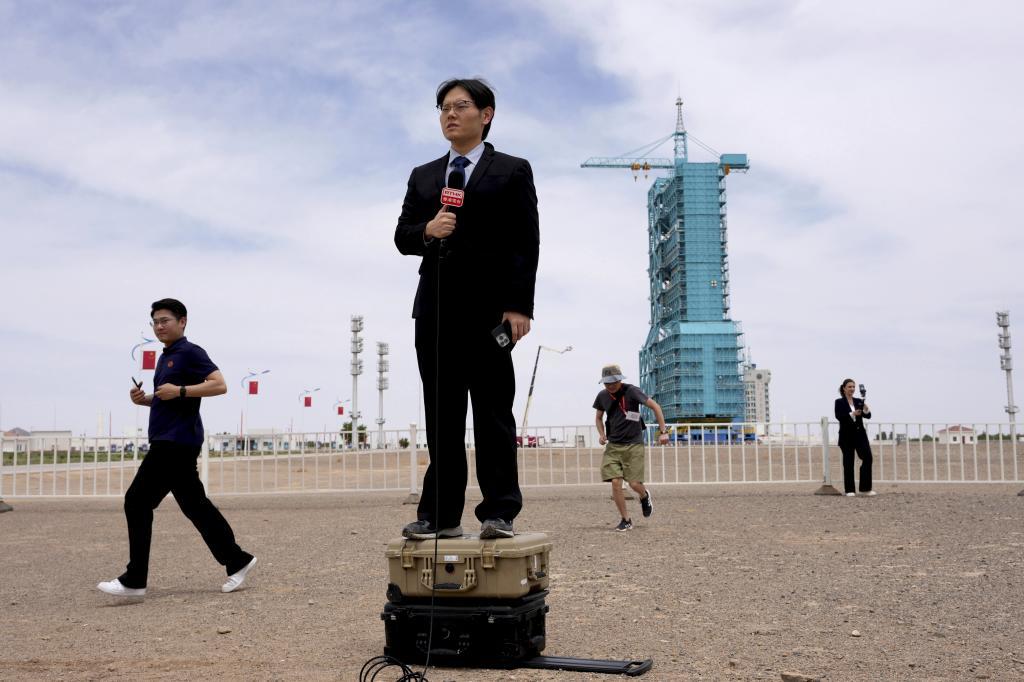
While organizations like the FCCC denounce that internal control is tightening, China is deploying its major state media with editions in multiple languages and partnerships with local media in many countries, including Spain, to insert supplements, reports, and columns that always present a positive image of the country, highlighting especially its great technological advances that amaze the world.
All this is added to the increasingly frequent invitations to foreign journalists on organized trips where carefully selected versions of the most attractive Chinese reality are shown. A calculated contrast: strict control at home, a very seductive narrative abroad.