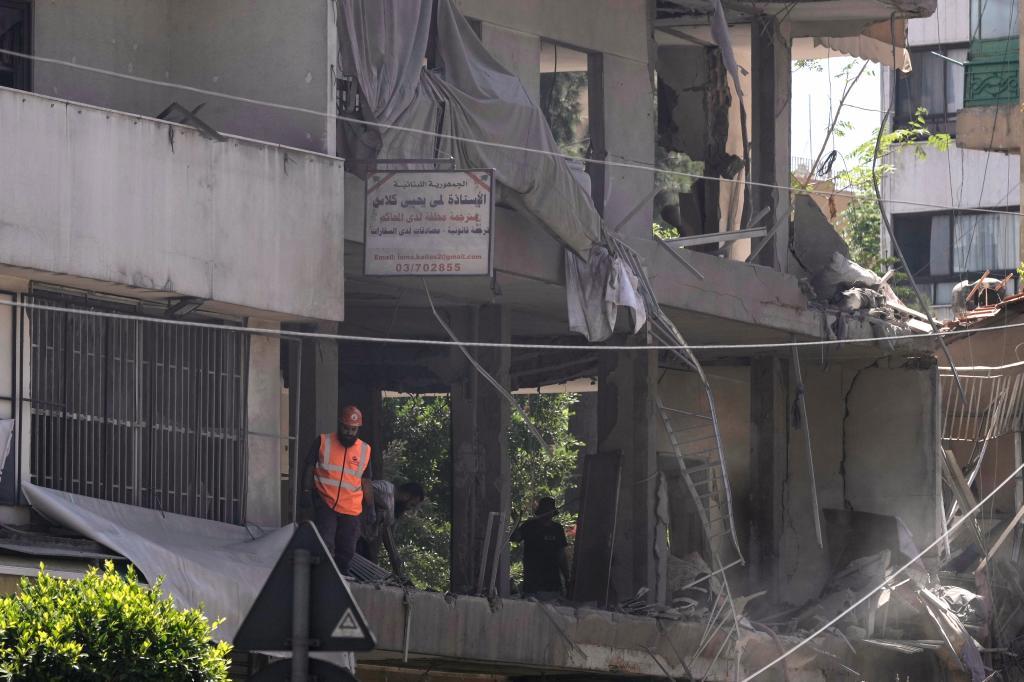
This military action, carried out by two Israeli fighter jets launching four missiles, has resulted in three deaths and several injuries, according to Lebanese sources.
The Government of Benjamin Netanyahu has defended the legality of the operation as a necessary response to recent aggressions from Lebanese soil. According to the Israeli army, it was "a precise attack against a command center used by Hezbollah terrorists to plan and promote terrorist attacks against Israeli citizens and soldiers." Netanyahu, who ordered the attack along with Defense Minister Israel Katz, argues that Hezbollah has committed a "flagrant violation of the ceasefire" after launching projectiles against communities in northern Israel this weekend.
Despite internal pressure to protect its borders, the decision to attack the Lebanese capital puts the leader in a delicate position with his main strategic ally, Donald Trump. The response from the White House has been unusually critical of its ally. Trump, who aims to close a deal that would allow the reopening of the Strait of Hormuz, has expressed his discontent through social media.
The U.S. president stated that "this morning's attack on Beirut should not have happened, especially on such a special day when we are so close to reaching a peace agreement." Trump downplayed the previous provocation by Hezbollah that prompted the Israeli retaliation, describing it as a minor incident: "Israel has the right to defend itself from threats, but the attack it was responding to was very slight and insignificant; no one was injured or killed."
For the president, the top priority is regional stability: "We are very close to an agreement that will bring peace to the region, including Lebanon, and all parties should remain calm (...). This could be the beginning of a long and beautiful peace. Let's not spoil it!" The bombing in Hezbollah's stronghold in Dahye has given arguments to the hardline faction of the Iranian regime to question U.S. mediation. Mohamad Baqer Qalibaf, Iran's chief negotiator, has challenged Washington by linking the future of the peace agreement to the ability to control Israel's actions in Lebanon.
"If you lack the will or the ability to fulfill your commitments, it is impossible to talk about moving forward," Qalibaf concluded. In the same vein, the Iranian spokesperson emphasized that "the Zionists' attack on Dahiyeh once again showed that the United States either lacks the will to fulfill its commitments or lacks the capacity to do so." This distrust jeopardizes an agreement that, if materialized, would redefine the balance of power in the region, but which Israel views with suspicion as Iran achieves immediate gains without fully renouncing its nuclear program.