Starting from the first quarter of 2027, minors under sixteen in the United Kingdom will not have access to TikTok, Instagram, YouTube, X (formerly Twitter), or Snapchat.
Those aged 16 and 17 will be able to register on these platforms. However, with limitations. The companies owning these networks must create a system that restricts or eliminates the ability of these users to receive messages from people not in their contact network - especially if the senders are adults - as well as sending messages that disappear after being viewed (Snapchat's defining feature), or their geolocation capability, meaning identifying the user's location.
They will be blocked from accessing Artificial Intelligence (AI) platforms, affecting platforms like Character.ai, SpicyChat.ai, and Janitor.ai, where users can engage in role-playing games with characters like Jeffrey Epstein or alleged 'psychiatrists' who are actually AI chatbots. Other measures could include a sort of curfew for 'infinite scrolling', which refers to websites continuously showing content as the user scrolls down the screen.
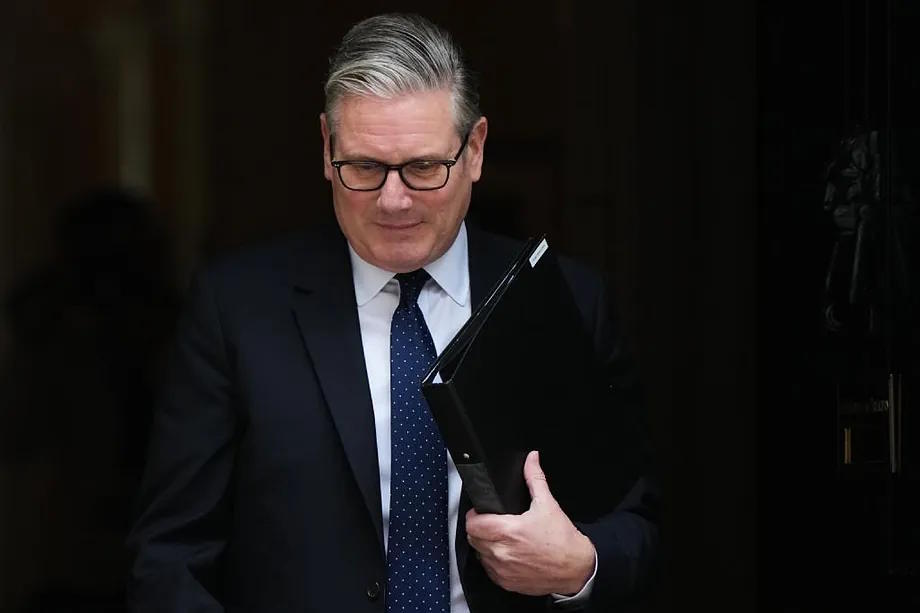
These are some of the measures announced yesterday, Monday, by UK Prime Minister Keir Starmer in a press conference. The plan is technically very complex as it will require drastic changes in the software of several of the world's largest tech companies. This adds to the political aspect. After a contentious period between 2016 and 2020, Silicon Valley giants have reached an understanding with Donald Trump under the current administration, in exchange for their support, he defends their interests outside the US and creates a regulatory system in the country that allows them to do practically as they please.
The Washington Government has strongly criticized the British regulatory project, which significantly tightens the regulations applied by Australia, previously the country with the most restrictions on minors' social media use. The over six months until the new regulations are set promise a new front in London-Washington relations. The US is also concerned about British regulations as several EU countries - like France or Spain - are considering similar measures. All social media companies are American, except for TikTok, which is Chinese. Overall, it is estimated that the sector generates around 20% of its revenue in Europe.
The rules still need to be codified. And that won't be easy. It is not clear if platforms like the American Discord or the Russian-Emirati Telegram fall under the regulation, as they are considered messaging networks - similar to Instagram - but have 'spaces' where users interact with strangers.
The same goes for the world's most popular chatbot, ChatGPT, from OpenAI, which allows users to have various conversations. OpenAI is preparing to go public, with a valuation close to a trillion dollars ($860 billion euros). Its competitors, Claude and Gemini - the latter owned by Alphabet, YouTube's parent company - also fall into that category, as the London Government has stated it will ban "chatbots offering intimate or sexual companionship."
The role of online gaming companies is also unclear, such as the American Epic Games, Microsoft, and Roblox (the latter with strong Chinese capital), whose products allow 'matching' with unidentified users or have open 'chatrooms' for all types of users.