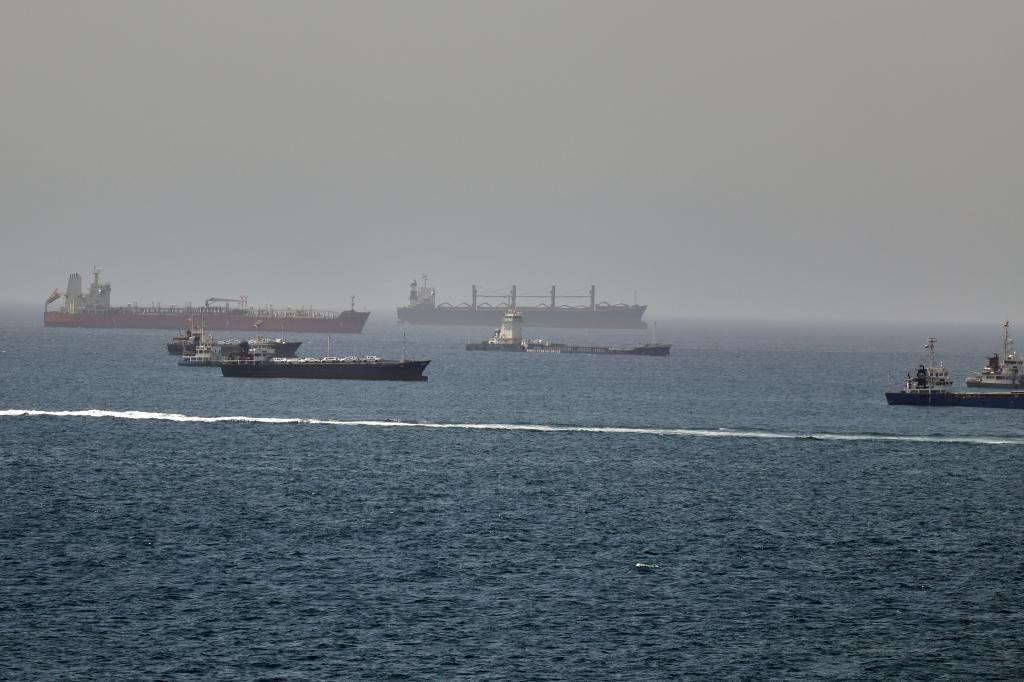
The world, based on oil dependency, has changed three and a half months after Donald Trump launched a war against Iran and its allies in the Persian Gulf, where the great Arab fortunes built on 'petrodollars' reside. The peace agreement announced on Sunday night between the US and Iran promises to reopen the Strait of Hormuz next Friday, when the agreement will be signed in Geneva (Switzerland) between both countries with Pakistan as a mediator. However, some key questions remain unresolved - such as the one related to the nuclear program of the ayatollahs' regime - which could jeopardize everything agreed upon so far.
The US President has publicly stated 38 times that the agreement was done, making investor skepticism intrinsic to their interpretation of the Republican leader since his reelection in January 2025, after an unprecedented trade and tariff crisis that has reshaped the global landscape as it was understood in the pre-Trump era. Today, a year and a half later, the US intervention in Venezuela - with the arrest of dictator Nicolás Maduro - and the armed conflict in Iran - among the top eight crude oil exporting countries - will result in a new world order in the production and use of oil and gas. Analysts have tirelessly explained the significance of the Strait of Hormuz since the US launched an initial attack on February 28. It was the natural passage for 20% of the world's oil and gas supply until Iran blocked and mined it, allowing only the transit of ships from allied countries in a limited manner, benefiting ports of neighboring countries like Saudi Arabia and accelerating the use of alternative road and rail routes through the Emirates.
At the peak of the crisis, the Brent barrel, a European reference, exceeded $120. Yesterday, its price plummeted by 5% upon the agreement announcement, and summer futures - for August and September - dropped to $82 per barrel, the lowest in the last three months. Nevertheless, the cost of the war is undeniable. Consumers have incurred an additional cost when filling their fuel tanks, further disrupting their domestic economy after years of uncontrolled inflation, exacerbated by Trump and his war in the Middle East.
From the outset, it was said that the Republican Administration sought a lightning operation to avoid further erosion of Trump's popularity, especially in an election year with midterm elections in November.
The immediate result of the agreement is that the Brent barrel is now trading at a price 13% higher than the $72 it was trading at the day before the conflict erupted. The impact is particularly noticeable on gas prices. The Dutch TTF, used in Europe, still has its price 38% higher than at the end of February, nearly tripling its cost before Russia initiated a war against Ukraine also in February 2022.
Market relaxation has been felt over the last month, with close to 25% drops in the prices of the two main reference barrels in the Western world. "There will be setbacks along the way, but the resolution of the crisis seems clear. The energy crisis has been much less threatening than feared, as markets have once again demonstrated their resilience," Julius Baer states optimistically in a note about the final outcome.
However, the medium-term result is what needs to be clarified now: how will it affect fuel prices or how much will it impact inflation and economies. "Even if the Strait of Hormuz reopens, the normalization of oil flows is unlikely to be immediate. Production increases are limited by operational bottlenecks and logistical issues, while tanker traffic will remain cautious due to ongoing security and insurance uncertainties," Vontobel points out.
"The question is how quickly traffic through the Strait of Hormuz will resume until normalization," UBS bank similarly notes.
Analysts at Lombard Odier estimate that "half of the traffic" will resume in the coming weeks, "enough to prevent major disruptions to the supply cuts", although they anticipate that it will not be until well into 2027 that the world's oil reserves will be replenished. This leads them to estimate that crude oil prices will remain high for the next six months above $90 per barrel.
Moreover, it is not just about restoring maritime traffic through the Strait of Hormuz, but also assessing the damages caused by bombings on Iran's and other Gulf countries' oil and gas facilities, which own some of the world's largest reserves and processing plants, potentially reducing their supply capacity.