In mid-May, the days are almost indistinguishable from nights in Tromsø, the northern city of Norway known as the gateway to the Arctic. During the early morning, there are barely three hours when the sky darkens slightly, without fully darkening. It is no longer possible to enjoy the Northern Lights that attract hundreds of thousands of tourists to Tromsø every winter, considered one of the best places in the world to see them. Instead, the equally famous midnight sun takes over, a phenomenon that keeps the light all day long.
Spring has arrived in this remote region of Europe, and both the animals and landscapes are emerging from the winter hibernation around the city. Caution is needed because the frozen lakes are partially thawed; the snow on the mountains is also melting, noticeable in the waterfalls that flow with more water each week.
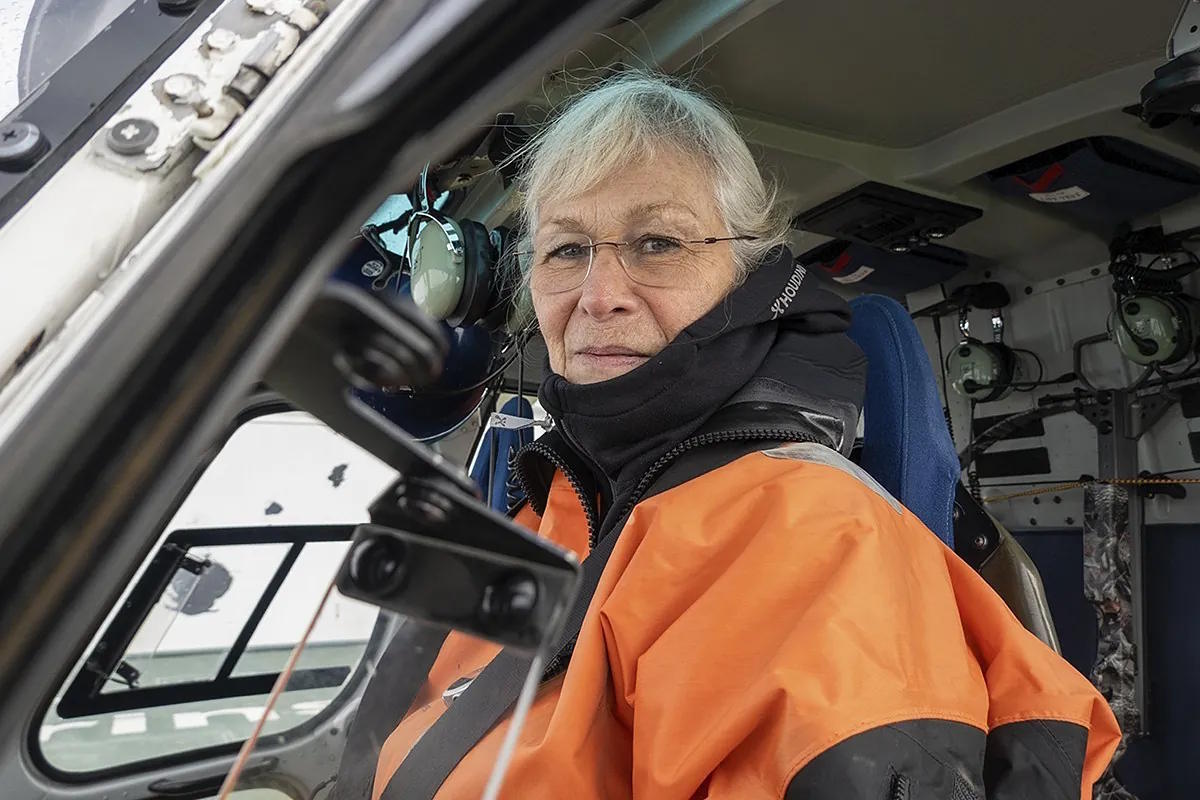
But things are not as they used to be. Spring has arrived earlier in 2026. This is a concern for climate scientists, oceanographers, and biologists. "This year, we are four or five weeks ahead of what would be considered a normal spring: rivers are opening earlier, snowmobiles can no longer be driven because there is not enough snow, the risk of damaging the tundra increases... Everything has advanced a lot. It gets hotter every year and arrives earlier," summarizes Kit Kovacs, a scientist at the Norwegian Polar Institute, during an interview in Tromsø. The main headquarters of this organization, founded in 1928 to provide scientific advice to the Norwegian government on its decisions and public policies, is currently located here.
This biologist specialized in marine mammals leads the Svalbard program, coordinating all the science conducted on the Norwegian archipelago where polar bears, foxes, and other iconic species for which ice is essential live.
She joined the Norwegian Polar Institute in 1999, but before that, she lived for three years in Svalbard, so she has witnessed firsthand the changes experienced in the last 30 years. "When my husband and I lived there, between 1996 and 1999, there was still sea ice every year that could be traveled on during May and even June. We used to drive on the sea ice to Barentsburg, in Isfjorden [the largest fjord on the island of Spitsbergen]. Now that fjord doesn't even freeze in winter, and the glaciers are becoming more dangerous because the cracks open up and there is not enough snow. It has become a completely different place. I feel a bit like a dinosaur talking to my students from that time, I think they find it hard to understand how quickly it has changed," she points out.
Last year, spring also arrived earlier: "It has been a gradual change, although there are variations. Here in Tromsø, it is very difficult to say what the weather will be like in 10 minutes," she jokes. But she tells this anecdote: "Twenty years ago, I planted a plum tree in my garden, and everyone laughed at me, but I said to myself, if we continue with this warming, maybe in 20 years we will have plums. Well, last year it bore fruit for the first time, we had 60 large plums. They were delicious, but it's depressing that we can grow them at this latitude."
Her colleague Arild Sundfjord, senior researcher and director of the Arctic Ocean program, agrees: "We have lost more than a month of winter, and not just this year. Snow arrives later in autumn, and spring starts earlier, so winter is shrinking at both ends. There are fewer days with snow on the ground."
The Arctic has become a hotspot for climate change, as it is the region where temperatures are rising the most on the planet: "On average, the entire circumpolar Arctic is warming twice as fast as the global average. But our specific Arctic region is warming five times faster, according to the most recent estimates: the Barents Sea and Svalbard are hotspots within the Arctic context. It's terrifying," warns Kovacs.
The Norwegian Polar Institute's database is one of the most comprehensive and oldest for documenting what is happening in this region. Arild Sundfjord shows us a map in his office to point out the most affected areas: "The big change started around 2012," he notes.
In addition to providing advice to the Norwegian government, this center provides data and knowledge to international organizations such as the Arctic Council or the IPCC (Intergovernmental Panel on Climate Change). Both for the focus of their research and for the quality and variety of their instruments, it has become one of the most prominent institutions in polar science worldwide. We could call it the control center monitoring the Arctic.
"Sea ice is obviously one of the most visible changes we have observed in recent decades. In about 30 years, the thickness of sea ice has decreased by 30% to 40% in the central Arctic Ocean, and the extent of the ice has decreased by a similar amount. So, the volume of sea ice in the Arctic has decreased by approximately 50%," warns Sundfjord. "It is a very dramatic and profound change, and it has effects on all ecosystems. The Barents Sea, for example, used to be covered in ice almost all year, or at least 10 months. Now it is less than half the year," he warns.
This institute, led by scientist Camilla Brekke, has facilities in various locations, but as Kit Kovacs explains, the Tromsø headquarters is the main one. It is a modern building called the Fram Center that they share with other scientific organizations in the country, located in front of the fjord that frames the city, with the mountains still covered in snow.
Here, they analyze the samples and data collected by scientific instruments and during field expeditions. The Fram Center also houses a geological sample archive from the Arctic and Antarctica and a library with over 15,000 volumes and various documentation on the polar regions.
"We also have two stations in the Svalbard archipelago: in Longyearbyen, we have a logistics base that accommodates researchers and much of the equipment we use there to avoid having to transport it continuously from the mainland, as we try to reduce our carbon footprint as much as possible. And then we have another station, Sverdrup, at the Ny-Ålesund Research Base, an international conglomerate. In addition, our institute has facilities in Troll, in Antarctica," Kovacs summarizes.
The crown jewel is the Kronprins Haakon, the modern research vessel that allows them to navigate the icy oceans at any time of the year. It is one of Norway's best icebreakers and is docked in Tromsø during our visit. It belongs to this institute, but it is shared with other research centers, so there is a national committee that organizes who uses it, when, and where: "The previous ship could not break thick ice or was not prepared for winter expeditions, but with the Kronprins Haakon, we can enter the central Arctic Ocean. We try to work holistically: ocean, sea ice, heat content... but also light, interaction between geochemical compounds and living organisms, carbon cycle... We study the entire ecosystem," details Sundfjord.