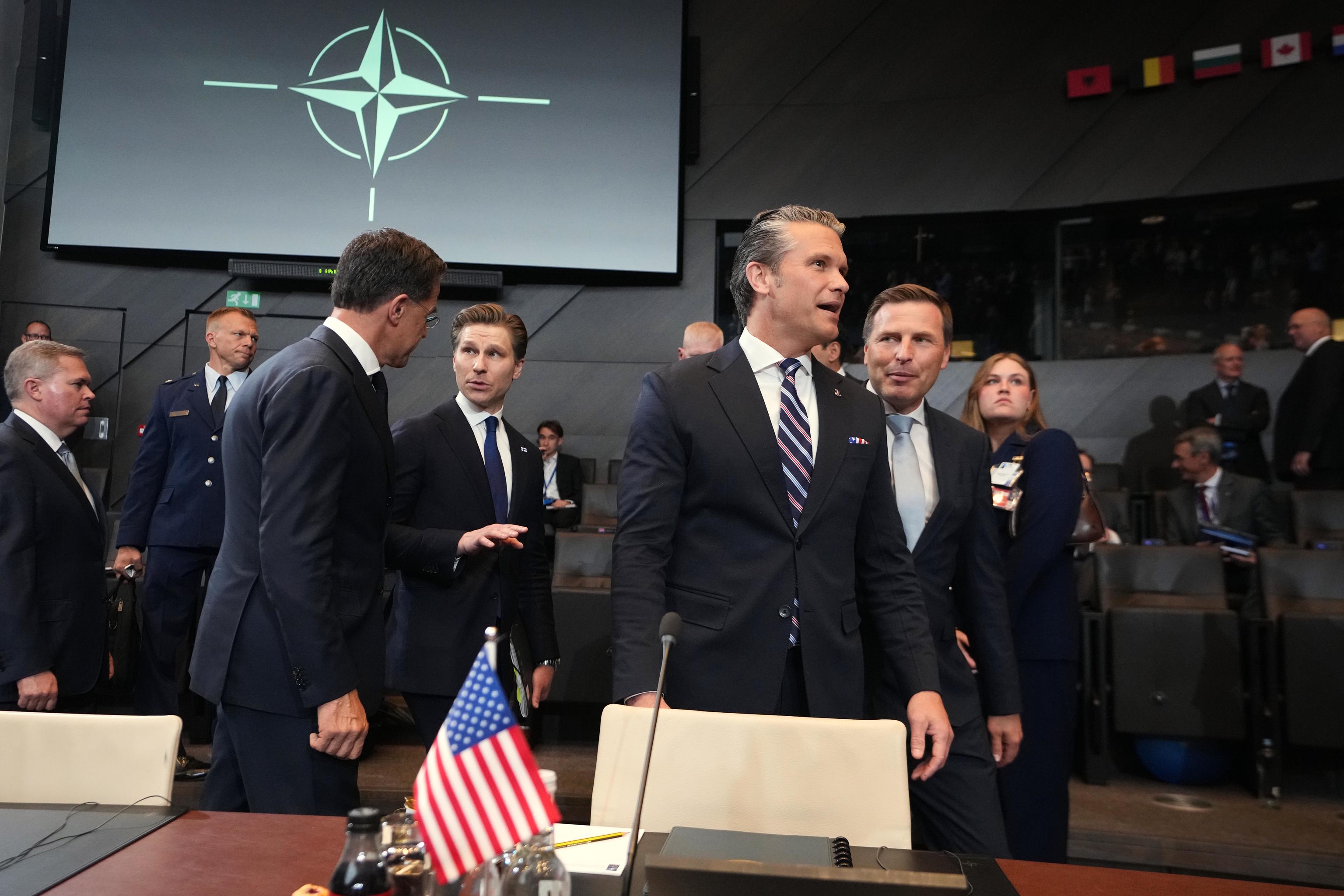
The United States has announced a review of its military presence in Europe, as well as the bases it has on the continent. It will be a six-month process, occurring amidst a reduction in the United States' presence and involvement in the continent. "We are redoubling our efforts to turn NATO into what it should have always been: a balanced alliance where Europe takes the lead in its own defense, 'NATO 3.0'. And to make this goal a reality, I announce today a six-month review by the Department of War that will examine the force posture and bases of the US in Europe," stated US Secretary of War, Pete Hegseth, during the meeting of Defense Ministers of the Alliance taking place in Brussels this Friday.
"Let's call it the NATO 3.0 review. This review will be conducted in collaboration with the US Armed Forces and European Command. It will involve consultations with the US Congress and our allies, but make no mistake: it will be a thorough review," he emphasized.
The US official also pointed out that "some countries will fail and others will pass with flying colors." He did not specify what that will entail, but considering past precedents and threats, it seems likely to involve troop withdrawals or even base closures from that country. "Ultimately, the review aims to both enhance the posture and bases of US forces and strengthen NATO 3.0; it aims to be constructive, as we have always been," he simply noted.
What criteria will be applied? That is also unknown. However, once again, if we look at what has happened in recent months, it seems probable that one criterion will be those who contribute the most and the least in terms of defense to NATO, that is, who invest more in defense; and it will also be very relevant which allies have assisted the US in its campaign against Iran. Here, of course, Spain comes into play twice but also Germany, a nation with which Donald Trump has already shown great displeasure for its lack of support.
And if any more clues were needed, Hegseth himself made it crystal clear in the EU capital. "Too many of our allies said no, or tried to drown us in arcane legal debates, or publicly criticized us for doing what they themselves are not willing or able to do. It was shameful."
Involvement in a potential war
The unease and nervousness generated by the United States have also not been precisely reduced by NATO Secretary General Mark Rutte. For the second consecutive day, the Alliance leader has not been able to be clear about the level of involvement the US would have in a potential war in Europe.
"If there were a war with Russia, let me start by saying that this is not about where the armed forces are currently deployed. It's about who would do what if our defense plans were activated. So in case Article 5 [of common defense] is activated, what the Supreme Allied Commander [US General Alexus G. Grynkewich] has said is that, in terms of capabilities, the United States will no longer assume certain commitments," he stated yesterday in the press conference prior to the ministers' meeting.
"If a war breaks out, it is clear that all allies, including the United States, will do everything in their power. I'm not saying they can fulfill everything they promised within the NATO force model, but they will give their utmost," he added today.