There are two phrases that better summarize the criticisms from hardliners in Washington or Tel Aviv to the agreement signed by the United States and Iran. The first one says with regret and also some admiration that "Iran has never won a war, but never loses a negotiation." The second, more specific and aggressive, states: "What a rotten deal we made with Iran! We get nothing (except mockery for our stupidity). They get everything, including delays and a lot of cash!" The main problem for the U.S. government is that the first quote is from 2020 and the second from 2013, both said by the same person: Donald Trump. Now, his words, insults, and tweets have turned against him like a sharp boomerang.
The Memorandum of Understanding signed in Tehran and Versailles (there couldn't be a stronger symbolism) is a disaster for the United States from all perspectives. At best, it will temporarily end attacks in the region, with doubts if Trump will truly be able to restrain Benjamin Netanyahu in Lebanon, and will ease energy prices. But it is a conditioned, open, incomplete, insufficient pact, no broader than the previous one unilaterally revoked by those who now boast about this one.
The U.S. not only fails to achieve anything beyond what was before Trump entered politics but has lost political capital, a fortune, and credibility along the way. Furthermore, it leaves the most important issue, the nuclear one, up in the air. And to make matters worse, it implies lifting sanctions and mobilizing hundreds of billions of dollars for the reconstruction of the attacked country, undermining all of Trump and his hawks' narrative and rhetoric over the last decade. "We don't see them as major concessions," the Executive said today regarding the oil and sanctions lifted in exchange for promises, not specific actions.
The thesis of the U.S. president has always been that the 2015 agreement by Obama, the JCPOA, was terrible because it meant "showering" the ayatollahs with money to eventually build nuclear weapons to threaten Israel. "We gave them $150 billion and got nothing," Trump said countless times between 2016 and 2024. "The dumbest deal I've ever seen negotiated. The U.S. handed billions of dollars to the Iranian regime, some of it in cash." Now, a text that closely resembles that, but with double the potential money and fewer concessions at the moment, is being criticized, unleashing anger and concern from his own party and voters. "It has a whiff of the kind of appeasement that our administration rejected in the nuclear agreement between Obama and Iran," former Vice President Mike Pence, who was in office when the U.S. withdrew from the agreement, settled scores.
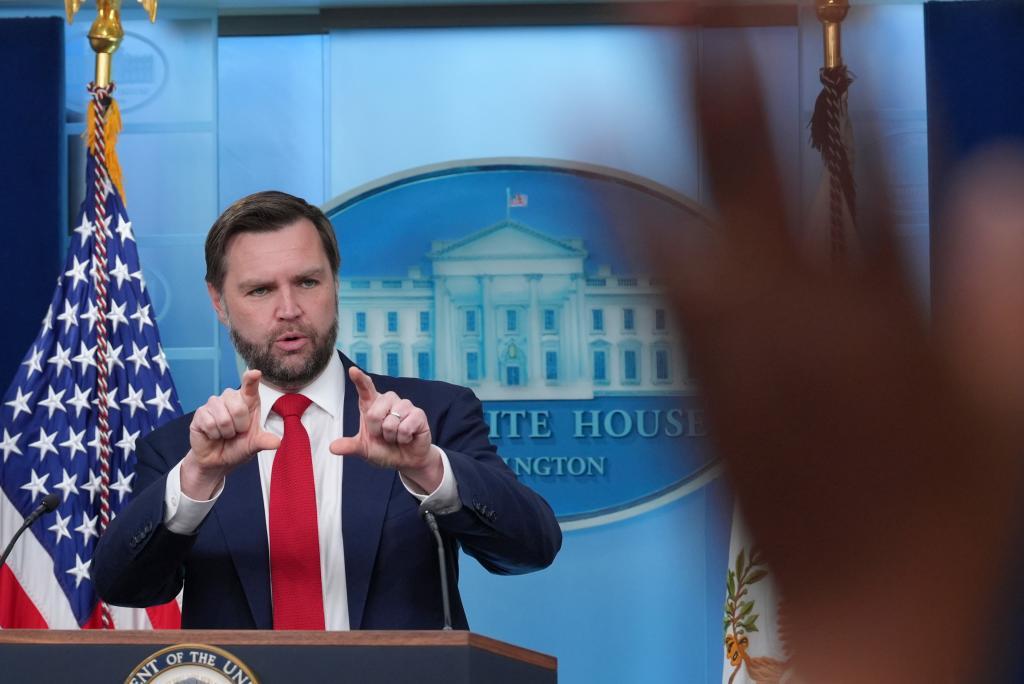
The ranks have split within the Republican side, prompting the White House to urgently bring Vice President JD Vance for an uncomfortable, challenging appearance, leaving him exposed, as he was and still is one of the most reluctant to get involved in more conflicts in the Middle East. It fell on him, not on the Foreign Minister, Marco Rubio, to face the situation. "I like the idea," Trump said when asked by Peter Doocy, one of his favorite Fox News journalists, if his vice president would take responsibility if the agreement failed. "If it works, I'll take credit. If it doesn't, I'll blame JD. Watch out, JD," he supposedly joked.
"If the Iranians don't change their behavior, their military and nuclear program will continue to be destroyed. If they change their behavior, then they will have a transformative relationship with the Middle East, and the Middle East will have a transformative relationship with the people of Iran. That would be a victory for the American people and for the President of the United States, regardless of the option the Iranians ultimately choose," Vance defended from the White House press room before heading to Switzerland, alongside Steve Witkoff and Jarod Kushner to meet with the Iranians and Pakistani and Qatari mediators this weekend, although he admitted that the exact date is still uncertain.
His media intervention was a desperate attempt to rationalize the situation and convince citizens that this Memorandum has nothing to do with what was signed by Obama: "Perhaps the Iranians won't change their behavior, but, isn't it worth trying?" A reasoning that would be acceptable if his government, and Trump's previous one, hadn't spent years viciously attacking and ridiculing Obama's attempts in a very similar line, but without bombings involved.
"Reagan must be turning in his grave. Iran's nuclear ambitions were not halted, and they have learned that threatening the Strait of Hormuz works, and they will undoubtedly take advantage of it in the future," Republican Senator Bill Cassidy from Louisiana, who will not be able to run for re-election after being defeated in the primaries by a Trump-endorsed candidate, also pointed out. "Now, Iran will be able to build entirely new infrastructure thanks to this agreement. Before the war, the strait was open, Iran suffered a severe blow from sanctions, and 13 soldiers were still alive. Now, 13 Americans have died, their families have spent billions on gasoline, sanctions have been lifted, and bombings have ceased. This is the worst foreign policy mistake in a decade," he concluded.
"The cardinal sin of U.S. foreign policy for decades has been not finishing what we started," conservative Newsweek columnist Josh Hammer agreed. "If the president signed a bad deal, many of us who applauded and supported him and thought his actions in Iran were heroic will be extremely disappointed. Winning the first half of the game is not enough; you have to finish it," conservative influencer Ben Shapiro reproached The Wall Street Journal.
The Memorandum has forced everyone to take a stand. While many are nervous about the ayatollahs remaining in power, they are even more concerned to hear the president and vice president say that it is normal and fair for Tehran to have ballistic weapons for self-defense, just like their neighbors and enemies do. "Israel does not give up the right to self-defense if Hezbollah fires rockets or drones at Israel. The Iranians do not give up the right to self-defense in their country", Vance insisted today.
Two influential voices who have privately advised Trump throughout the war, retired General Jack Keane, a regular contributor to Fox News, and Marc Thiessen, former speechwriter for ex-President George W. Bush and one of the most pro-Trump columnists in the national press, have expressed serious reservations about the agreement. "It's an absolute disaster," they said with leaks about the content that were later confirmed. "It's a surrender," lamented conservative radio host Erick Erickson, joining the voices of former key figures of the MAGA movement, like Tucker Carlson, now turned into Trump's enemies.
A few days ago, when he still hoped to sabotage what was about to be signed, Senator Lindsey Graham, perhaps the most representative figure of the "hawks"—those who support attacks on Iran, the total destruction of its military and nuclear facilities, and advocates for regime change—put pressure on the White House. "The idea of a $300 billion reconstruction fund, given who is in charge of Iran, seems tone-deaf. It would be like a Marshall Plan for Germany with the Nazis still in power. That wouldn't have been a good idea then, and any reconstruction fund that benefits this terrorist regime wouldn't be a good idea now," he said at the time. Now, with the agreement signed, he has backtracked, saying that experts have convinced him that reopening the Strait of Hormuz is essential. But his reputation, once again, has been damaged.
"I would tell all the critics to have a little faith in the President of the United States. The idea that he would make a deal that is bad for the American people is absurd. He is the person who has had the courage to fundamentally transform our relationship with Iran and with many other countries over the last year and a half. The second thing I would say is that many of the things I have read or heard that people believe about this agreement are simply false," Vance concluded.