Negotiations between the United States and Iran to develop the agreement reached last week and end the war have been suspended: the Iranian delegation has left the dialogue table in protest against the new threats made by the U.S. President, Donald Trump.
"The delegation of the Islamic Republic of Iran left the negotiation venue," reported the official Iranian news agency IRNA, attributing the decision to statements made by Trump just hours before the meeting. According to the agency, the Iranian representatives ended the talks after a meeting with the Qatari mediation team and left the negotiation venue in Bürgenstock, the Swiss town where the meeting was taking place.
The breakdown represents the first major setback for the diplomatic process initiated after the memorandum signed last week by Washington and Tehran, an agreement that set a 60-day window to negotiate the most delicate issues left pending after the ceasefire, including the Iranian nuclear program, the situation in Lebanon, and the definitive reopening of the Strait of Hormuz.
Pressure on Hezbollah at the start
The discussions began in a climate of high tension. Before the meeting started, Trump issued a new warning to the Islamic Republic from Camp David. The U.S. President demanded that Iran stop Hezbollah in Lebanon and threatened with a new military intervention.
"Iran must immediately stop its well-paid representatives in Lebanon. If they do not, we will hit Iran very hard again, just like last week, but even harder," he wrote on his social media.
The words of the U.S. President hit one of the most sensitive points of the negotiation. Tehran believes that the agreement reached with Washington should include an end to hostilities on all open fronts in the region, especially in Lebanon, where Israel maintains its operations against Hezbollah despite the ceasefire agreed upon after the war.
The situation in Lebanon had become the main issue of Sunday's discussions. While Washington aims to use the current diplomatic process to steer future negotiations on the Iranian nuclear program, Tehran insists that the immediate priority is to consolidate the cessation of hostilities in the region and prevent a new military escalation.
The first high-level meeting
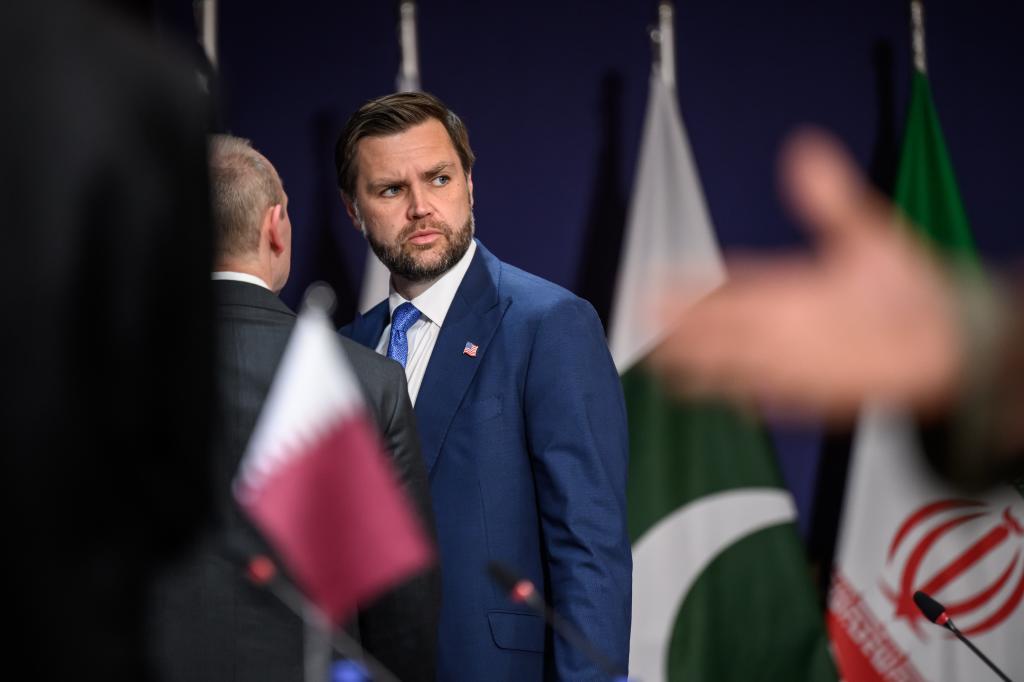
The Bürgenstock meeting was the first high-level one since the signing of the memorandum of understanding by Trump and Iranian President Masoud Pezeshkian. The U.S. delegation was led by Vice President JD Vance, accompanied by Steve Witkoff and Jared Kushner. The Iranian side included Parliament President Mohammad Bagher Qalibaf and Foreign Minister Abbas Araghchi. Qatar and Pakistan acted as mediators.
Before the talks were interrupted, Vance had tried to project optimism about the dialogue's chances of success. "Can we permanently change relations in the Middle East?" asked the U.S. Vice President upon arriving at the meeting.
However, the differences between both parties remain deep. Tehran rejects any attempt to limit its ability to enrich uranium and believes that this issue should be addressed in a later stage of the negotiations. Washington, on the other hand, aspires to turn the current diplomatic process into a prelude to a broader nuclear agreement that prevents Iran from developing atomic weapons.
In addition, there are disagreements about the practical implementation of the peace agreement. In the last hours, Iran claimed to have closed the Strait of Hormuz again due to the continuation of the Israeli offensive in Lebanon and accused the United States of not fulfilling its commitments. Washington denied that version and stated that maritime traffic continues as usual, although it acknowledged maintaining naval escorts to ensure navigation safety.
The suspension of the talks now leaves the diplomatic schedule in limbo designed by Washington and Tehran. Although neither party has formally announced the rupture of the process, the departure of the Iranian delegation reflects how extremely fragile the agreement signed just a week ago still is.
Instead of healing the wounds opened by the war, the Swiss negotiations have shown that the issues that triggered the conflict — the Iranian nuclear program, Tehran's regional role, and the war in Lebanon — remain unresolved. The challenge for both parties will be to determine whether the current clash constitutes a passing crisis or the beginning of the failure of the peace process.