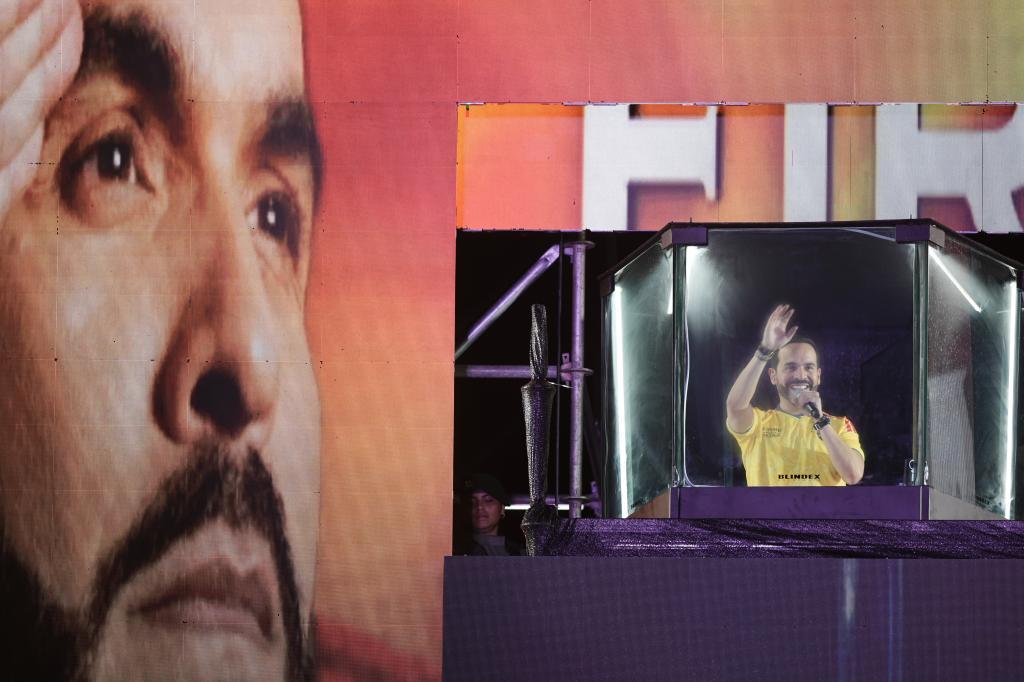
With 99.24% of the votes counted, the independent candidate and right-wing figure obtained 49.7% of the votes, compared to 48.7% achieved by the incumbent candidate, Iván Cepeda.
De la Espriella's victory represents a political turnaround in a deeply divided country and sets the stage for a future filled with uncertainty. The lawyer, who has never held political office before and has very limited parliamentary representation, will have to govern facing a left-wing opposition that is already anticipating a particularly complex term.
Tensions have escalated following statements by the outgoing president, Gustavo Petro, who has once again questioned the electoral system and stated that he will wait for the final vote count before acknowledging the results. Petro had previously unsubstantiatedly denounced alleged fraud after the first round on May 31, an accusation that was not supported by electoral bodies or international observers.
Warnings of potential protests have raised concerns in various sectors of Colombian society. During the campaign, leaders and activists aligned with Petro's ideology had even suggested scenarios of social mobilization in case of an electoral defeat, while voices from the opposition have warned of the risk of an institutional crisis.
To enhance the transparency of the process, electoral authorities deployed over 15,000 international observers, in addition to thousands of supervisors and electoral witnesses across the country.
Upon learning of the results, De la Espriella stated that he will fully respect democratic rules and called for national unity. Meanwhile, Cepeda affirmed that he will accept the verdict of the ballot boxes, although political uncertainty continues to mark the beginning of a new era for Colombia.