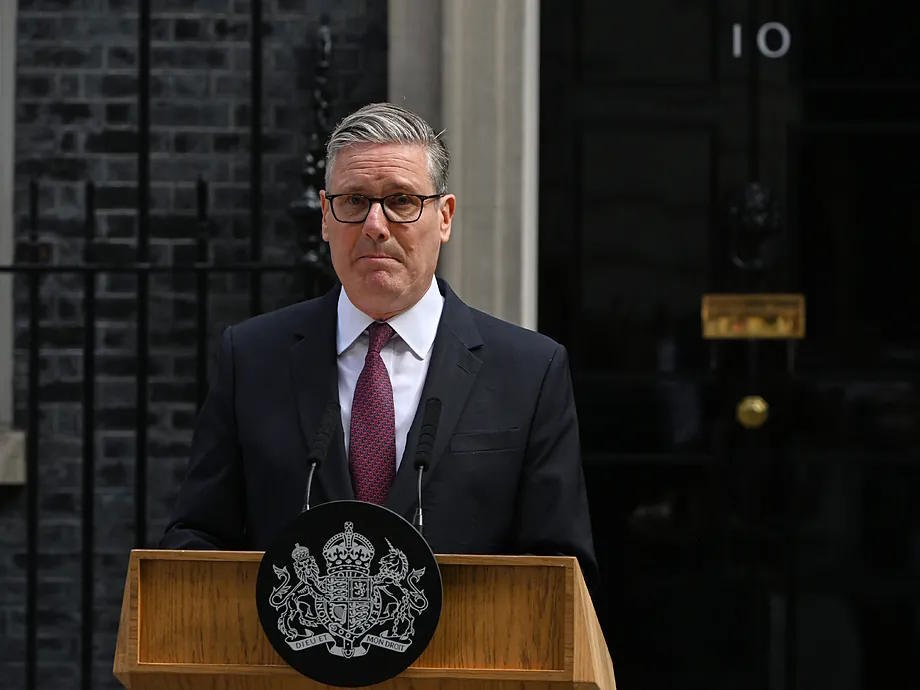
For the European Union, the announced departure of Keir Starmer from Downing Street is a bitter moment. The British Prime Minister, faithful to the political caution that two years ago brought him to power by avoiding risks, which may have now cost him his position, has done everything possible to bring the UK closer to the EU without crossing its 'red lines': freedom of movement of people, the customs union, the single market, and, of course, readmission.
With Starmer, London and Brussels drew closer through memorandums of understanding, working groups, and technical agreements. Sometimes, the negotiations recalled the old times when the UK was in the EU, like in 2025 when Brussels and London reached a fishing agreement in the early hours of the last deadline day, a deal that the Eurosceptic newspaper The Daily Telegraph titled with a call to arms: "This is how Starmer handed over British waters to the Europeans".
No substantial change is expected when Andy Burnham takes office, which is likely to happen in July or August. But there is always the possibility of friction. This is what is happening between the incoming prime minister and the outgoing one, precisely at two highly influential summits for Europe taking place in July: the NATO summit and the EU-UK summit.
The NATO issue seems the most relevant. Despite the government's promises that there would be no new state investment projects for the remainder of Starmer's term, London announced yesterday that it will unveil the defense spending increase plan by 2030 in the next two weeks, allocating £13.5 billion (€15.7 billion) to this budget item. Starmer plans to make this announcement before the NATO summit in Ankara on July 7 and 8.
This decision is controversial because it is deemed insufficient by critics. Among them is John Healey, who resigned as Defense Minister two weeks ago, considering it inadequate. For Healey, this increase will only raise spending from 2.6% to 2.68% of GDP by 2030, far from the 3% target set by the UK on February 25, 2025, and a vast distance from the 3.5% that NATO countries (except Spain) committed to spend on defense in 2025 (plus another 1.5% on security, critical infrastructure, and resilience).
For Burnham, the announcement would be a blow. If he becomes prime minister, he would be forced to accept Starmer's plans or change defense plans again, at a time when London struggles to balance budgets that allow no margin for error due to the country's huge debt.
View from the European Union
The other summit affected by the change in Downing Street is the one that the UK and the EU were set to hold on July 22 in Brussels, which has been postponed by Brussels due to the change in prime minister. According to the British newspaper Financial Times, the decision has not been well received by Starmer's government. In Brussels, however, they reject any suggestion of anger from the outgoing premier or his team. The postponement of the EU-UK summit is attributed, they argue, to practical reasons. On the one hand, to allow London time to address its internal situation. And on the other, because it does not make sense to hold the meeting with a leader who has already announced his departure from Downing Street after the summer. In the EU capital, it is understood that it is better to meet with the next British leader and discuss the next steps. Because there seems to be no doubt: the intention is to continue strengthening relations and integration between both parties.
However, not everyone is convinced that there are many opportunities to further advance the relationship between the two sides of the English Channel. According to sources familiar with the situation, Ireland, which assumes the EU's rotating presidency in a week, doubts whether it is worth continuing to advance British integration into the EU architecture beyond the areas already being negotiated: phytosanitary standards, youth mobility, defense - the critical factor -, electricity markets, greenhouse gas emissions, and judicial and police cooperation, especially against illegal immigration.
Although not opposed to Burnham, Brussels will miss Starmer. The President of the European Council, António Costa, stated on Monday that the British leader opened "a new chapter in the relationship" between the UK and the EU after Brexit. "It was a truly emotional moment for all of us. Since then, we have worked very closely with him and made significant progress in our bilateral relationship," emphasized the former Portuguese Prime Minister. The President of the Commission, Ursula von der Leyen, praised the premier's contribution to common defense. "It may be many years before many leaders reach the statesmanlike stature that you have achieved in just two years. Europe's and Ukraine's security is stronger today thanks to you," she pointed out on social media.