The fear of falling from the top grows as the height increases. The market is in transition to the second half of the year, shaking off excesses. With the focus literally on the Strait of Hormuz, the rally led by exchanges like the South Korean and Taiwanese had tiptoed around the high weight of semiconductor companies, crucial for AI development, including Nvidia, Micron Technologies, Samsung, and SK Hynix. Suddenly, the bearish shake in Asia had awakened European investors to their own reality, amidst the resignation of the seventh UK Prime Minister in ten years of Brexit and the recent ECB interest rate hike.
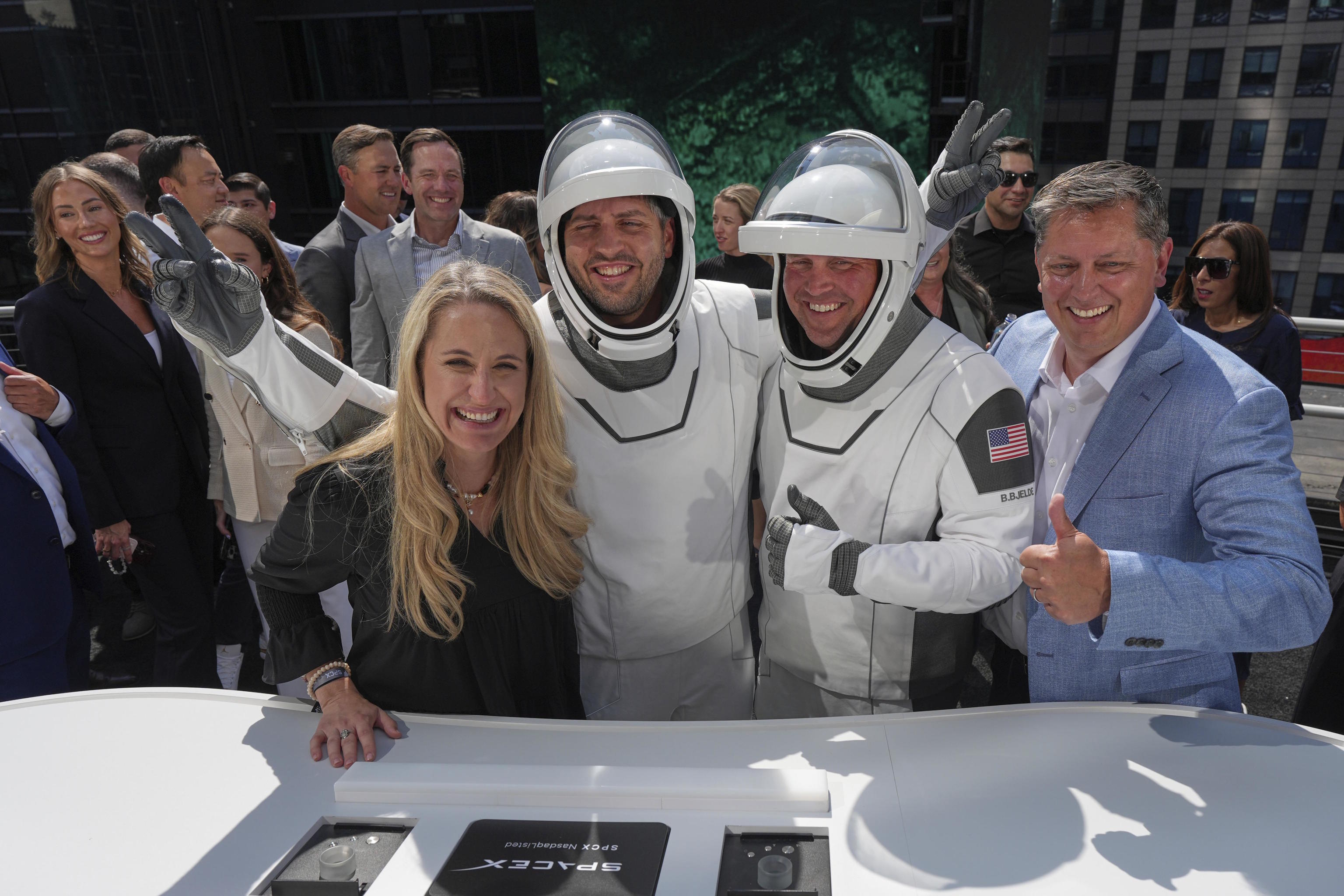
Artificial intelligence, which envelops and occupies everything, continues to dominate the markets, following SpaceX's entrance, a company specialized in reused rockets and satellites but with a future business focus on AI. The market's speed has overwhelmed small investors, many of whom have sold their positions in recent weeks out of fear of a potential stock market bubble. Experts deny this, although more are starting to express doubts. In the early hours of the Spanish Tuesday, panic gripped investors as they witnessed a 10% bloodbath in the Kospi index of the Seoul Stock Exchange, where losses are limited by the local market regulator. Europe modestly mirrored this drop, not exceeding a percentage point, while in the US, sales led to over 2% losses on Tuesday. The US VIX fear index (measuring volatility on S&P 500 futures) surged over 10% yesterday.
The reality is that the Kospi had doubled its market capitalization this year, mainly thanks to Samsung and SK Hynix, and the widespread use of leveraged investments in the country, even by the general public. The regulator has stepped in to call for order in a practice encouraged by public institutions to support the market and engage citizens in it.
Everyone agrees that the high demand for semiconductors and the scarcity of controlling companies create a bottleneck reflected in skyrocketing stock prices, with no end in sight for their market performance or demand for their services. Even after Tuesday's debacle, the South Korean Kospi index is up nearly 95% this year, followed by Taiwan's Taiex with another 63% appreciation, and Japan's Nikkei with gains close to 40%.
Samsung Electronics - not only producing chips but also phones and washers - surged 140% this year, and SK Hynix, another 277%. Their US semiconductor rival, Micron Technology, soared 324% on the US stock market in less than six months, surpassing a market capitalization of over $1.2 trillion. Yesterday, it plummeted nearly 10%. This week, it announced a partnership with AI giant Anthropic for memory and storage supply and joint infrastructure development and investment. This move could be a significant catalyst for the sector in the coming weeks. The fear of missing out (FOMO) among investors is evident, with BlackRock's semiconductor-focused ETF reaching a market cap of over $46.1 billion before the Tuesday bloodbath, following the soaring stock prices of its companies by over 100% and 200%, such as STMicroelectronics, United Microelectron, Marvell Technology, ARM Holdings, among others.
With a semiconductor market that has at least doubled in value in less than six months, the S&P 500 is up 8%, with the Nasdaq reaching an 18% gain this year, despite Tuesday's close to 3% drop, following the Asian markets' trend. Spain's Ibex 35 gained another 11% in 2026.
"The pace and intensity of the Nasdaq 100's rally have started to worry some investors, and rightfully so, as sharp declines and rapid recoveries are typical characteristics of bubble formation and propagation," noted Bank of America analysts in a client note. This concern is compounded by Nasdaq's decision to revise its criteria for admitting new companies following SpaceX's mega IPO two weeks ago. In a matter of days, Elon Musk's company will join the Nasdaq 100, but not the S&P 500, which opted to maintain its criteria - although it did adjust those of smaller indices - precisely to set a firewall against potential risks.
It's worth noting that the US's 500 largest publicly traded companies index is the most replicated and indexed managed index globally, which would automatically trigger billions of dollars to buy SpaceX shares if it were to join. While this would boost purchases, it could magnify the fall when sales come. All eyes are on the upcoming fall when two AI giants, Anthropic and OpenAI, will ring the bell, aiming to raise another $120 billion collectively from investors, in addition to SpaceX's $75 billion capital increase and the debt placements of major US tech firms (Amazon, Alphabet, etc.) to support their plans and growth pace. SpaceX itself is reportedly planning a $100 billion debt issuance to fund its interplanetary life plans in the coming years, absorbing more funds from qualified investors eager to buy AI-related assets amid the recent rally.
The size of AI-linked companies, such as semiconductor manufacturer Nvidia, the world's largest publicly traded company with around $5 trillion in market capitalization, means that significant losses occur with major drops. Thus, SpaceX experienced the second-largest bloodbath in history, with a 16.4% drop on Monday, wiping out over $400 billion. Only Nvidia surpassed this, losing $593 billion in a single session in 2025.
However, SpaceX has been on a rollercoaster in its seven Wall Street sessions, with three days of gains, including its debut, accumulating nearly 50% appreciation, followed by a 23% plunge over three consecutive days, and a close to 5% rise yesterday with the European session closed. This has led to losses exceeding $500 billion, equivalent to Inditex, Banco Santander, CaixaBank, and Iberdrola combined.
"While the concentration in South Korea and Taiwan is high, it comes with equally extraordinary profits (...) The recent appreciation is not due to demanding multiples but has been accompanied by extraordinary profit growth due to chip scarcity and manufacturing capacity shortages, positioning these companies among the top global profit generators for this year and the next," state Banca March, who find it premature to talk about a bubble.
Even Cathie Wood, Ark Invest founder and renowned US tech guru, sees this risk as distant precisely because it is on the minds of all investment banks, and "everyone is concerned about it," she confessed in an interview with this newspaper last week, noting that AI has taken up "all the room's oxygen," leaving no space for anyone else.