This is the story of a successful entrepreneur we'll call Raúl. Someone who seemed like a fascinating product designed for one of those YouTube channels that are so popular among young people describing sudden success in real estate or cryptocurrency investments. He was a 26-year-old university student with a degree in Business and Marketing who had set up a nutrition company with a brand called IberoSarm that billed 1.7 million euros last year.
With a lot of money in his account, Raúl decided to move out of his parents' house. He did so without abandoning his discreet, almost monastic profile, far from the exhibitionism of digital winners who boast in their videos about high-end watches, pools, and sports cars. This young man rented an apartment in a middle-class neighborhood in Madrid and continued to get around in an old Peugeot 309.
Raúl's business marketing was based on an aggressive advertising strategy led by Rod Montana, a controversial youtuber whose most viral videos consist of giving macho advice on picking up women and providing tips on getting ripped.
Everything seemed to be going well for IberoSarm until May when its collapse occurred. It wasn't due to the oil price caused by the Iran war or the economic slowdown risk detected in the Eurozone, but rather a blow executed by the Civil Guard and the National Police.
It turns out that IberoSarm was actually a clandestine network of a powerful drug trafficking ring that controlled the distribution of Selective Androgen Receptor Modulators (SARMs, in English) in Spain. These are chemical substances with effects similar to testosterone and anabolic steroids that are becoming increasingly popular in certain gym circles. Although originally created as medications, SARMs are now banned for human use due to their serious health risks, including effects such as testicular atrophy and impotence.
"Their acceptance among new generations is due to the fact that they are not injected or taken in pill form, but ingested in drops through a dropper," explains Miguel Ángel Marcos, a member of the Civil Guard's Technical Unit specialized in drug trafficking. "These criminals were selling them through social media as side-effect-free steroids that increase muscle mass and reduce fatigue, which of course was a lie. Let's not forget that these are substances whose real impact on health has not yet been properly studied."
Raúl's network operation involved buying the active ingredient abroad, specifically in China, Bulgaria, and Turkey, countries with much less health control than Spain, and bringing the merchandise by road in powder form. They would then mix it with excipients in a local laboratory, package the content in droppers, and distribute it. Raúl had managed to control almost the entire national SARM market.
This police operation is a new proof of the unknown underground world that hides the illicit drug trafficking, a business that moves more money globally than cocaine, prostitution, and contraband tobacco. According to a 2020 report by The Pacific Research Institute, its annual sales reach an estimated value of $200 billion.
"It is necessary for people and the media to be aware of what this criminal activity generates. A journalist quickly writes a news article if five kilos of cocaine are seized, but when we talk about vials and doses of medications, even in large quantities, it is not of interest," says Marcos.
The WHO presents a disturbing diagnosis: half of the medications purchased on websites that hide their physical addresses are fake, and the situation in many underdeveloped countries, unable to fight against mafias, continues to worsen. In Africa, one out of every 10 circulating drugs turns out to be fraudulent, and there are many antibiotics and cancer medications with misleading labeling.
In wealthy countries, the problem is different; the threat focuses on medicine that is not for survival but for lifestyle. The EU police cooperation agency, Europol, highlighted this concern in a recent report: "This phenomenon is expected to be widespread, and the constant increase in demand will generate continuous opportunities for organized crime."
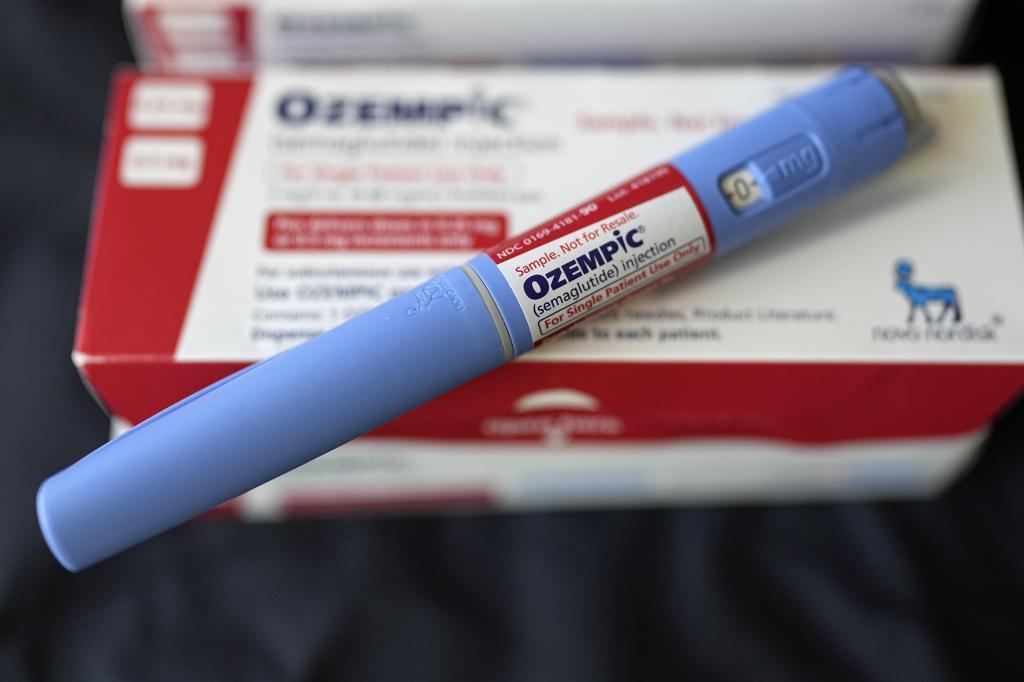
The most pirated medications in Spain are led by sexual enhancers, imported from Chinese and Indian laboratories; followed by weight loss medications from the Ozempic family; the coveted botulinum toxin from Asia, with South Korea as the main producer; doping medications; psychotropic drugs including ranges of antidepressants and anxiolytics leaving pharmacies for illegal purposes in the national black market or to be sold in North Africa; and, of course, the aforementioned SARMs seized from Raúl.
To combat trafficking, Marcos and other medication watchdogs - law enforcement, Ministry of Health, health departments, and the Spanish Agency of Medicines and Medical Devices (Aemps) - monitor social media for clues leading to clandestine laboratories and contaminated customs. All in search of very different smuggling and piracy actors: mafias, countries indifferent to crime prosecution, corrupt pharmacists diverting medications from the legal circuit, and irresponsible users breaking the law by purchasing prescription-required products online without having a prescription.
Police work lacks the spectacle of a raid where bales of cocaine are seized, heavy weaponry is found, or sexually exploited women living in inhumane conditions are discovered in a basement. The images from their operations show disordered shelves and cardboard boxes with thousands of pills that take many hours to catalog, laboratories that look like bastard offspring of a chemistry set, and clinics for injecting pirate Botox that resemble student flats more than first-world hospital centers. The danger is packaged.
The main threat posed by this business is the health risk, as it is common to find in forensic analyses a dose with an incorrect ingredient, including a toxic component not present in the original medication or that indirectly causes dangerous reactions in the body, such as antimicrobial resistance. Therefore, total distrust is necessary. The best-case scenario for the consumer is that the clandestine drug is completely ineffective.
"I met a woman who had been injected with adulterated Botox," Marcos recounts. "Since then, she suffers from chronic migraines, and her life is a nightmare." According to the United Nations, half a million people died worldwide last year due to counterfeit drug consumption.
In 2025, there were 100,000 attempted scams by illegal pharmacies in Spain, mainly dedicated to online sales of Ozempic family drugs containing semaglutide and Viagra. "Buyers in front of a computer screen have a lower risk perception when purchasing these medications," explains Lucía Ferrero, assigned to the Central Unit of Specialized and Violent Crime in the Anti-Doping Group of the National Police.
Uncontrolled virtual sales not only pose medical risks but also significant economic losses, both for healthcare system treasuries and pharmaceutical companies. This disregards innovation, as fraud discourages the research of new drugs. The buyer is not exempt. "It is very common for the medication purchased through these channels to never arrive," warns Ferrero.
Therefore, constant cyberpatrolling is essential. The closure of fraudulent digital sales ads promoted by the Spanish Medicines Agency has doubled in five years, from about 600 in 2019 to 1,350 in 2024.
Despite efforts, entering the black market is very easy. Several Telegram messenger chats appear when typing buy sell ozempic. These are channels in English, Russian, and Arabic. "Many are just scams to attract people," explains an agent dedicated to internet tracking. Those looking for genuinely fake medications need certain tricks, such as misspelling the medication name or entering popular second-hand sale platforms in unsuspected categories, which are less monitored by companies, such as office supplies or furniture for camouflage.
"When we receive information, we contact the platforms for its removal, and it must be acknowledged that most act within a few hours," explains Manuel Ibarra, head of Inspection and Control at the Spanish Agency for Medicines and Health Products (AEMPS).
An additional problem that law enforcement officers face is the technological revolution of artificial intelligence. Officer Ferrero explains: "We are encountering increasingly sophisticated sales websites designed with AI to display fake reviews from satisfied customers and illustrated with unrealistic images of the supposed laboratory that manufactures the medication they sell, when in reality, the mixture was most likely made in a kitchen sink."
When asked about the reasons for the growth of both organized crime groups and lone criminals, law enforcement officers agree that the key lies in the enormous profits and the lenient penalties. "There is more profitability and less danger than engaging in drug trafficking," adds Miguel Ángel Marcos of the Civil Guard.
The trafficking of unlicensed medicines or the sale of counterfeit drugs carries prison sentences in Spain of six months to four years, fines of six to 18 months, and disqualification from practicing any healthcare profession or trade for one to three years. This applies to the most serious cases. Many traffickers manage to avoid prison. "In this world, we encounter a very high rate of recidivism," acknowledges Lucía Ferrero.
A tightening of penalties may be an option that legislators consider in the coming years. For the moment, legal resources are directing the prosecution strategy toward a broader range of crimes related to pharmaceutical fraud, such as social security fraud, swindling, money laundering, and tax evasion.
Although no drug regulator dares to estimate the quantity of counterfeit medicines circulating in Spain, the truth is that police operations and the closure of online stores are constant. A great deal has happened in the last two months alone. A criminal group trafficking in doping substances and illegal medications has been dismantled. They were found to be concealing 11,500 tablets of various types of anabolic steroids and 15,000 pills for treating erectile dysfunction. A sentence has also just been handed down finding that university professor and physician Marcos Maynar and Ignacio Bartolomé Sánchez supplied unauthorized substances to professional and amateur athletes through mail shipments disguised as supplements. In addition, several cosmetic clinics in Tarragona, Valencia, and Alicante have been shut down, along with a network trafficking Botox and hyaluronic acid that operated in Spain, Lithuania, and the United Kingdom. Among the seized drugs were 1,200 vials of Botox and 382 syringes of hyaluronic acid.
"In this world, we encounter a great deal of recidivism."
Regarding the increasingly abundant medications intended for cosmetic purposes, writer Leticia Sala, author of the essay *Give Me Poison, I Want to Live* (Anagrama) about the fear of aging, sees a dangerous trend in society itself that fosters fraud.
"There are people who consider, for example, Botox as something exclusive to the privileged, to people with high purchasing power," says Sala. "The problem is that, by being seen as something desirable, as a kind of silent luxury in which wrinkles are viewed as a failure, it encourages the most vulnerable to take more risks when accessing it because they have fewer resources."
This accelerates the search for expensive medications. The price of a botulinum toxin treatment in Spain through legal channels ranges between 300 and 500 euros per session, depending on the areas of the face treated. Undoubtedly, a significant amount for many people.
This toxin temporarily prevents facial muscle contraction. It produces a muscle-deactivating effect, smoothing wrinkles. This lasts between three and six months, until the muscle regains function. "I draw an analogy with heroin in my book, not because the two substances are comparable, let's be clear, but because of their effects: they last for a while, and then you need more to achieve the same result." Ultimately, there's a market that guarantees repeat business. Something the criminals know.
Even more so now that cosmetic Botox has become so widespread. The 2022 report from the International Society of Aesthetic Plastic Surgery states that 34 million cosmetic procedures, both surgical and non-surgical, were performed worldwide. Nine million treatments involved botulinum toxin, a 26% increase compared to 2021.
In Spain, according to the Spanish Society of Aesthetic Medicine, the average age of patients dropped from 35 to 20 in 2021. Almost half of these treatments involved botulinum toxin. In recent years, what is known as "baby Botox" has become popular—an injection with a lower dose used for preventative purposes. "This means that it's being injected by people without wrinkles," says Sala. In other words, more consumers are entering the market.
This interest is also seen in weight-loss medications, which are used by patients who are neither diabetic nor obese. This aspirational pressure is explored by Johann Hari in his book, "Slimming at Any Price" (Ed. Península).
"The next risk arose when many people, unable to obtain Ozempic from the registered trademark, resorted to unbranded, counterfeit products—the chemical equivalent of buying a fake Louis Vuitton bag," Hari writes. "They were sold in beauty shops, spas, or ordered online."
Civil Guard officer Marcos believes that one of the greatest dangers of these injections for cosmetic reasons is the lack of professionalism. "Many of the cosmetic practitioners we've arrested genuinely believed that a nursing assistant qualification from who-knows-how-many years ago or a hairdressing course was enough to administer them. When we're talking about medication, it has to be administered by a doctor in a place with the sanitary measures required by law. It's not something to be taken lightly."
Currently, our medicalized society faces a major public health problem with a striking picture. This problem is fueled by an escalation of uncontrolled consumption, with increased demand for certain drugs; a greater number of manufacturers worldwide; A highly lucrative activity with high profits and low risks, criminal organizations with ties to various countries, and, above all, the camouflage offered by the internet.
In the future, everything will depend on upcoming scientific discoveries and their impact on the desires of wealthy societies. Can you imagine the potential of a multi-million dollar drug that eliminates baldness? Consider, too, the benefits of a treatment that regenerates skin and leaves a sixty-year-old with the face of a baby or a Viagra, without any side effects.
What is certain is that criminals will continue to track desire like social taxidermists. And their guardians? "We don't know which molecules currently under investigation might be susceptible to counterfeiting tomorrow," says Manuel Ibarra. "But we do know that regulators will have to forge alliances with digital platforms and be even more attentive to social demands."