While Brussels sharpens new tools to protect its industry from a flood of Chinese products, Beijing has decided to counterattack in the narrative field. As the term "Chinese shock 2.0" increasingly resonates in Europe to describe the impact of Chinese exports on the community's industrial fabric, the Chinese Government responds with a diametrically opposed slogan: "the Chinese opportunity 2.0". The commercial battle is also fought with concepts.
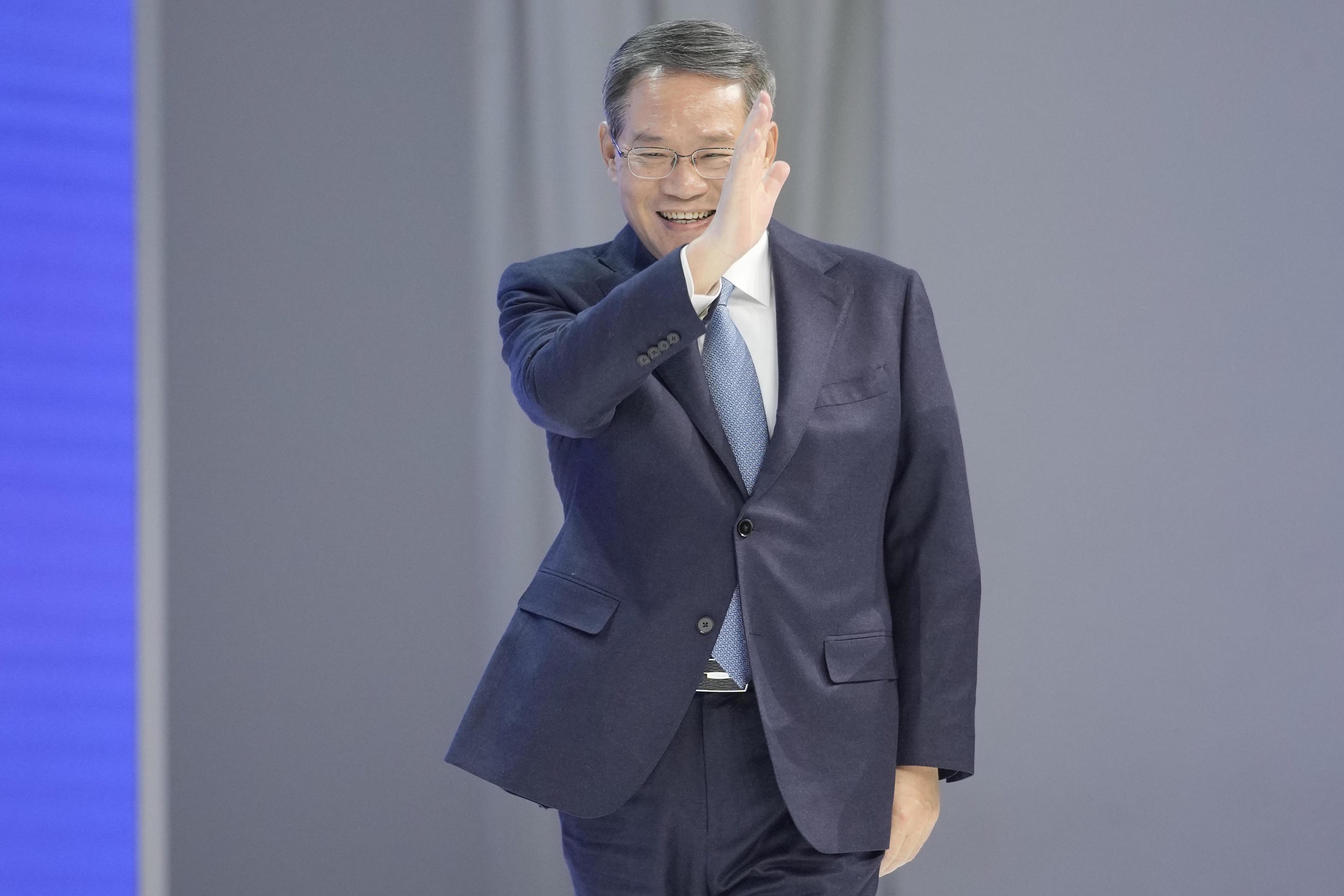
On Wednesday, during the opening of the Annual Meeting of the New Champions of the World Economic Forum - known as the Davos of Summer - in the port city of Dalian, Chinese Prime Minister Li Qiang took advantage of the international stage to outright reject the narrative consolidating in Western capitals.
"What Chinese technologies and products in emerging fields bring to the world is not a shock, but an opportunity; not a threat, but empowerment", he stated before more than 1,700 delegates from over 90 countries. The Chinese government's number 2 criticized the so-called "Chinese shock 2.0" and argued that his country's technological rise should be understood as a new source of growth for the global economy.
Li tried to dismantle one of the most repeated accusations by Brussels: that Chinese competitiveness is sustained thanks to huge state subsidies. "The Chinese government is not yet so wealthy, and we cannot afford such subsidies either," he assured.
According to his argument, Chinese competitiveness is based on the innovative efforts of its companies and the enormous size of its domestic market. However, amid a slowdown in domestic consumption and an economy that fails to regain the trust of households and businesses, many experts believe that a significant part of China's export drive is precisely supported by state financial backing.
Li cited Huawei as an example, transformed into a symbol of Chinese technological resilience against Western sanctions. "Huawei has long been subjected to external blockades, but its R&D spending has increased rather than decreased," he stated.
The Prime Minister also presented China as a "safe haven" for the global economy. According to Li, if for decades China shared benefits through cheap production and access to its market, it now also offers "innovation benefits." For foreign companies, he concluded, "Chinese opportunity 2.0 means "high-return investment opportunities"
However, the message from Dalian clashes directly with the current political climate dominating Brussels. There, the concept of "Chinese shock 2.0" has gained strength in recent months to describe a new wave of Chinese exports threatening sectors considered strategic for Europe: electric vehicles, batteries, solar panels, industrial machinery, chemicals, or steel.
The expression refers to the original "China Shock," a theory popularized by American economists to explain the impact of China's entry into the World Trade Organization on US manufacturing employment at the beginning of the century. The new version transfers that concern to a new phase: a much stronger technologically China with enormous industrial capacity seeking more outlets for its production in international markets.
The figures fuel European concern. China recorded in 2025 a trade surplus close to $1.2 trillion, largely driven by exports of low-cost technological products. Meanwhile, the EU's trade deficit reached 359 billion euros, more than double pre-pandemic levels. Just last year, Chinese goods worth almost 560 billion euros entered the European market.
The fear is that the weakening of domestic demand in China and increasing restrictions in Washington are pushing Beijing to redirect its excess production to Europe. Hence, during the last European summit, several leaders called on the Commission for new tools to protect EU companies.
French President Emmanuel Macron warned that Chinese exports were "literally destroying much of European industry." Luxembourg's Prime Minister, Luc Frieden, even described the Chinese industrial challenge as an "existential threat."
In this context, the European Commission is considering resorting more intensively to existing defensive instruments - such as tariffs - and developing new tools to address Chinese industrial overcapacity. The tariffs of up to 35% imposed on certain Chinese electric vehicles are just a preview of a broader strategy.
On this front, Spain continues to be one of the most favorable voices for dialogue within the EU. The Prime Minister, Pedro Sánchez, distanced himself again last week by defining China as a "potential ally." "We need friends, balanced relationships, to be pragmatic, and to build bridges," he stated. Spain's position reflects a more pragmatic view of the relationship with Beijing and confirms Madrid's role as one of the EU's most receptive partners in keeping all political and economic channels open with the world's second-largest economy.
A few days ago, after Brussels described the current commercial situation as "unsustainable" and called for a firmer strategy, the Chinese Ministry of Commerce warned that it would respond with "effective measures" if the EU adopts "discriminatory restrictions" against Chinese products.
Tensions could escalate in the coming days. Chinese Minister of Commerce, Wang Wentao, is scheduled to meet in Brussels next Monday with European Trade Commissioner Maros Sefcovic, in a meeting that will gauge to what extent both parties are willing to avoid an escalation.
According to analysts like Georg Emil Riekeles, Associate Director of the European Policy Centre (EPC), Europe faces "a Chinese crisis of historical proportions." According to his estimates, between 400 and 800 categories of European products are exposed to the pressure of Chinese industrial overcapacity. The debate, he argues, no longer revolves solely around low prices or market share loss but about Europe's ability to preserve industries essential for its prosperity, strategic autonomy, and future security.
However, experts close to the Chinese government defend from Beijing that "Chinese shock 2.0" is little more than a political construct aimed at justifying protectionist measures. Academics from universities like Fudan or Tsinghua argue that the West is projecting onto China internal problems such as loss of industrial competitiveness, costs of the green transition, or economic inequality.