From the luxury penthouse overlooking Central Park where he broadcasted his inflammatory speeches against Beijing, Guo Wengui repeated an almost messianic promise to his followers: "I have come to the United States to destroy the Chinese Communist Party." For years, hundreds of thousands of Chinese inside and outside the US believed that the exiled tycoon, surrounded by bodyguards, luxury cars, and flags of a hypothetical "New Federal China" - a political project promoted alongside Steve Bannon that aimed to overthrow the CCP and replace it with a new democratic state - represented the biggest political threat to Xi Jinping's regime.
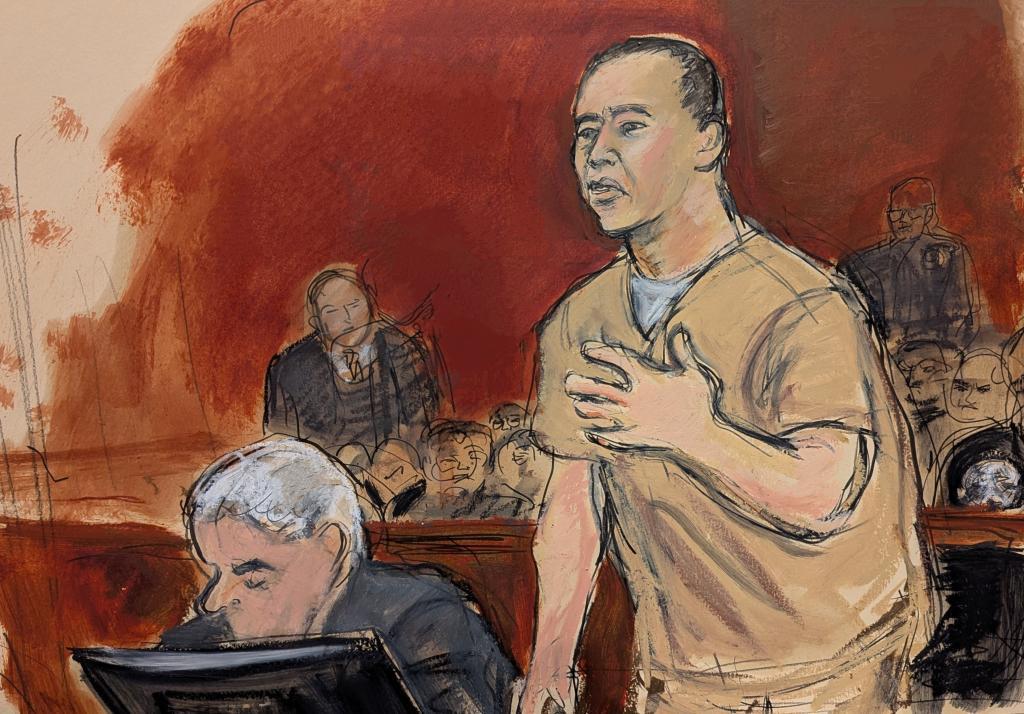
On Monday, that entire narrative collapsed in a Manhattan court. Judge Analisa Torres sentenced Guo to 30 years in prison for a colossal fraud scheme. The man who claimed to be fighting to liberate China used money from those who dreamed of that same freedom to finance a life of excess.
For Beijing, the billionaire Guo (56 years old), also known as Miles Guo or Miles Kwok, was always a common criminal turned fugitive. But for a large part of the Chinese opposition in exile, he was a brave whistleblower who dared to publicly denounce the corruption in the highest echelons of the regime. In the end, for the US prosecution, he turned out to be a fraudster who built a financial empire on the political faith of his followers.
His rise began long before becoming a dissident. Born into a humble family in the province of Shandong, he found in the Chinese real estate boom the perfect springboard to enrich himself. During decades of economic expansion, he amassed a fortune through major urban developments in Beijing, especially around the 2008 Olympics. His most emblematic project was the Pangu Plaza complex, next to the National Stadium, popularly known as the "Bird's Nest." But in China during those years, no major entrepreneur thrived without cultivating close relationships with the Party apparatus.
Guo was one of the most well-connected businessmen to power. His name was linked to leaders of enormous influence, including Ma Jian, former vice minister of State Security, later convicted of corruption. For years, he used those relationships to expand an empire that placed him among the wealthiest men in the country. In the end, that proximity to power would also become his greatest vulnerability.
When Xi Jinping launched his massive anti-corruption campaign upon coming to power in 2012, many of his political allies began to fall. Guo left China a couple of years later knowing he could be next. Beijing issued arrest warrants for bribery, fraud, kidnapping, and rape, accusations he always dismissed as false. The fugitive first settled in London and then in New York, where he completely reinvented his persona as a dissident.
From the US, he launched an incessant internet broadcasting campaign in which he claimed to know the best-kept secrets of the communist elite. He accused senior officials of corruption, spoke of internal struggles within the CCP, and turned each broadcast into an event followed by millions of Chinese. Many of his revelations were never independently verified, but they bolstered his image as an influential dissident.
His growing prominence opened doors to the most hardline wing of the Republican Party. He found a decisive ally in Steve Bannon, former strategist of Donald Trump, with whom he founded organizations and media platforms aimed, as they proclaimed, at hastening the fall of the CCP.
They launched the so-called "New Federal State of China" and promoted media channels that mixed political activism, disinformation campaigns, and fundraising. Guo also gained entry into Trump's exclusive Mar-a-Lago club and became a regular figure within the American conservative ecosystem, most hostile towards Beijing.
The pandemic further elevated his notoriety. He spread conspiracy theories about the origin of the coronavirus, promoted anti-vaccine campaigns, and even announced one of the most extravagant projects of his career: an alleged auction of "millions of unvaccinated sperm." According to him, the semen from naturally immunized men would become "the next bitcoin."
While Guo cultivated this image of a revolutionary leader, US prosecutors discovered that he was running a well-organized fraud machinery. Between 2018 and 2023, he convinced hundreds of thousands of followers to invest over $1 billion in various companies under his control. He promised extraordinary returns and claimed the money would be used to combat the Chinese regime. In reality, much of it ended up financing a lifestyle reserved for billionaires.
The list of expenses presented during the trial seemed like a catalog of excess: a mansion of over 5,000 square meters, a $37 million yacht - the same one where Steve Bannon was arrested in another legal proceeding -, a $3.5 million Ferrari, a custom-made $4.4 million Bugatti, luxury furniture, tens of thousands of dollars worth of TVs, and mattresses whose price exceeded the annual salary of many of his victims.
Judge Torres was particularly harsh in her sentencing. She reminded that Guo had exploited precisely those who desired a freer and more democratic China, many of them migrants who entrusted him with their life savings. Letters from the victims describe hundreds of ruined families.
His downfall now leaves an uncomfortable lesson for followers of the confrontation between Washington and Beijing, which at times turned certain dissidents into symbols before carefully verifying who they really were. Guo knew how to take advantage of that climate of tension and built a character capable of simultaneously seducing desperate Chinese exiles seeking political change and sectors of Trumpism convinced that any enemy of the CCP deserved support.