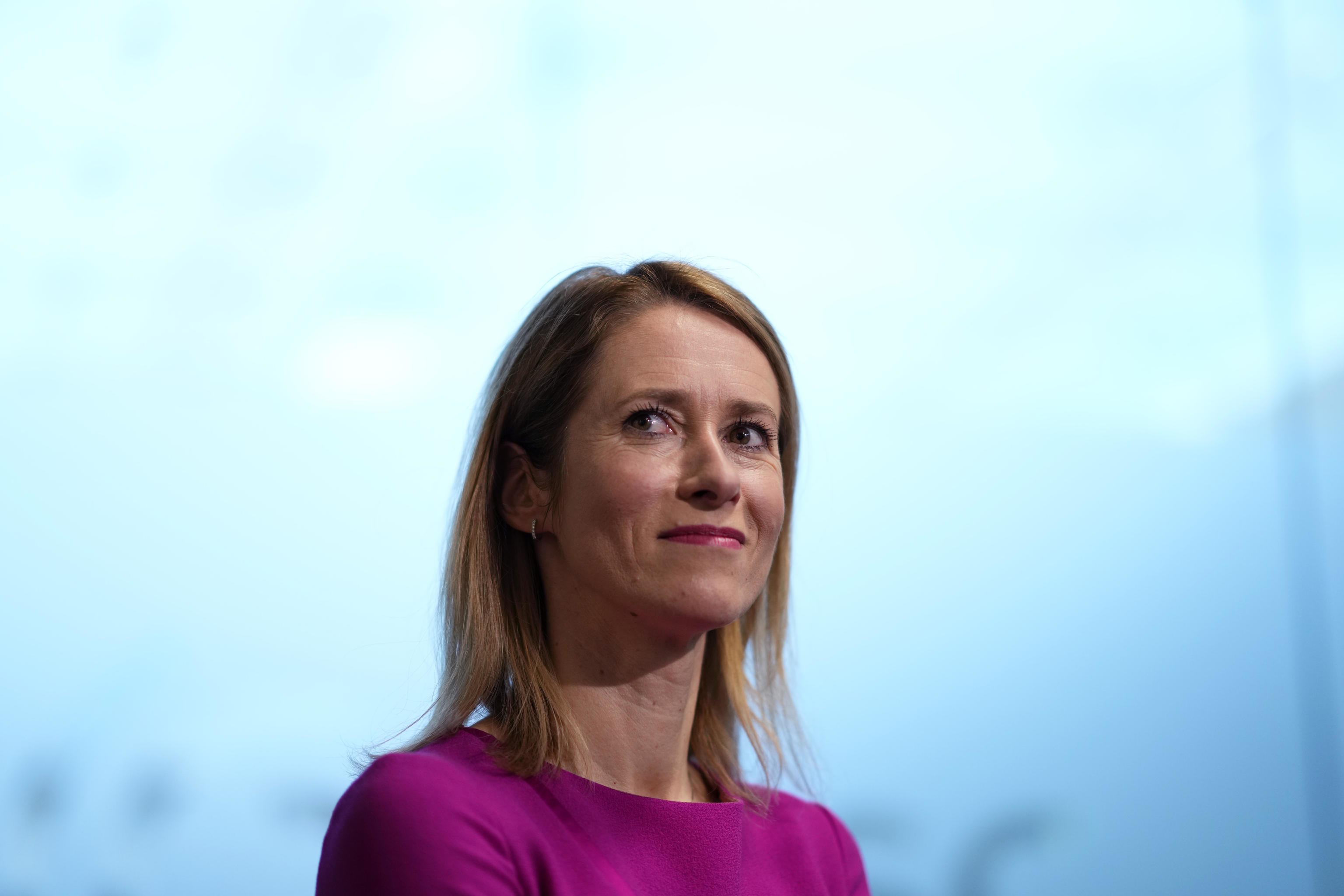
The European Union is experiencing strong tensions at a crucial moment for the world. With the crisis of the international order, the struggle for leadership of other powers, and the shift of geopolitical weight towards the Indo-Pacific, the 27 Member States seek an international voice that seems to be in crisis within the institutions. It is the European External Action Service (EEAS) responsible for setting a position on international issues, but the lack of political will among the States to reach major agreements, combined with the questioned leadership of its High Representative, Kaja Kallas, has plunged this service into a moment of uncertainty, with its influence being questioned inside and outside the institutions.
"It is true that the relationship has never been too good between Kaja Kallas and Ursula von der Leyen, because Kallas is very direct, something that delights the press, but not diplomacy," sources consulted say. The complicated relationship between the Commission President and the High Representative is something that has been talked about for a long time in the corridors of the institutions and also in the bars of the community bubble.
But well-founded rumors have given way in recent weeks to statements and even information that also points to the complicated moment of the European External Action Service of the EU. Some countries, in the framework of the negotiation of the next EU budget, want to cut the annual budget of 1,000 million that the organization has and allocate it to other areas, or even make it part of the adjustment that the northern hawks want to impose. And others like France and Germany directly advocate reducing its competences and giving them to the countries and the European Commission. That is, to the President, something that would be very much to her liking. So much so that many consider that she herself could be behind the initiative.
The problems have been dragging on for months, and the main reason would be the different personalities of both politicians, one of German origin and the other from Estonia. On December 1, 2024, the Estonian leader, who had been the Prime Minister of her country, was appointed High Representative in place of Josep Borrell. Her profile, someone from the Baltics who goes head-to-head with Vladimir Putin and does not consider negotiating with the Russian autocrat, seemed to be in continuity with that of her predecessor, the Spaniard Josep Borrell. However, her way of understanding diplomacy has not achieved great consensus, as was the case with the conflict between Israel and Palestine or the problem of the blockade of the Strait of Hormuz.
"The External Action limps due to lack of political consensus," explains the source, "because the command is very complicated and the 27 do not speak with one voice," he continues, emphasizing that there is "a lack of consensus among the States, not in Brussels." The same person consulted ensures that in the External Action service "there should have been a debate about the future, but everything has been accelerated," he laments. Among the problems, he especially highlights the lack of authority of Kallas: "It seems that she does not have a firm grip, but for certain issues, sometimes you need the Member States to accept your authority." Despite this situation, he downplays the seriousness of the situation, pointing out that there are elements such as the EU's coercion instrument that have not yet been applied.
Although another person describes this as "the typical internal problem of Brussels," they do acknowledge that the hyperactivity of Von der Leyen, and her "eagerness to deal with all the dossiers" exasperates both inside and outside the institutions. The German high official, whom many also accuse of wanting excessive prominence in almost any area, is also playing an increasingly important role in foreign policy. And not only has this not pleased Kallas, but Von der Leyen's stance has clashed at times with that of the High Representative. If the EU's role in foreign affairs is already complicated, this dual aspect is not precisely positive. "The Member States are fed up because she gets involved in issues that the States believe are theirs, in Foreign Policy and many other issues," this person frankly concludes.
In this equation, there are two things that do not help. The first is the lack of legitimacy that some actors attribute to Kallas, who came from leading a country with 1.3 million inhabitants, the third least populated country of the 27. "It is the equivalent of a mayor in many European cities," summarize diplomatic sources from two different countries, one Mediterranean and the other Central European, consulted by this newspaper. This causes many to question the legitimacy of her role, combined with her total rejection of any approach to Russia due to the distrust it arouses in the Baltics.
The latest problem in this crisis of international influence, and the third way, is the President of the Council, Antonio Costa. The Portuguese also wants to have a relevant role in this area. Proof of this is that his office had a brief contact with the Kremlin a few weeks ago. And this not only displeased some countries, which reject the possibility of bridging any gap with Russia, but also goes against what Kallas defends. The former Prime Minister of Estonia totally distrusts Vladimir Putin and the mere possibility of having any kind of conversation with him makes her skin crawl. One of the reasons why Von der Leyen chose her for such a relevant position was precisely her rejection and resistance to Moscow, but this could backfire if the negotiation route ultimately prospers.
The lack of coordination is already affecting at the functional level. Last January, Von der Leyen surprised by announcing that the EU was going to develop a new European Security Strategy, a puzzling announcement, as they do not have executive power to implement that strategy on the countries. A statement motivated by the US Security Strategy and an announcement before the teams started working. In March, the High Representative stated that the document would address security broadly. "It is very difficult at the current moment to condense the EU challenges into two pages, and undoubtedly the premature announcement did not help," this source summarizes.
A year and a half after her appointment as head of European diplomacy, Kallas has not found the point of collaboration to agree on consensus among the 27 and make Europe's voice sound stronger in the world.