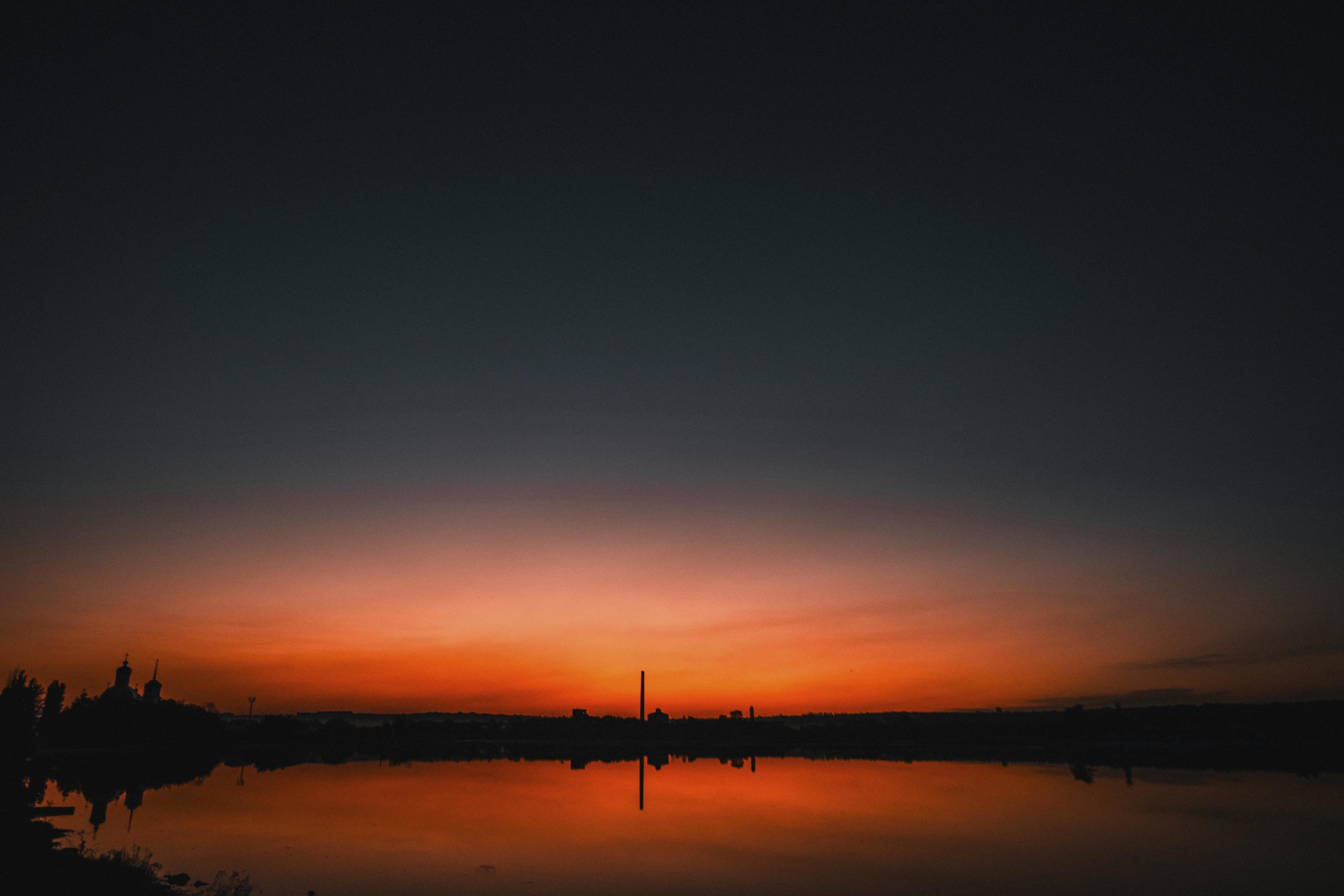
As night falls, Sloviansk turns into a ghost town. It's drone time. Their favorite time to "hunt" starts "at sunset," as warned by Mykhailo, a Ukrainian pilot of these devices.
The residents -and therefore the visitors- have had to learn to distinguish the sounds to avoid catastrophe. The dreaded buzz of the FPVs. The smaller ones, who usually approach the houses looking for military vehicles or simply distracted pedestrians. They are usually accompanied by shots from those trying to shoot them down.
One can hide from the FPVs. They are loaded with a few kilos of explosives. It's not the same with the Molniya or the Shaheds -other unmanned aerial vehicles (UAVs)-, capable of gutting a house. When you hear the echo of their engine -very similar to that of a motorcycle-, the only option is to hide next to a hallway wall and hope they are just passing by.
Sloviansk and the neighboring town of Kramatorsk -part of the so-called Donbass stronghold established in 2014- have been witnessing a gradual approach of the war front in recent months, forcing a growing exodus of their population and a drastic change in the appearance of both towns.
Both are particularly emblematic for Ukrainians as they were the main stronghold of the Moscow-backed rebellion 12 years ago until being recaptured by Kiev.
Since the journalist's last visit, anti-drone network tunnels have become an omnipresent part of the urban landscape. Signs are also starting to multiply, such as those saying: "Attention, beware, FPV action zone!", referring to the lethal drones that roam daily around both inhabited areas.
It is not uncommon to come across the charred remains of cars every morning, which have been targeted by these devices. Very few now park in the open. Most try to hide their vehicles under trees.
On the 25th, a Russian Molniya passed a few meters from the gas station where this reporter was refueling. Many locals have normalized the danger, so the reporter was the only one who tried to take cover. The employees continued to fill the vehicles' tanks without flinching. Although the gas station was not the target of the aircraft, that same day several Moscow UAVs exploded at gas stations in Sumy, Zaporiyia, and in Kramatorsk itself.
The attacks on these gas stations are part of the Russian strategy to isolate Ukrainian supply routes, especially those leading to the Donetsk province, where Sloviansk and Kramatorsk are located.
Just driving along the road connecting that region with Kharkiv, Dnipro, or Pavlograd reveals an endless succession of these businesses turned into charred remains.
In some, like the Wog company located at the exit of Pavlograd -the gateway to the Donbass area-, you can still see the bodies of two vehicles that were supposed to be refueling when the aerial bombardment occurred and were charred like the rest of the place. "Technical pause," reads a sign they have put up to prohibit access.
According to the chain's CEO, Andrii Pyvovarskyi, on the 25th, the Russians have devastated over 150 gas stations in the last two months. "In response to our attacks on logistical facilities, the enemy has decided to destroy all our gas stations on the front line," wrote Serhiy Beskrestnov, an advisor to the Ukrainian Defense Minister, on social media days ago.
Both Sloviansk and Kramatorsk have witnessed a unique migratory ebb and flow since the general invasion of 2022. Tens of thousands fled at the start of the Russian onslaught, but then -when they saw that the Donbass stronghold was holding up-, they began to return in droves.
"Here we went from 111,000 inhabitants to 18,000 when the Russians came within seven kilometers in 2022. But then almost half returned. By the end of last year, we were about 55,000. In March, another new exodus began, and now we are about 41,000," says Svitlana Vyunychenko, advisor to the mayor of Sloviansk.
The statistics handled by the municipality give an idea of the constant punishment they endure. Since the beginning of this year, the Russians have taken the lives of 20 people and injured at least 141.
A quarter of the homes and infrastructure have been damaged or completely destroyed. "In the case of high-rise buildings, 56% have already been damaged or destroyed", adds the official.
The news dominating the digital media of the Donetsk province now revolves around shelters for the displaced, moving companies, or news instructing on how to "prepare a house and an apartment before leaving."
Week after week, the inhabitants of these towns have witnessed the closure -and in some cases also the devastation- of the most emblematic businesses in their surroundings. Kramatorsk, for example, has decided to build what is already called "new Kramatorsk" near the Carpathian Mountains, in western Ukraine, where firms like the KZVV machinery factory, one of the country's main industrial complexes, have been relocated. Quite a historical irony, as when Nazi troops advanced towards the east of the Soviet Union, Moscow transferred its industries to the interior of its territory.
The announced closure of the Amazing Fish aquarium in Kramatorsk is part of this dynamic in which towns harassed by the Russian army are gradually "fading away" -expression of a local resident- little by little, before being flattened by the final onslaught.
The facility, which had opened in 2020, was closed at the start of the general Russian invasion. It reopened a year later, taking advantage of the residents' return. However, in recent months, "our windows have been shattered three times due to nearby explosions," says Iryna Artyomova, the business owner.
Her husband, Roman Dubinin, was injured in February when a 250-kilo bomb hit near their home. Months earlier, last autumn, about thirty fish -including their popular collection of piranhas- died due to power cuts the town suffers from bombings.
Artyomova was born in Konstantinyvka, a town that no longer exists. It was devastated by combat and all experts indicate that it will be taken by Russian military in a few months.
"I have been living in Kramatorsk for 10 years and I have seen how the Russians have been destroying one by one all the cities they occupied: Bakhmut, Pokrovsk, Konstantinivka, and now Druzhkivka. If no one stops Putin, they will also annihilate Kramatorsk and Sloviansk," says the 42-year-old woman.
That's why they have decided to close the aquarium and move to live in Lviv, near the Polish border. They have already donated almost two-thirds of the aquatic animals they housed in huge tanks, a favorite destination for local children, who have also disappeared. "We can't deal with this psychological pressure anymore. It saddens us and hurts us," adds Iryna.