They exchange blows. They perform flying kicks. They jump to crush the opponent. Maneuvers to damage the rival's joints. But in wrestling or professional wrestling, not everything is as it seems. The same goes for politics. The Spanish Government also sees its relationship with the Donald Trump Administration in a similar light. That's why they put it on hold. The U.S. President signed a new threat against Spain on Wednesday, insisting on immediately cutting off commercial relations with our country. Very harsh words.
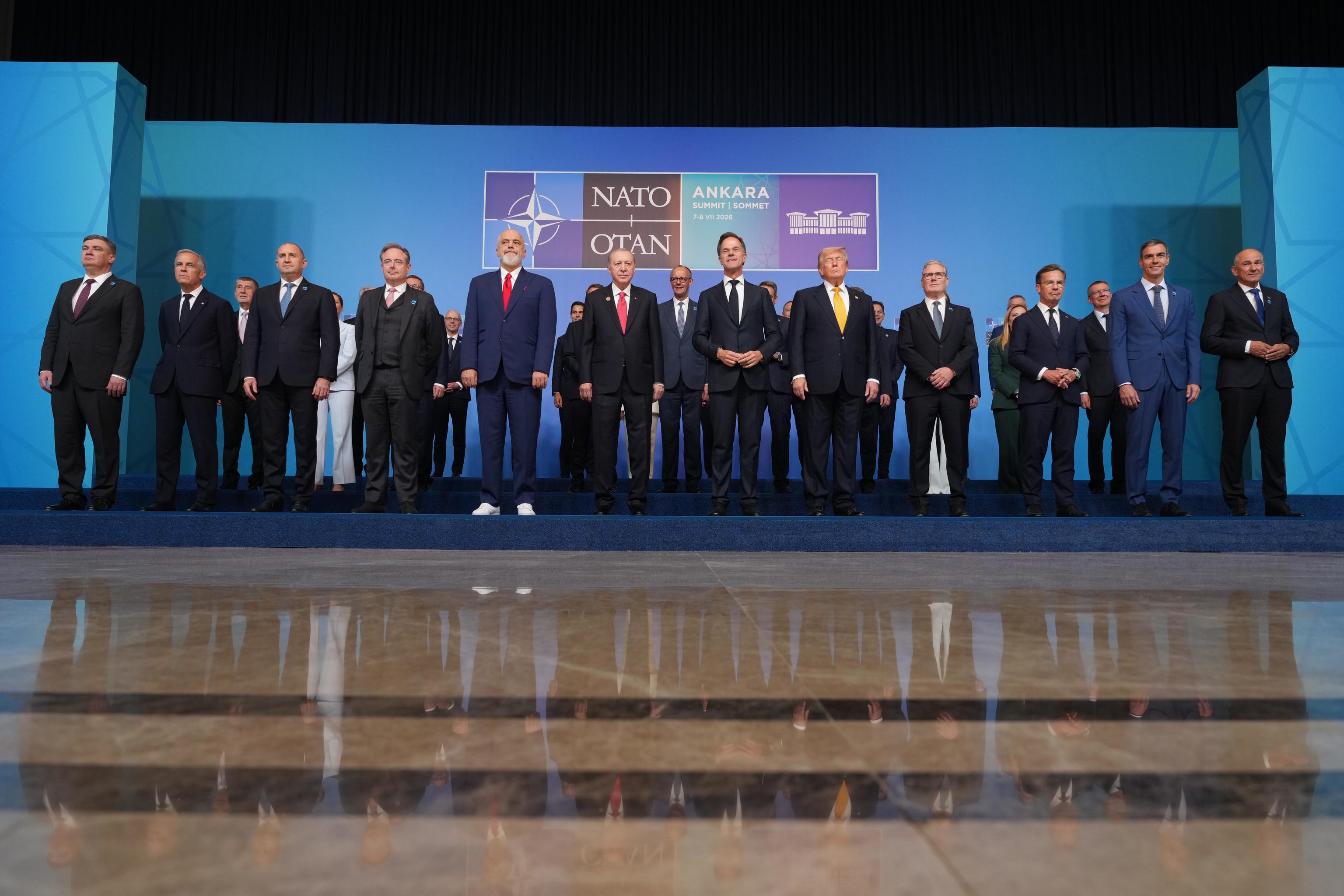
"Spain is a lost cause. We no longer want to do any commercial business with Spain. They are bad people." Hours later, he eased off. He reiterated that our country "behaved very badly" for not supporting him in his offensive against Iran. But that was it. And later, on the return flight, he surprisingly changed his tone: "Today Spain completely backtracked, was very generous." "It's Trump in its purest form", notes a member of the Government. In between the two Trumps, Pedro Sánchez and the U.S. President briefly conversed while waiting to take a family photo. They talked about soccer and golf. "Trump is a fan, I don't practice as much," said Sánchez in his statement. A snapshot of the relationship.
The criticisms from Trump did not catch La Moncloa off guard. They were expected. But they did not startle them. Just as it did not startle them when on Tuesday he attacked other European countries, but not Spain. At the NATO summit plenary, diplomatic sources indicate that there was no condemnation of our country in front of the other leaders. "As expected. Barbarities outside and inside, no reproach towards anyone," sources from the Spanish delegation point out. Political wrestling for the Spanish Government. The performance, for now, without bruises. Economic sources from the Executive explain that despite Trump's bluffs, they have not detected any economic consequences or a decrease in investment in Spain in recent years.
However, the Damocles sword of military spending and the fact that Trump may stop bluffing and break the rope at any moment is something hovering over La Moncloa. Sánchez arrived in Ankara with the strategy of presenting investment and military spending data as a shield and endorsement against the criticisms. Shifting the debate to the field of numbers rather than opinions. Something that is not acceptable to the U.S. President, who demands that European countries spend more, nor to Mark Rutte, the Alliance's Secretary-General, who remained silent and did not defend Spain from the U.S. President's criticisms.
German Chancellor Friedrich Merz did lend a hand, stating in a press conference that Trump approved of Sánchez's explanations regarding the efforts our country is making to meet the Defense spending targets. "Sánchez once again explained that the Spanish Government is now making a huge effort to meet the agreed objectives in The Hague, and that was also received with great approval by President Trump."
"We are not going to give it the importance that others would like", is the motto within the Government regarding Trump and his attacks. The strategy is to avoid confrontation, not escalate tension. "When one steps back a bit from these statements, what one sees is that relations are very positive socially, culturally, and economically," Sánchez stated to journalists. An example of the normality that prevails in everyday life is that it is planned for the sixth U.S. destroyer ship to arrive at the Rota naval base after the summer, where there were previously four.
Sánchez benefits from confronting Trump because he has cultivated the role of an international leader who is the antithesis of the American leader. This earns him support and mobilization on the left. But once the data confirms a significant increase in military spending in recent years - it has grown by over 24,000 million annually since 2019 - they want to ground the discussion there and not in rhetoric. Even though in an upcoming election campaign, or as a lever to rally his supporters, the socialist leader continues to portray Trump and other leaders like Milei or Abascal as the enemy to beat.
"You have to understand Trump. People know him. One thing is the public discourse and another... You have to understand people and the context in which they say things." Diplomatic sources state that in the closed-door meeting of NATO leaders, he did not verbalize any criticism of Spain or any partner. "Love, love, love", summarize from the Spanish delegation. In contrast, they point out that countries like Latvia or Turkey thanked Spain for its deployment on their territories.
"Life goes in a different direction than what is intended." Because the flying kick gives the impression of hitting, but in reality, it does not make an impact. However, this does not diminish the seriousness of the clash between the White House and La Moncloa, where the consequences of just one spark igniting can be drastic.
For now, the fact that Spain is once again being targeted prompted the European Commission to come to the defense of one of the EU Member States, while maintaining its usual discourse. "The Commission will always ensure that the interests of the European Union and all its Member States are fully protected. We will continue to advocate for a stable, predictable, and mutually beneficial transatlantic trade to the benefit of all." This argument is also embraced by Spain: action cannot be taken against a State because economic policy is directed by Brussels.
La Moncloa is handling Trump's attacks with "patience" and "normality". But they also do not like that he continually puts our country in the spotlight, trying to portray us in a negative light or presenting us as vassals of the U.S., an image that parties like Podemos convey. "Whether we are dragging our feet is up to those who want to believe it. Let's see what happens in November and who is dragging their feet," they say in reference to the midterm elections in the U.S., which are a barometer for the political direction the country may take, and where they are waiting to see what support the current president receives. It so happens that Sánchez will also face general elections in 2027 where, at least until now, the polls are not in his favor.