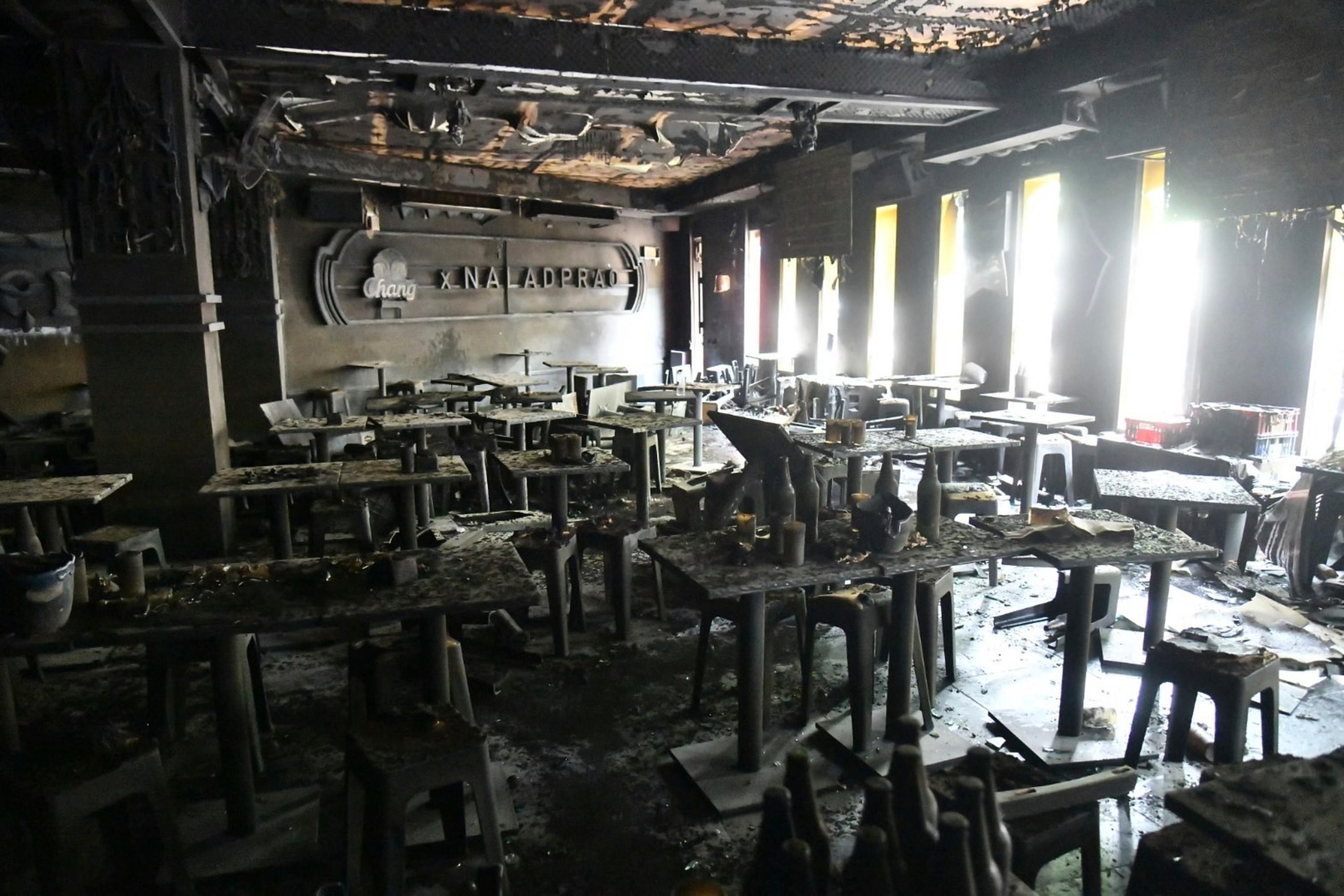
Shortly after midnight on Sunday, the interior of the Na Ladprao pub, a popular live music venue located in northern Bangkok, turned into a death trap. In a matter of seconds, black smoke began to spread across the ceiling as dozens of customers tried to find a way out amid darkness, panic, and screams. At least 27 people died, and 63 others were injured in one of the worst fires recorded in the Thai capital.
The first hypotheses suggest that the fire originated near the stage while a band was performing in front of a full house. A band member stated that they saw smoke falling from above, then the lights went out, and "explosions" of fire swept through the venue.
As explained on Monday by the Thai Prime Minister, Anutin Charnvirakul, after visiting the site a few hours after the tragedy, musicians reported seeing smoke coming out of an electrical panel near the stage. Moments later, a power cut occurred, followed by an explosion. In just a few seconds, the flames began to spread across the ceiling, and a thick cloud of smoke filled the entire room.
Images released by rescue teams show huge flames coming out of the main entrance of the establishment as several people tried to escape amid a dense column of black smoke visible from several hundred meters away.
Firefighters managed to control the fire in approximately half an hour, but when they managed to enter the interior, they encountered a devastating scene: tables and chairs completely charred, walls blackened, and dozens of bodies lying in the back of the venue.
The location of many of the victims has been a focal point of the investigation from the beginning. As confirmed by the Prime Minister himself, numerous bodies were found near the bathrooms, located at the back of the establishment. Everything indicates that many customers, disoriented by the darkness and poor visibility caused by the smoke, ran towards that area believing they would find an alternative way out. However, they became trapped when toxic smoke filled the venue.
The Governor of Bangkok, Chadchart Sittipunt, revealed that one of the emergency exits may have been blocked by furniture from the establishment itself. An investigation was also announced to determine if the venue complied with regulations regarding licenses, capacity, and fire safety measures. Among the injured is the pub owner, while two of the musicians performing that night also died.
Investigators believe that the rapid spread of the fire could be due to the combustion of highly flammable materials installed on the ceiling to improve the venue's acoustics. The Governor pointed out that some plastic tables and chairs remained relatively intact, an indication that the flames mainly spread through the upper part of the establishment while the smoke descended rapidly to cover the entire room, a phenomenon especially lethal in fires in enclosed spaces.
Bangkok receives over 30 million international tourists each year and prides itself on being one of the world's major nightlife capitals. However, tragedies like this one once again bring into scrutiny the deficient safety standards that still persist in numerous venues in the city.
Despite successive legal reforms, some analysts point out that inspections continue to be irregular. Authorities have been facing accusations of inadequate surveillance of compliance with construction and fire prevention regulations for years.
The latest catastrophe has revived memories of the Santika nightclub fire, one of the greatest tragedies in recent Thai history. During the New Year's Eve celebration in 2009, a pyrotechnic show inside the venue caused a fire that resulted in the death of 66 people - including numerous foreign tourists - and left over 200 injured.
Subsequent investigations concluded that the building had an insufficient number of operational emergency exits and that a significant portion of the fire prevention systems were not functioning correctly. The case ended with judicial convictions for the owners and became a symbol of negligence in terms of safety.
Just 13 years later, in August 2022, another fire shook the Thai nightlife industry. In the province of Chonburi, southeast of Bangkok, a fire ravaged the Mountain B club, where 26 people died and over 40 were injured. Investigations revealed that the venue lacked the necessary licenses and that much of its walls and ceilings were covered with highly flammable acoustic foam, the same type of material that has caused similar tragedies in nightclubs worldwide.
The Na Ladprao fire now reopens an old debate in Thailand. While forensic experts try to determine the exact origin of the flames and engineers inspect the building's structure, attention once again focuses on a recurring problem: overcrowded venues, blocked exits, lax controls, and regulations that, all too often, are only reviewed once the smoke has cleared and the victims are no longer counted.