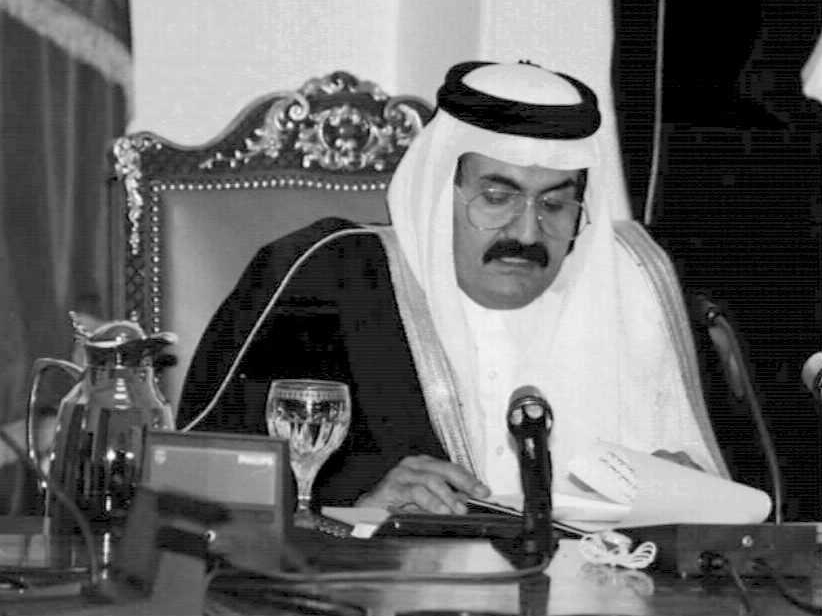
When Hamad bin Jalifa Al Thani assumed power in 1995, after a bloodless palace coup against his own father, Emir Jalifa, Qatar was already rich in oil, but the state coffers were half empty, and the country had never really made a mark on the international stage. Eighteen years later, when he surprisingly abdicated the throne to his son Tamim - the current sovereign, Qatar enjoyed the highest GDP in the entire Middle East, the state sovereign wealth fund created by him participated in or controlled business empires worldwide, including a significant portion of Europe, and the Emirate had not only become one of the key allies of the United States in the most turbulent region on the planet, but its diplomatic influence and mediating capacity allowed it to stand on equal footing with the giants of the region, especially Saudi Arabia, which was already wary, in 2013, of the prominence achieved in such a short time by Doha.
The political role of the former Emir Hamad, who passed away on Sunday at the age of 74, was truly extraordinary. We are undoubtedly facing one of the most prominent Arab leaders of his generation, who radically transformed the face of Qatar. When he took the reins of the nation, it was still almost the small land of old pearl fishermen and Bedouin tribes that had inhabited it for centuries.
But Hamad's construction fervor - in the midst of a modernization race throughout the region, with a similar impact to that of the United Arab Emirates - and the extraordinary profits of the Qatar Investment Authority (QIA), the state sovereign investment fund established in 2005 to manage the surpluses generated by oil and natural gas, led to a new architectural landscape of imposing steel and glass structures and impossible geometric shapes that symbolized and still symbolize the strength of this Gulf country, with an area of 11,600 km², one of the smallest, stretching along 180 kilometers on a peninsula that seems to want to separate from Saudi Arabia and immerse itself in the waters of the Persian Gulf that bathe its borders. However, the urban development frenzy was accompanied by a massive and highly controversial hiring of foreign workers - many Pakistanis or Palestinians - who today make up the bulk of the total population, around 2.5 million inhabitants. Complaints about the semi-slavery regime in which these employees operate are one of the most painful aspects of this absolute monarchy, where human rights are not respected, nor anything resembling individual freedoms.
Hamad was the eldest of the five male children - in addition to 12 females - born to Jalifa, who was the sixth sheikh of the dynasty and the second emir of modern Qatar, following the liberation from Ottoman rule in 1913. The Al Thani family had established themselves in power in the territory by the late 19th century, when Britain signed an agreement with the dynasty's chieftain - with thousands of members, like most Arab royal families. London needed Qatar to have stable political authority to combat the prevalent piracy and ensure maritime transport for the East India Company, and the Al Thani family took advantage of this to rid themselves of the vassalage that the place, inhabited mainly by pearl fishermen, provided to the Jalifa family ruling - just like today - Bahrain. The Qataris could not avoid falling later under the Ottoman sultan's orbit, nor becoming a protectorate of London until Qatar's definitive independence in 1971. Doha rejected the possibility of joining the United Arab Emirates federation.
Hamad's father, Emir Jalifa, was crowned after deposing his cousin Ahmad in 1972. As mentioned earlier, he would later be overthrown by his son, our protagonist. Hamad was immediately proclaimed crown prince. He gradually assumed almost all top government positions in Doha.
Regarding the palace coup against his father in 1995, while he was in Switzerland, there are different theories. On one hand, Hamad, who had already become the true strongman of the nation and its de facto ruler, had desires to undertake economic, institutional, and political-diplomatic reforms that his father was hindering from the throne. On the other hand, there was always speculation that Hamad carried out the bloodless coup to prevent the possibility of his father maneuvering with one of his half-brothers, Prince Abdulaziz, who had self-exiled in Paris due to disagreements with the powerful Hamad's political decisions. The Heir may have feared that his father would replace him in the dynastic order, as Qatar did not strictly adhere to male primogeniture, but rather the reigning sovereign could appoint his successor at will. The deposed Jalifa initially did not accept what had happened, and even orchestrated a subsequent failed counter-coup against his son, involving pawns from several neighboring countries. However, by the end of 1996, a family reconciliation took place, Jalifa abdicated his rights, and recognized his son as ruler, who was crowned as emir in the year 2000.
Beyond the significance brought to Doha by its substantial profits from hydrocarbon exports - if oil is important, gas is even more so, with 10% of the world's proven reserves - Emir Hamad embarked on a diplomatic policy that made him a key player in the region. Decisions such as strengthening relations with the Iranian ayatollah regime and approaching Israel - Prime Minister Simon Peres made a historic visit to Doha in 1996 - were poorly received in Riyadh, which did not take kindly to its tiny neighbor starting to act independently in foreign affairs.
However, if there is a milestone for which Hamad's reign is remembered, due to the extraordinary impact it has had to this day, it was the foundation of Al Jazeera network in 1996, primarily funded by Qatar and at the behest of the monarch himself. What soon became the main source of news in the Arab world, under the guise of independence, with coverage in all conflicts and unprecedented reporting of events such as the Second Palestinian Intifada, the September 11, 2001 attacks in the United States, or the subsequent wars in Afghanistan and Iraq, was soon perceived by most regimes in the Arab world as an uncomfortable tool against their interests. Saudi Arabia, Egypt, the United Arab Emirates, and Bahrain soon demanded its closure. In fact, the channel became one of the main obstacles that the Sunni nations led by Riyadh would end up breaking off relations with Qatar for years, already under the reign of the current emir, Tamim.
Following the 9/11 attacks, Emir Hamad became one of the United States' most active supporters in Operation Enduring Freedom, making Al Udeid Air Base—located 35 kilometers from Doha—available to the U.S. Joint Forces Command, where up to 11,000 troops would be permanently deployed. Qatar, however, expressed its opposition—though it limited itself to public dissent—to the invasion of Iraq that brought an end to Saddam Hussein's regime. And Washington harshly criticized what many considered the emirate's double-dealing during those times of war, since, while Doha was a key ally in the Gulf, Al Jazeera was providing coverage of what American hawks described as "terrorism."
Emir Hamad never heeded pro-democracy demands, but he did modernize Qatar's institutional structures, granting the country its first Constitution and establishing a unicameral Parliament—though its functions are essentially advisory, since the monarch appoints the members of the government, who are accountable only to him. His abdication in the fall of 2013 took everyone by surprise. Although who knows to what extent the unorthodox manner in which he had ascended to the throne influenced his decision.