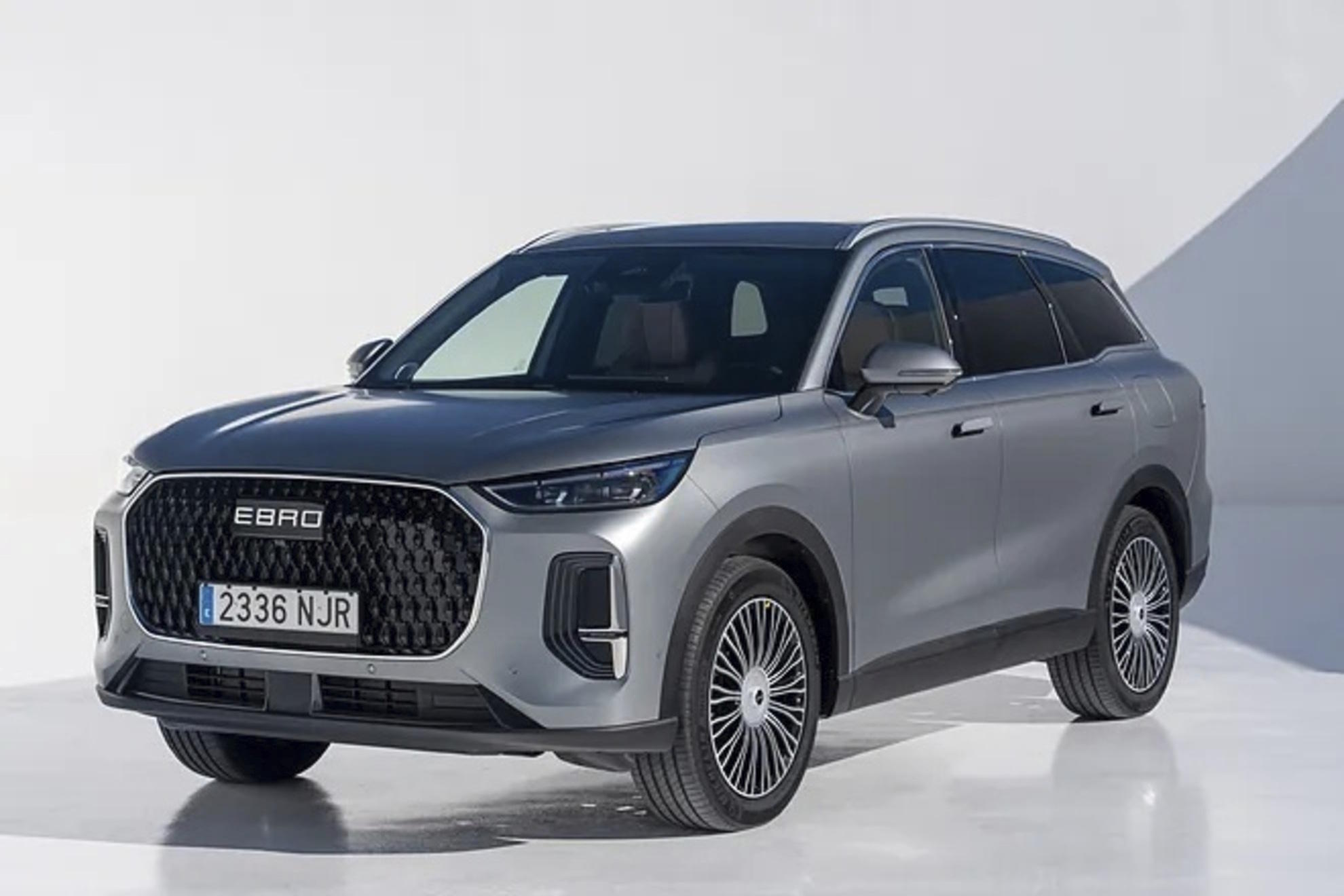
At first glance, only the sales figures are already beginning to justify this industrial localization in the Old Continent, as the Americans, Japanese, and Koreans did in their time, in that order. According to the European association Acea, in just the first five months of 2026, SAIC exceeded 141,000 registered vehicles and BYD, 135,000. Furthermore, within the global automotive landscape, with the US closed to its products and other regions lagging far behind in electrification, Europe emerges as a conquest market for Chinese brands, highly profitable, and serving as an escape valve from the fierce competition and overcapacity in their home country. Last year, Stéphane Séjourné, Vice President and Head of Industrial Strategy of the European Union, questioned the industrial scope of some of these projects. And the Spaniard Josep Maria Recasens, who until just a month ago was a top global executive of the Renault Group and president of the Spanish association Anfac, stated, "We cannot allow China to come to Europe to make four metal sheets with wheels and seats without any added value. They have to teach us." The remarks were aimed, without saying it, at Ebro and Chery, who, by the way, announced their plant months before Brussels imposed tariffs on Chinese electric cars. Initially, they started by finishing vehicles that were more than 90% made in China, but they have just launched a second line where a large number of parts are already assembled, and other activities such as painting, assembling all those components, and final quality control are carried out. Additionally, Chery has established its European headquarters and its first R&D center outside of China right in Catalonia.
There are also doubts about the future of the SAIC plant in Ferrol, which promises to produce 120,000 cars per year and provide direct employment to over 1,000 people. Because the initially announced investment of 200 million euros seems very modest compared to what is customary. For example, the Chery and Ebro plan foresees injecting up to three times that amount. The Xunta de Galicia points out that "value will be added from the beginning, and it is not just a warehouse for assembling cars." Furthermore, they indicate that "SAIC has always been told that at least 50% of the components should be of local (European) origin by 2030." And that this is "just the first phase of a global strategic project" that will progress towards a "total" factory including a supplier park. The Anfac vehicle manufacturers' association positively assesses all announced projects, recognizing "the value of Spain as an ideal destination for investment." However, they also point out that, "in fair correspondence, they must contribute value, employment, and technology, and utilize the extensive and competitive Spanish automotive value chain. If not, the investment is not mutually beneficial and, therefore, not desirable."
This leads us to the so-called Industrial Acceleration Law (IAA in English) published by Brussels in March, which is still subject to debate, so it may undergo changes and would not come into effect until well into 2027. Concerning the automotive industry, its aim is to boost local industry in everything related to electric cars, ensuring competitiveness and increasing technological sovereignty. Although Spain leads these movements, France, Italy, or Germany have also put themselves forward for new projects. The IAA seeks to reduce potential benefits for vehicles imported from China, although the country is not mentioned; to end industrial operations that do not add content; to encourage their manufacturers to invest and produce here with local components, and to compel them to share knowledge in a technology they master.
The strategy is articulated through two lines. On the one hand, the concept of made in Europe. This will require manufacturers to assemble their cars in the EU to benefit from purchase incentives, subsidies, or contracts with administrations. However, not with imported parts: 70% of the value (pre-tax) of the vehicle components must originate in the region, which could include the UK. The measure applies to pure electric, fuel cell models, and plug-in hybrids. The battery is excluded, for which (in a first phase) three main components, including cells, must come from the Old Continent. The second step concerns conditions for foreign direct investments. Specifically, for projects exceeding 100 million euros executed by companies from countries representing over 40% of global production in the relevant sector. In other words, China in most strategic sectors protected by the IAA. In these cases, and as China did, foreign manufacturers cannot own more than 49% of the company capital that drives the project, which can be a joint venture with one or several European companies. They must also share intellectual property rights and transfer their technical knowledge "for the benefit of the EU." Finally, at least 50% of the workforce employed from the project's start and throughout its operation will be composed of Old Continent workers.
Beijing states the opposite. Knowledge transfer, technological cooperation, and joint development of industrial capabilities are key aspects of this landing, but it does not seem so clear. This is a request echoed by Western manufacturers, anxious about their lag in this field, and which, in the Spanish case, Pedro Sánchez has reiterated in his numerous trips to that country. The most recent one was in April of this year. However, following the technological rivalry with the US, which has turned innovation into a matter of national security, Beijing has just issued a regulation that safeguards the outflow of strategic technologies. The goal is to prevent the accumulated advantages in sectors such as electric vehicles or advanced computing from benefiting foreign competitors. In fact, at the CATL battery gigafactory in Figueruelas (Zaragoza), a significant portion of specialized staff is expected to come directly from China. Beijing's decision clashes with what happened decades ago when the priority was to attract foreign technology to accelerate its economic development. In this regard, the European automotive industry argues that they carried out that transfer when they wanted to establish themselves in the Asian giant, so their demand is "simply a matter of reciprocity."
That is not the idea of Alfredo Altavilla, special advisor for BYD in Europe. The executive has pointed out that "when VW or Fiat were limited to minority stakes in Chinese joint ventures in the late 1990s, they imported outdated models instead of their most advanced technology." In fact, a maneuver of this kind thwarted the alliance between VW and Suzuki, which barely lasted from 2009 to 2011 after complaints from the Japanese about the low level of what the German manufacturer wanted to share with them. Altavilla's conclusion is clear. Doing what the IAA intends is "not coexistence. It is brutal violence."