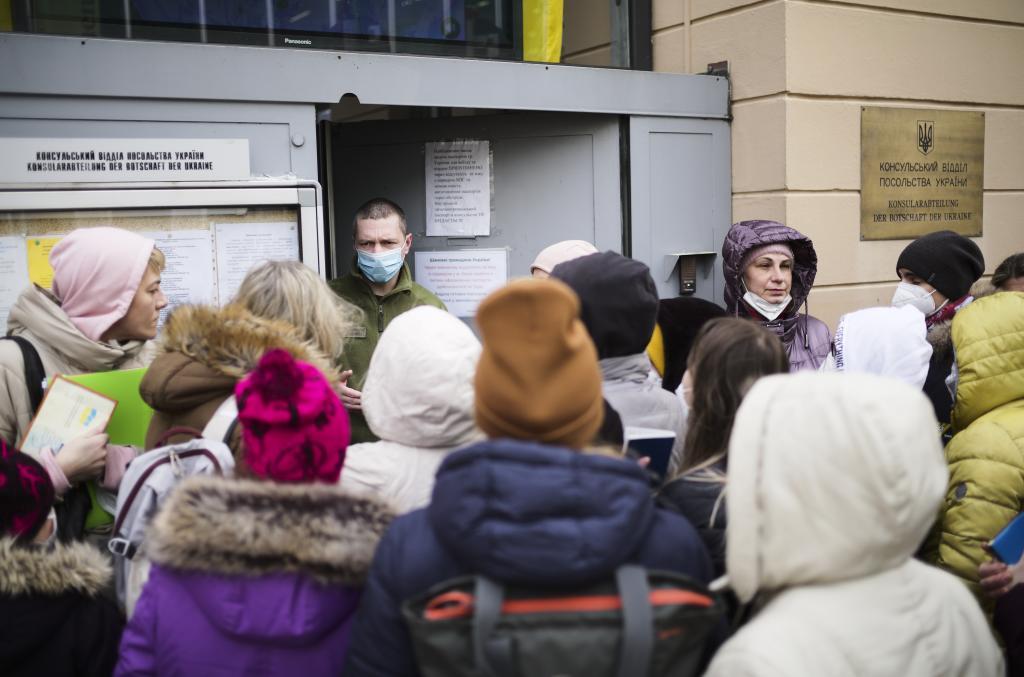
The European Union will stop hosting new Ukrainian refugees who have not fulfilled their military obligations. The European Commission proposed it last month, and the Council approved it this Wednesday. It is an action that the country's president, Volodymyr Zelensky, had requested due to recruitment problems, and it will take effect immediately.
"Taking into account Ukraine's changing defense needs, from now on, temporary protection will only be granted to those who fulfill their military obligations in Ukraine. This limitation will apply only to new applicants for temporary protection and not to those already benefiting from it in the EU," explains the statement signed by the Twenty-Seven.
Ukrainian refugees must demonstrate that they have fulfilled their obligations by presenting in their passport the exit stamp issued by the Ukrainian authorities certifying that they left Ukraine legally and, therefore, fulfilled those obligations. They can also do so by providing a document confirming the fulfillment of their duties. Brussels also emphasizes that the action will not be retroactive, meaning it will only apply to new applicants once it is published in the EU's official journal and comes into effect.
The measure is part of the extension for another year, until March 4, 2028, of the temporary protection status that the European Union grants to Ukrainian refugees fleeing the war, allowing them to reside and work in European territory.
"The message is clear: we continue to support Ukraine. And as part of our support, we also want to ensure that Ukraine can defend itself. That is why our temporary protection framework respects Ukraine's legitimate needs," said Irish Minister of Justice and Interior Jim O'Callaghan, whose country holds the rotating presidency of the EU Council.
"The current uncertainty and volatility in the situation in Ukraine do not allow for the end of temporary protection for beneficiaries currently in EU member states or for those who may still need it. These individuals must continue to be protected within the Union," the Commission stated when making its proposal.
"Although the protection of displaced persons from Ukraine who need it remains a priority, temporary protection should not be granted, as a general rule, to individuals leaving Ukraine from the date of entry into force of this Decision and who cannot prove to national authorities that they have been authorized by Ukrainian authorities to leave the country in compliance with their military obligations," added the Von der Leyen Executive.
No agreement on sanctions against Russia
Also on Wednesday, negotiations resumed to approve the 21st package of sanctions against Russia, but countries still have not reached an agreement. On Monday, at the Foreign Affairs Council, some capitals expressed doubts about the plan presented to gradually eliminate liquefied natural gas, and Austria also demanded that a Vienna-based bank be allowed access to sanctioned assets, with diplomatic sources confirming that unanimity required for sanctions has not yet been achieved.
However, what was agreed at the ambassadorial level meeting was to extend the cap on the price of Russian oil, which was to be reviewed today if the new sanctions package was not approved. According to current regulations, the maximum price must be 15% lower than the market average, and with the closure of the Strait of Hormuz, this reference has skyrocketed.
Consequently, the new limit was set to rise from $44 per barrel to almost $60, a figure the Commission considers unacceptable. Therefore, the EU wants to include a measure among the sanctions to correct this effect and prevent Russia from further enriching itself. Brussels estimates that it is absurd to sanction Vladimir Putin but then allow him to continue receiving large amounts of money through this channel. The countries have agreed to postpone the new review until July 23, that is, until next week. They are giving themselves that time frame to continue negotiating and definitively approve the sanctions package.