Naruhito became the 126th emperor on May 1, 2019, of a Japan that proudly boasts of having the oldest reigning dynasty on the planet, all sovereigns of the same lineage for 2,600 years, direct descendants of the goddess Amaterasu - the great sun deity - according to Shinto tradition. Although experts agree that the first occupants of the Chrysanthemum Throne were actually mythical figures, the imperial institution has survived all kinds of historical events and the fall of regimes worldwide.
Out of those 126 sovereigns, with an emphasis on an uninterrupted line of continuity, there are eight women who were crowned empresses. The first, Suiko, reigned from 593 to 628 AD to preserve the dynasty on the throne, facing the threat of the powerful Soga clan who saw an opportunity to establish a purely military government in a power vacuum. Suiko, among her many feats, is remembered for opening the doors of the Land of the Rising Sun to Buddhism. The last empress was Go-Sakuramachi, who reigned as sovereign between 1762 and 1770, while her stepbrother Crown Prince Hidehito reached adulthood.
Despite the history and the role that women have played in the Japanese Monarchy over the centuries - always secondary, indeed, since not even those who were crowned empresses could transmit succession rights, something that in Japan has been maintained patrilineally uninterrupted - the controversial reform of the Imperial Household Law has come into effect today in the world's fourth economic power - only behind the US, China, and Germany - after navigating through a stormy parliamentary process in recent weeks, aiming to address the worrying reduction in the number of imperial family members, to the extent that without action, there is a risk of the Yamato dynasty becoming extinct. As it sounds. However, far from taking the opportunity to make the institution more modern through a new regulation, the conservative government led by the country's first female prime minister, the conservative Sanae Takaichi, has used its majority to push through a law that is quite incomprehensible to the majority of the population - let alone to Western eyes - which, above all, represents a definitive closure to the possibility of a woman reaching the head of the State.
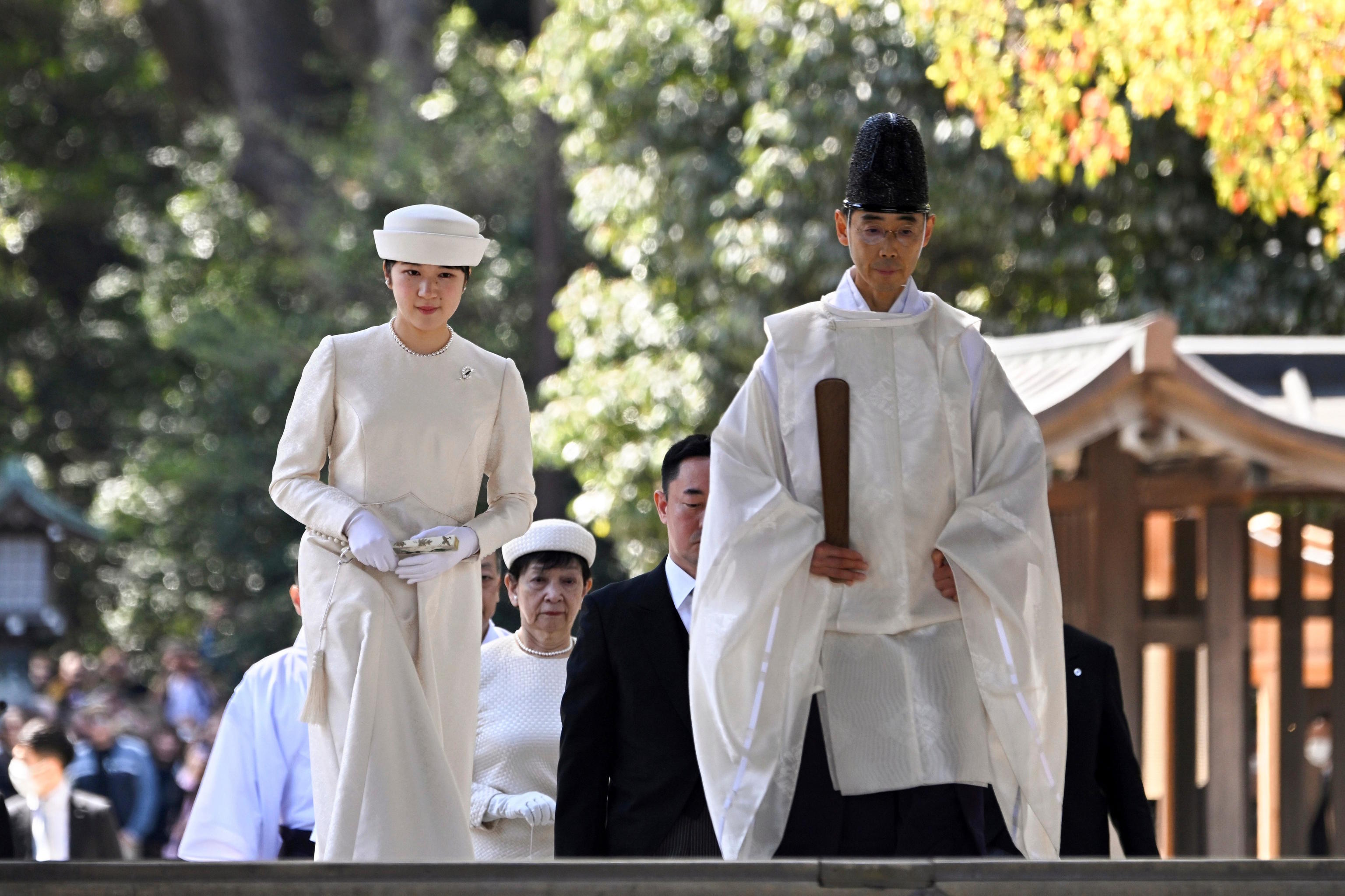
There are two fundamental measures that come to light in the revamped Japanese Imperial Household Law. On the one hand, from now on, princesses will maintain their status and, therefore, will continue to carry out Crown representation duties, even if they marry. Until now, female members of the dynasty became commoners and were excluded from the institution when they decided to marry commoners - and today they have no other choice, as there is no bench of male princes available. This is what happened, for example, to the daughter of the previous emperors and sister of Naruhito, Sayako, who ceased to be a princess and has been a completely anonymous citizen since her marriage in 2005. However, neither the future husbands nor the children of princesses who marry will have imperial status, nor will they be able to transmit succession rights.
Pressure on the twenty-year-old Hisahito
Given that this is just a patch to ensure that there will be a sufficient number of members in the dynasty in the coming decades, and as the only male under 60 years old - and therefore, the hope that he will become a great stud who will have children as if there were no tomorrow - is Prince Hisahito, the emperor's nephew, the controversial law that receives approval today has included another measure, which is that the imperial family can adopt males under 15 years old descended from the 11 lines with distant kinship to previous emperors who lost their royal status after the adoption of the 1947 Constitution. Why? Because even though these males may not ascend to the throne, their descendants could. This is what the conservative Japanese political class has come up with as the only solution in case Hisahito does not have children, or even if he does, there may come a time when they find that the bench of imperial males is not growing. Indeed, it is strange that a commoner can suddenly assume the protocol of the Court with the strictest customs and traditions in the world.
The imperial family is increasingly aging and now has only 16 members. And since only men count for the transmission of succession rights, it is worth noting that, except for the aforementioned Hisahito, the only males in the line of succession to the throne today are his father Akishino (60 years old), the current Crown Prince, and Prince Masahito, an uncle of the emperor who is nearing 90 years old, who, logically, is not thinking about sitting on any throne.
The heated debate that this reform of the imperial law has sparked in the Diet, especially in the Upper House where the Government does not have a majority, has been closely followed by the Japanese public, who see how their desire to end the male-only succession law has not been taken into account. According to a survey published by Mainichi Shimbun at the end of June, 73% of Japanese people support a woman's accession to the Chrysanthemum Throne, while only 6% oppose it. Another survey conducted by Yomiuri Shimbun showed, in the same vein of equal advancement, that 75% support women of the imperial family retaining their status after marriage, compared to 13% who oppose it. Regarding the incorporation through adoption of descendants of the ancient imperial branches, 46% were in favor and 36% were against. The rigidity of the ruling class is less understandable when, it should not be forgotten, the strict male-only succession law is a product of the rules promulgated during the Meiji Era (1868-1912), and as mentioned earlier, there were indeed female sovereigns at the pinnacle of power.
"There is broad public support for women of the imperial family to maintain their status after marriage, while the proposal to incorporate descendants of the ancient imperial branches through adoption divides public opinion. In general terms, I consider that a significant part of the population is not fully convinced by the project presented by the Government. This is because the reform rules out the possibility of Princess Aiko [daughter of Naruhito and Masako], who is very popular among the population, from inheriting the throne and, instead, aims to preserve male-only succession by incorporating descendants of the ancient imperial branches," explains Yohei Mori from Tokyo to EL MUNDO, a university professor and journalist specializing in the Japanese Imperial House.