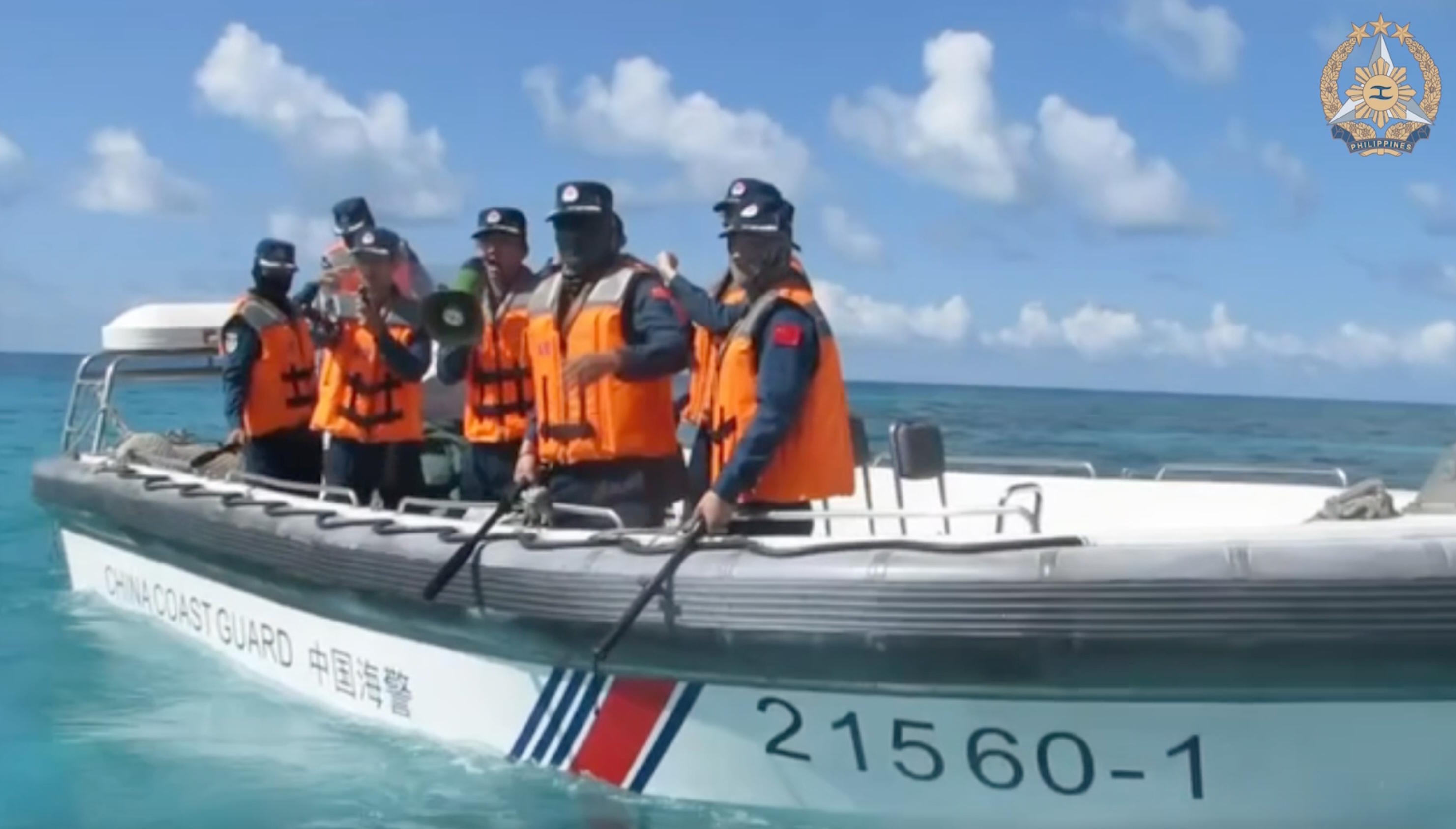
Every summer, when the heat intensifies on the coast of Fujian in southern China, the People's Liberation Army (PLA) intensifies the training of its troops, mainly targeting the always tense Taiwan Strait. This Thursday, Chinese military authorities announced two days of live-fire exercises off the coast of Dongshan Island, just a few kilometers from the strait separating mainland China from the self-governing island. A new reminder that Taiwan remains the main focus of military tension in the region.
The exercises focus on two maritime areas near the mainland coast. According to the coordinates released by the Chinese Maritime Safety Administration, the training zones are less than 12 kilometers from the coast of Fujian province and will be closed to navigation during the maneuvers.
Although they do not involve a direct approach to Taiwan, they are part of a pattern that the Xi Jinping government has been perfecting in recent years: maintaining constant military pressure on the island without crossing the threshold of open warfare.
Beijing has never hidden its view that Taiwan is a rebellious province whose reunification, by force if necessary, is an irrevocable goal. This position has been part of the official discourse for decades. What has changed is the intensity of military pressure. For the past four years, the intrusions of Chinese fighter jets, bombers, drones, and ships in the vicinity of the island have ceased to be exceptional incidents and have become routine.
In Taipei, there has long been talk of a "gray zone harassment" campaign: operations designed to psychologically and militarily wear down the adversary without triggering a conventional conflict. Each day, the Taiwanese Ministry of Defense publishes the number of Chinese aircraft and ships detected near the island.
Also becoming common are crossings of the median line of the Taiwan Strait, a tacit boundary that both sides informally respected for decades. The Chinese military stopped recognizing that line after the major turning point in August 2022, when the then Speaker of the U.S. House of Representatives, Nancy Pelosi, landed in Taipei defying Beijing's repeated warnings.
For the Chinese leadership, that visit crossed a red line. The response was immediate: the PLA conducted the largest military exercises ever held around Taiwan, with ballistic missile launches, naval maneuvers, and blockade drills that virtually surrounded the entire island. Since then, that show of force has ceased to be an exception and has become the new starting point.
In April 2023, following a meeting in California between then Taiwanese President Tsai Ing-wen and Kevin McCarthy, former Speaker of the House of Representatives, Beijing organized new maneuvers that included operations with aircraft carriers, air strikes against military targets, and partial naval blockades. The message was clear: any rapprochement between Taiwan and the United States would have a strategic cost.
The assumption of the Taiwanese presidency by Lai Ching-te did not ease tensions. In early 2025, just weeks after Lai described Beijing as a "hostile foreign force," the Chinese military announced another major operation around the island.
In that exercise, the Navy, Air Force, missile brigades, and the Shandong aircraft carrier, accompanied by a large group of warships, participated. Colonel Shi Yi explained at the time that the maneuvers aimed to practice a comprehensive blockade of Taiwan, conduct attacks on maritime and land targets, and test the coordination capabilities among all branches of the military.
Each new exercise in the strait serves to rehearse specific scenarios: isolating the island through a maritime blockade, cutting off its trade routes, controlling airspace, or preventing potential U.S. and Japanese intervention. Many analysts believe that Beijing is trying to accumulate enough operational experience to have multiple military options available, without needing to decide yet when to use them.
In recent years, the idea that China had set 2027 as a deadline to be prepared for an invasion became popular. This interpretation arose from Pentagon reports linking that horizon to the modernization of the PLA. However, the latest U.S. intelligence assessment introduces an important nuance: Beijing does not seem to operate on a fixed schedule. Its priority remains to create the political, military, and economic conditions that would make future reunification possible without assuming the enormous costs of a war.