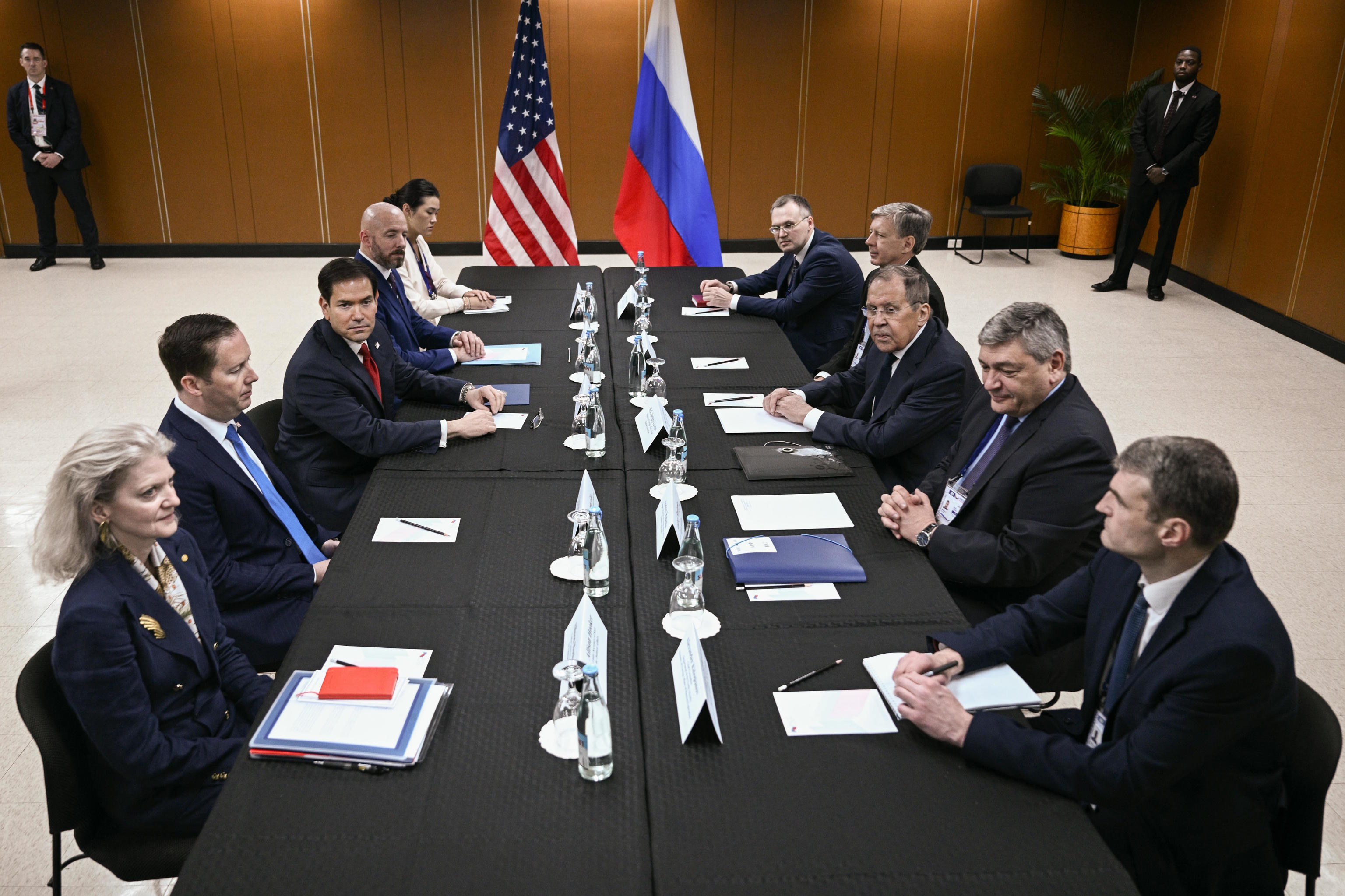
On the sidelines of the summit of ministers from the Association of Southeast Asian Nations (ASEAN), the United States and Russia sat face to face again on Thursday. The meeting between U.S. Secretary of State Marco Rubio and Russian Foreign Minister Sergey Lavrov barely exceeded half an hour. But that time, as some analysts point out, was enough to confirm an evidence that has been marking the relationship between both powers for months: the dialogue is not completely broken, but there is also no real way to unlock the war in Ukraine for now.
The meeting took place in a new setting. Manila was hosting a regional meeting officially focused on security and cooperation in the Indo-Pacific. However, the Russian invasion of Ukraine once again made its way onto the agenda, reminding to what extent the conflict continues to condition international balance, even thousands of kilometers away from the European front.
According to the Russian Ministry of Foreign Affairs, Lavrov "reaffirmed Russia's readiness for a political and diplomatic solution to the conflict" and conveyed to Rubio that Moscow remains committed to the proposals discussed by Donald Trump and Vladimir Putin during their meeting in Alaska in August 2025. At the same time, the Russian Foreign Minister reiterated the Kremlin's red lines: he deemed it "unacceptable to continue supplying weapons to the Kiev regime" and once again accused European countries of pursuing a "strategic defeat" of Russia.
On the contrary, Washington opted for a low profile. The State Department provided few details of the meeting and simply stated that both officials "discussed the relationship between the United States and Russia and the need to end the war between Russia and Ukraine." The brief note reflects the delicate moment of negotiations that have been stagnant for months without tangible progress.
Beyond diplomatic language, the positions of both governments remain virtually unchanged. Moscow maintains as a condition for any agreement that Ukraine accepts territorial losses and definitively renounces its aspirations to join NATO. Kiev flatly rejects these demands as it considers them a legitimization of the invasion, while demanding greater Western security guarantees before accepting any ceasefire.
The meeting in Manila also coincided with a new attempt to revive the diplomatic path. Ukrainian President Volodymyr Zelensky announced on Thursday that he had held "a good and important conversation on how to revitalize diplomacy" with U.S. envoys Steve Witkoff and Jared Kushner. The message aimed to convey the idea that Washington remains involved in seeking a negotiated solution, even though the White House's strategic focus has shifted in recent months towards the war in the Middle East.
"I believe that the war in Ukraine has hindered, in many ways, Russia and the US's ability to find common ground on other issues," Rubio told reporters before his meeting with his Russian counterpart. "That doesn't mean we're not looking for other areas of possible cooperation. But we would like to see that war come to an end." The Secretary of State added that his country remains willing to play a role in resolving the conflict "if the opportunity arises."
Lavrov, on the other hand, lowered expectations before entering the room. The meeting would be "useful in any case," he stated. "It's good to ask questions and get answers," he pointed out, indicating that he would directly ask Rubio about Trump's recent statements, who has repeatedly claimed that an agreement could be closer than it seems.
This optimism contrasts with the evolution of the conflict on the ground. While negotiations remain frozen, Russia has intensified its bombings on Ukrainian cities, including the massive missile and drone attack at the end of June that left at least thirty people dead in Kiev. At the same time, Ukraine has increased its long-range operations against Russian energy infrastructures, targeting refineries and fuel depots, in a strategy aimed at raising the economic cost of the war for the Kremlin.
The meeting between Rubio and Lavrov, as reported by both parties, also served to address other areas of tension, especially the Middle East. Russia has condemned U.S. attacks on Iran, one of its main strategic partners.
The meeting in Manila did not yield any announcements or concrete progress. But it did confirm that, even in a moment of maximum confrontation, Washington and Moscow maintain small channels of communication open. However, these channels remain heavily influenced by the war initiated by Vladimir Putin, which prevents any serious attempt to rebuild the relationship between the two largest nuclear powers on the planet.