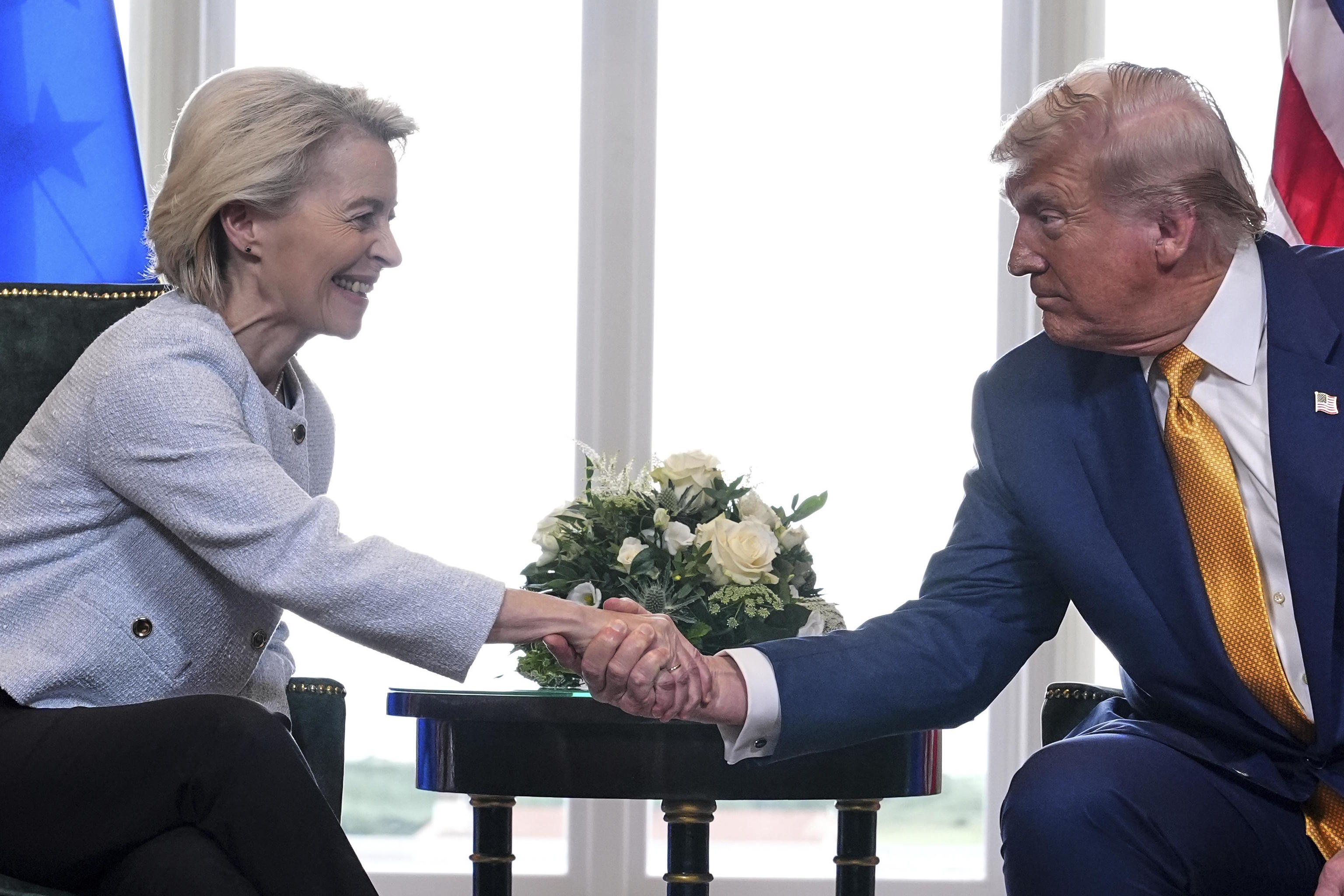
Brussels almost celebrates Donald Trump's decision to impose a 10% global tariff on the European Union. It values it "positively" because it is "in line with the tariff commitments assumed by the United States in the Joint EU-US Declaration". That is, in line with the agreement reached by both parties exactly a year ago in Turnberry (Scotland), which established a maximum general rate of 15% for European products by the United States.
"The European Union takes note of the publication by the United States of the definitive measures adopted within the framework of its Section 301 investigation, related to the lack of action against trade in products manufactured through forced labor," said Commission Trade spokesperson Olof Gill, referring to the announcement made by the US President, Donald Trump, earlier this morning. Yes, the new approach sought by the tycoon's team to impose tariffs is to punish countries that, in their opinion, do not combat forced labor. This includes all EU countries, Japan, or Canada.
"These measures establish a global tariff of 10% for the EU and reinstate additional tariff exemptions for European products, such as cork and diamonds, in addition to those already planned for aircraft and components, generic drugs, and active ingredients," Gill continued.
Brussels also considers that the new tariff "provides a positive boost to continue working on seeking new tariff exemptions and to deepen cooperation in a wide range of areas, such as critical raw materials, economic security, artificial intelligence, and digital issues".
The action comes just after the Commission announced yesterday a fine of almost 900 million euros to Google, something that is not at all well-received in the White House and was carried out through the Digital Services Act that is not well-liked in Washington. This had raised some fears in Brussels about the possibility of Trump overreacting this morning, but so far there have been no retaliations.
And also, as already mentioned, the new wave of tariffs by the US President is activated a year after the agreement signed in Scotland. The terms of that agreement generated some indignation in the EU capital and in some capitals. It was considered a clear defeat for the EU, but in the European Commission, they have always argued that it was the lesser evil and events have proven them right.
"It is fair to say that it has achieved its main objectives. It has protected our trade and investments from what would otherwise have been a growing and unpredictable transatlantic trade conflict," explain EU sources. "It has helped safeguard our key economic interests and has strengthened the unity of the European Union".