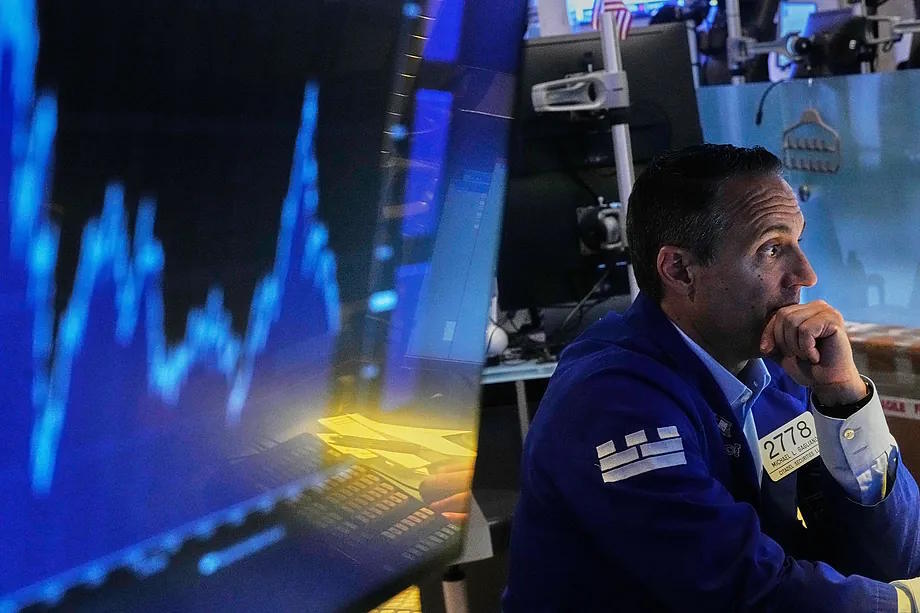
The war in the Middle East opened a new front this week south of the Red Sea after the attack by the Houthi rebels from Yemen on several Saudi oil tankers. From the blockade of the Strait of Hormuz to the possible closure of the Bab el-Mandeb strait - which translates literally as the 'gate of sorrows' and represents the passage to the Gulf of Aden in the Indian Ocean - it is a new stage of the war that describes the situation for investors, who are witnessing how in two weeks they have gone from celebrating the beginning of a peace agreement to anticipating skyrocketing energy prices for the upcoming winter.
The escalation of the conflict between Iran, the US, and other countries involved in the region was particularly felt in the price of a barrel of oil, which yesterday soared over 6.6% and surpassed the psychological barrier of $100. A level not seen in two months, reflecting the current state of nervousness. But it doesn't stop there. The situation of European natural gas is especially critical, after acting as the sleeping beauty of Europe for months. Yesterday, levels of 64 euros per megawatt-hour were reached, the highest in the last two and a half years, with prices slightly below at 62 euros. This is nearly double compared to the beginning of the war on February 28 and triples the levels at which Europeans were buying gas before Russia invaded Ukraine also in a February of 2022.
Just yesterday, the European Central Bank (ECB) warned through its president, Christine Lagarde, about the critical situation of energy prices in Europe. Although lower than the previous month, the energy consumer price index closed June at 8.5%, down from May's 10.6%. This situation is occupying and worrying in Frankfurt. The ECB foresees that electricity and gas prices, which it says it is closely monitoring, will remain high until the second half of 2027. "The geopolitical situation remains fragile after the recent weeks. This could have a greater and more prolonged impact on their prices," Lagarde stated on Thursday.
The decision that the ECB may take at its next meeting in September largely depends on how the commodity markets evolve and their transmission to the economy. The consensus expects another 25 basis points increase in interest rates to try to tackle the 2.8% inflation in the eurozone. If the situation were to become chronic, the institution's forecasts could be thrown off. In June, when the Iran-US agreement was not yet known - nor that it would only last three weeks - the central bank's economic projections estimated European Brent prices at $97 by the end of this year with gas around 45.6 euros per megawatt-hour. Well, gas is now trading 36% higher. The good news is that European crude futures, which have been rising nearly 40% since July 1, are pricing around $86 for December. What does this imply? Investors may be seeing short-term tensions but are confident in a resolution of the conflict in the coming months that would unlock the Strait of Hormuz. It is worth noting that 20% of the world's oil and natural gas supply passes through there.
Germany is the center of attention. With an economy that is struggling to take off, its dependence on both commodities - especially gas - raises doubts about the country's short-term future. Recently, one of its industrial giants, Volkswagen, announced the closure of four plants in the country and global layoffs of another 100,000 workers. Additionally, the market eagerly awaits for the European locomotive to kickstart with the investment plan announced over a year ago with half a trillion euros committed to modernize the country and invest in infrastructure and defense. According to the latest data released by the coalition government led by Chancellor Friedrich Merz, around 11 billion euros of the allocated 40 billion for 2026 had been spent by April, less than a third of the total. Last year, a similar situation occurred, with a disbursement of 24 billion euros, 64% of the planned target. The Iran war has been a significant setback for its economy, with a strong energy dependence from abroad and an industry affected by inflation and supply chain disruptions.
Banca March analysts are focusing on the electricity price, which "will be particularly relevant to assess the extent of inflationary pressures in the Eurozone. To date, the price of electricity in Germany has increased by 37% since the start of the conflict, a significant rise but still far from the levels seen after the invasion of Ukraine, when it soared by 263% over the following five months," they comment.
Meanwhile, the stock markets closed yesterday with slightly over 1% declines, moderate, while the fear index surged over 20%. The VIX of the US stock market exceeded 20 points, the highest since the second week of June, before the market learned about the signing of the MoU, that 'Memorandum of Understanding' between Iran and the US that now seems so distant.
The balance of Western economies is so delicate that while one eye watches commodities and stocks, the other eye is concerned about the debt market where countries like the US and France are in the spotlight. Yesterday, the US ten-year bond continued to climb, with a yield pointing towards 4.7%. These are levels not seen since January 2025 when Donald Trump officially assumed the presidency. The 30-year bond remains consistently above 5% due to continuous selling by investors seeking refuge elsewhere.
The French bond, around 4%, is worrying considering it has not reached these levels since the great eurozone debt crisis back in 2012. This Wednesday, French Prime Minister Sébastien Lecornu acknowledged that the situation was not only "serious" but "worrisome" even considering that French debt is the third highest in the Eurozone (as a percentage of GDP) ahead of Greece and Italy, with the second-highest public deficit in the EU at 5.1%.