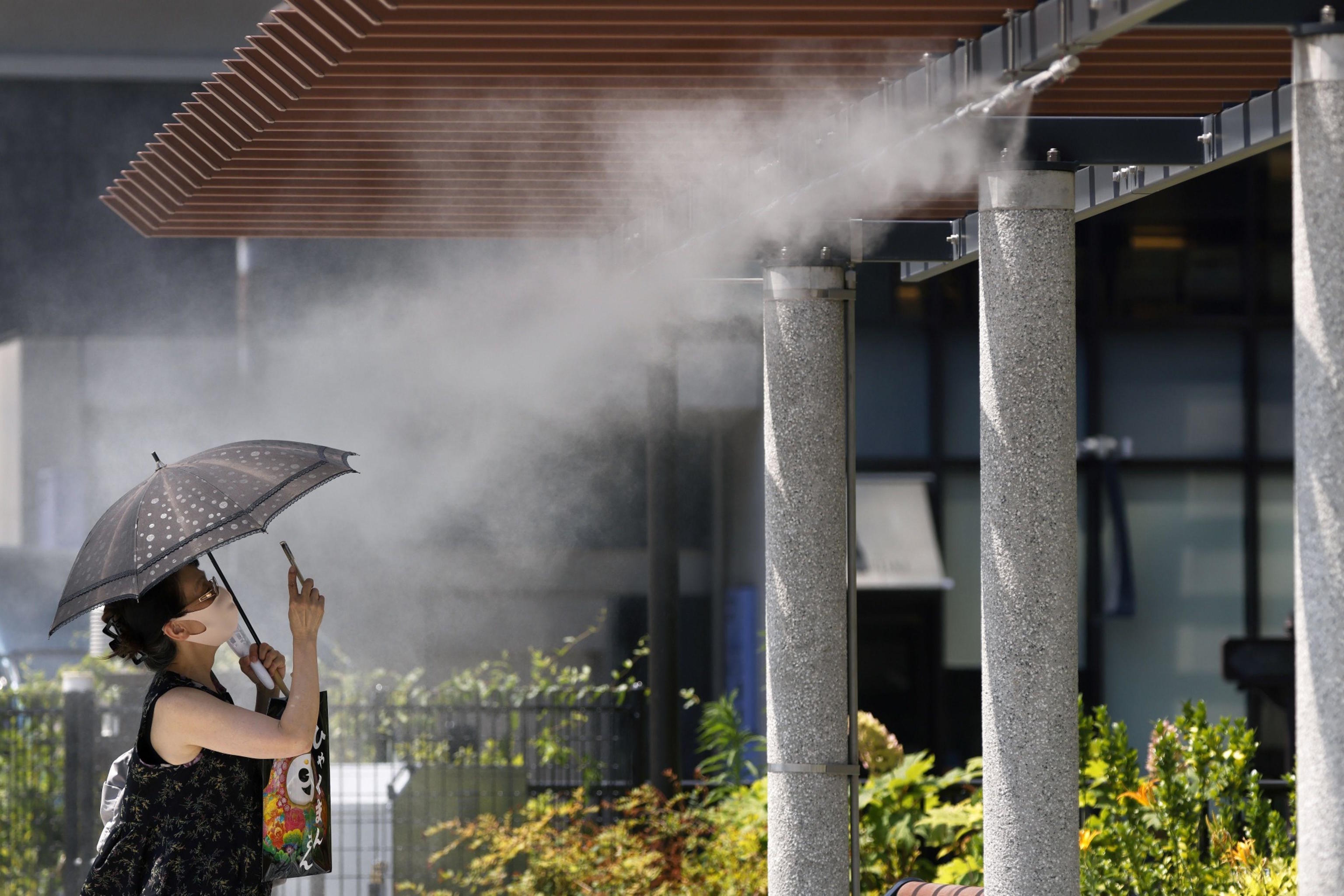
The thermometer read 40 degrees. But in Japan, a country where even language carefully measures emotions, numbers were no longer enough to convey the danger. At the end of July, when three cities surpassed this psychological barrier for the first time this year, authorities officially introduced a new word: kokushobi, which means "day of extreme heat". It is not a meteorological technicality, but a warning signal. An attempt to convince the population that heat has ceased to be a summer nuisance and has become a national threat.
Record temperatures, combined with humidity that turns the air into an invisible wall, are disrupting everything from daily life to agriculture, energy consumption, and even office attire. In a country accustomed to planning everything, heat has become an increasingly difficult variable to control.
The Japan Meteorological Agency decided this year that more than just a number on weather maps was needed. After a public survey with over 400,000 participants, they chose kokushobi as the term to identify days when the mercury exceeds 40 degrees.
When the new concept first appeared in official bulletins, authorities recommended staying indoors, turning on the air conditioning, and avoiding any unnecessary physical activity. The image of many cities practically deserted during the midday hours evoked scenes that many Japanese only remembered from pandemic lockdowns.
Simply naming the phenomenon seemed to better convey the risk than any statistic. As Taro Kawasato, Deputy Director of Climate Prediction at the Japan Meteorological Agency, explained: "Numbers are difficult to understand because each person perceives them differently. If we call it an 'extreme heat day,' everyone immediately understands that it is dangerous."
Last summer, Japan recorded the highest number of heat-related illnesses since official records began in 2008: over 100,000 people needed medical assistance between May and September. This summer, the trend continues to worsen. Just between July 13 and 19, 10,857 people were transported by ambulance due to heatstroke, more than double the number from the equivalent week the previous year. Last weekend, as reported by the public broadcaster NHK, the heatwave broke another record: Japan had never experienced so many consecutive days with extreme temperatures since records began.
The heat is also transforming the agricultural economy of a country where rice is not just a crop but a central element of national identity. The high temperatures during flowering and grain filling are reducing the quality of the product and forcing farmers to change centuries-old practices. In many regions, more resistant varieties are being introduced, while other producers are starting to experiment with crops that were unthinkable just a few years ago, such as avocados, favored by increasingly subtropical climate conditions.
This climate challenge comes as Japan continues to pay a high energy bill following the crisis caused by the blockade of the Strait of Hormuz, which drove up fuel import costs. In a country heavily dependent on external sources for energy, keeping millions of air conditioning units running for weeks represents a considerable economic effort for families, businesses, and administrations.
In supermarkets and department stores garments with built-in fans are proliferating, umbrellas capable of blocking radiant heat, portable fans, cooling towels, and all kinds of devices designed to survive an exceptionally hot summer. But perhaps no consequence is as uniquely Japanese as the controversy surrounding office attire.
In April, the governor of Tokyo, Yuriko Koike, decided to expand the historic Cool Biz campaign, created two decades ago to reduce electricity consumption by allowing employees to forgo jackets and ties. The new version goes further: it encourages men to come to work wearing shorts, sneakers, and much lighter clothing.
The measure aimed to facilitate adaptation to the heat without increasing air conditioning use. However, it sparked an unexpected debate on equality, aesthetics, and social norms.
Many women pointed out that while men could now show up at the office in shorts without much concern, they still felt pressure to adhere to much stricter aesthetic codes: wearing stockings, shaving, and meticulously caring for the appearance of their legs to meet social expectations.
As often happens in Japan, the debate quickly led to the creation of a new term. On social media, sunehara began to gain popularity, loosely translated as "leg hair harassment," to describe, with a mix of humor and criticism, the discomfort some women feel when seeing their male colleagues' hairy legs.
The controversy, which last week made international headlines, has even reached laser hair removal clinics. Several specialists claim that they are increasingly receiving inquiries from men interested in removing leg hair, not for sports or aesthetic reasons, but as a new matter of "workplace etiquette." Some admit that if they are going to wear shorts in the office, they prefer to do so with shaved legs to avoid looks or comments.
This campaign conceived to combat extreme heat and reduce air conditioning consumption has ended up fueling another very Japanese concern: the pressure not to inconvenience others or deviate from the rigid appearance codes that still largely dictate daily life on the Asian archipelago.