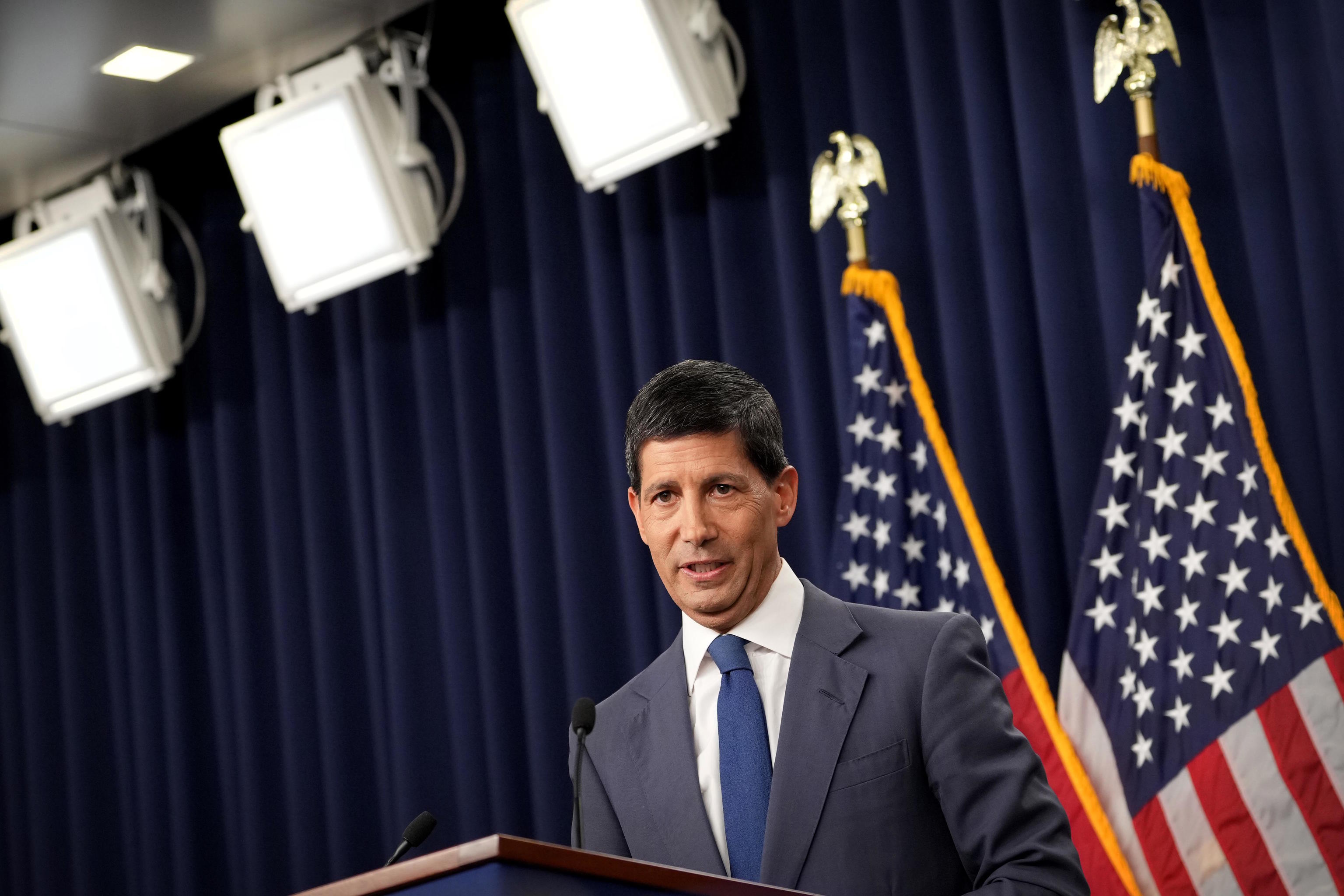
No revolution, growing uncertainty, deep divisions. The era of unanimity is history. After increased geopolitical tensions, a new wave of tariffs from the White House, and even after the European Central Bank decided to raise interest rates in June to tackle inflation, the U.S. Federal Reserve has decided this Wednesday to keep the price of money unchanged (in the range between 3.5% and 3.75% since January), extending the delicate pause of recent months a little longer. However, this decision was made with three dissenting votes, three governors in favor of a quarter-point hike for the first time in a decade.
With all the information available until last week, it could have been said that the Fed is simply following the expected script and that the decision was widely anticipated by the markets, which almost took for granted that the central bank, under the new leadership of Kevin Warsh, would choose to wait before making a move. Warsh was chosen by Donald Trump with a single mission: to lower interest rates. As much and as quickly as possible. However, the current situation could not be more unfavorable, and what was a debate six months ago not about whether rates would continue to fall, but about whether it could be done more aggressively, has turned into a discussion about possible, even probable, rate hikes. Warsh wanted more confrontational meetings, and he is having them.
"The Federal Open Market Committee has decided to maintain the target range for the federal funds rate between 3.5% and 3.75%, in support of the Federal Reserve's dual mandate. The Committee continues its policy of maintaining ample reserves in the banking system. Economic activity is expanding at a solid pace despite high uncertainty, partly due to the conflict in the Middle East. Productivity growth and capital investment are strong. Job creation has kept pace with the labor force, and the unemployment rate has remained virtually unchanged. Inflation remains elevated relative to the Committee's 2% target, reflecting in part supply disruptions that have driven price increases in certain sectors, including energy. The Committee will ensure price stability," says the brief statement released today, part of our communication strategy of the institution.
When Warsh replaced Jerome Powell this spring, it became clear that the Fed board was not at all aligned with the wishes of the White House, with barely two or three voices leaning towards rate cuts, a broad majority holding the line on monetary policy, and increasing voices warning that tightening was becoming inevitable. The new chairman had the mandate to make the revolutionary changes he had promised in the organization's structure, but he does not have the votes to lower interest rates and credit costs. Things have changed since then, and he himself does not see the next steps clearly.
The biggest problem since February is the Iran war, the bottleneck in the oil market, and energy prices. Inflation data for May and June brought up the debate about a possible rate hike, perhaps starting in September. But what seems like a definitive rupture of the ceasefire between Washington and Tehran has pushed the price of crude oil back above $100, significantly increasing U.S. debt and once again worrying traders. Yesterday, Tuesday, futures markets suggested a 30% probability of a rate hike. "Unfortunately, inflation does not seem to be sustainably heading back to 2%," said one of the three dissenters in a speech just a few days ago.
Despite the three advocates of monetary tightening, the Federal Open Market Committee (FOMC) believes that the U.S. economy continues to show enough strength to justify caution. Inflation remains above the 2% target but is not out of control. Meanwhile, the labor market maintains remarkable resilience despite the high cost of credit and business uncertainties. At the same time, economic growth continues to surprise on the upside.
This delicate balance explains the Fed's strategy. After being heavily criticized for reacting late to the inflation spike after the pandemic, the central bank is now doubling down on caution. Warsh argues that information sources need to be modernized to better understand the real-time economic situation, adapting them to the year 2026. But that takes time.
Today's meeting once again comes under political pressure from the White House. Donald Trump, who learned his lesson after choosing Powell in 2016, has made monetary policy one of his main obsessions. He has not yet lashed out at his new candidate, but if the debate continues to lean towards rate hikes rather than cuts, it is only a matter of time before he expresses his frustration.