For the first time since the Russian invasion of Ukraine, anti-aircraft alarms rang out in the night in Poland. The sirens, tested a few days ago in a drill, sounded this time for a real risk: the violation of airspace by an object that impacted 94 kilometers from the border, leaving a large crater in the middle of the field. Hours later, authorities clarified: it was a Russian Kh-101 cruise missile, a common weapon in Putin's regime bombings on neighboring Ukrainian cities.
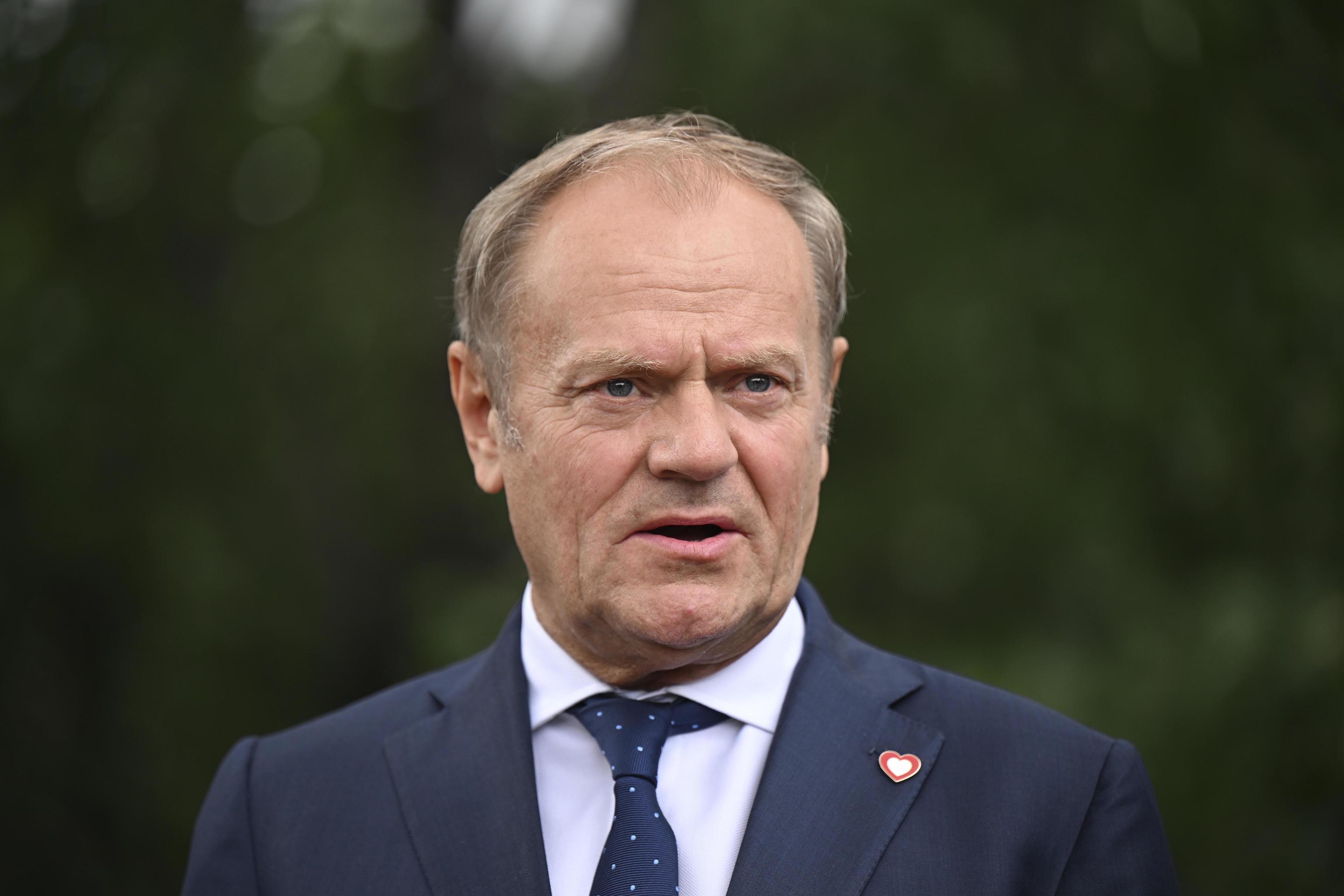
"As you know, we have faced this question several times before: whose missile was it? We already know that Russian disinformation is underway," said Polish Prime Minister Donald Tusk near the missile impact site, very close to the city of Lublin. "I don't need to explain to anyone that Russia will do everything possible to avoid responsibility, but according to the assessment of our military experts, the overwhelming majority of evidence - including recovered fragments - point to it being a Russian Kh-101 cruise missile."
Russia launched more than 70 missiles - many of them ballistic, which are harder to intercept - and over 280 Shahed attack drones, of which more than 260 were shot down. Precisely one of those Russian missiles ended up impacting Polish territory (by extension, NATO's), leading Polish citizens to question the real reasons why this large and highly destructive projectile crossed the border. Tusk described the event as a "very serious incident," but added: "There is absolutely no reason to believe that Poland was the target."
The first option considered by analysts is deliberate provocation, as history repeats itself. In September of last year, a swarm of 20 Russian attack drones crossed the border from Ukraine to Poland, impacting rural areas and forcing NATO fighters to intervene. What could Russia be seeking by deliberately launching this projectile towards Poland? Testing the defense systems' reaction, response time, and procedures of the Atlantic Alliance.
Another option currently being studied is a technical failure in the propulsion system, navigation system, or control system, or interference by electronic warfare systems, although the deviation is so significant that this option is remote, as is the lack of precision of the missile. It is a weapon of Soviet origin with a hitting accuracy ranging between 90% and 70%, but missing the target by 100 meters is one thing, while deviating 100 kilometers is quite another.
It was a night of intense attacks on Ukrainian civilians, who have already endured four years of Russian bombings on civilian targets, a common Kremlin strategy. Russian drones and missiles killed at least eight civilians, including children, and injured over 50 people, as reported by authorities. Moscow seeks to exploit the critical shortage in Kiev of Western-supplied missile defenses, precisely the main request of President Zelenski to his allies, starting with Trump.
The war in Iran has depleted the reserves of these American-made interceptors. The US President has promised Zelenski licenses to manufacture their own Patriots, but the production could take many months to become a tangible reality.
Ursula von der Leyen, President of the Commission, stated: "Another unacceptable violation of our EU airspace caused by Russia's recent attacks on Ukraine, this time over Poland. The Polish people are known for their fearlessness, and our thoughts are with them. To end this, we are assisting Ukraine in winning this war in every possible way."
NATO Secretary-General Mark Rutte spoke with Tusk and stated, "This incident is another reckless act by Russia and a dangerous consequence of its war against Ukraine." In a social media post, Rutte mentioned that upon detecting the missile's presence, NATO and Poland activated their air and ground defenses. "We will continue to strengthen our readiness to defend against any threat, including missile attacks," the Secretary-General noted.
According to EFE, Colonel Martin O'Donnell, spokesperson for the Allied Military Headquarters, deployed two Polish F-16 fighters, a Polish Saab 340 early warning aircraft, a Polish Mi-24 helicopter, and an Airbus A330 tanker aircraft from the NATO Multinational Transport and Air Refueling Fleet.
A report from the International Institute for Strategic Studies (IISS) published this month records at least 144 incidents involving drones suspected of being of Russian origin across Europe between 2024 and 2026, mainly affecting Germany, France, Belgium, the Netherlands, the UK, and Denmark, with a peak of activity at the end of 2025. However, the escalation has taken a qualitative leap in 2026. For example, Romania has recorded 18 aerial drone incursions from Russia so far this year.