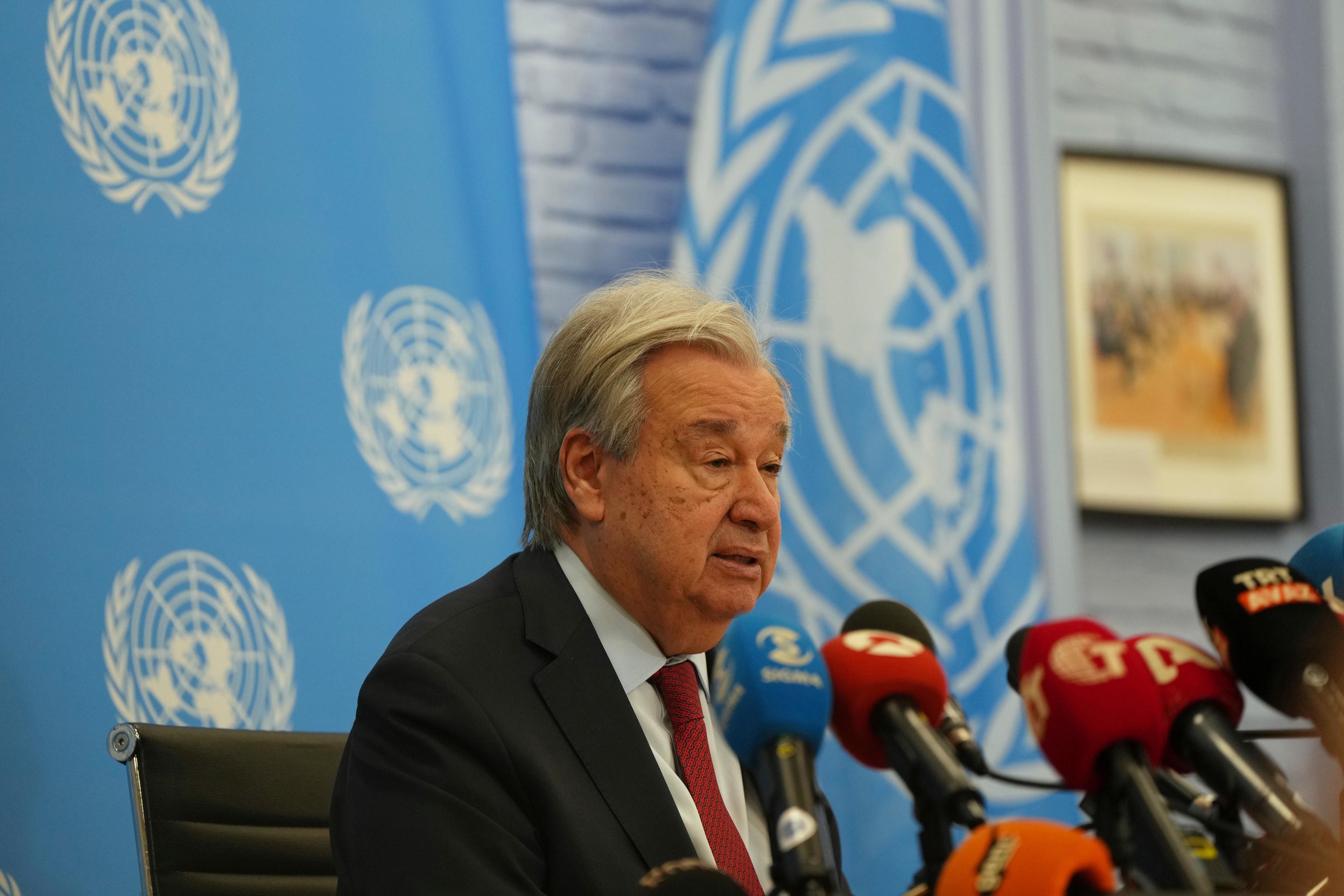
This Thursday, July 30, officially marks the start of the final phase of the election process for the next UN Secretary-General, a series of procedures and tough, lengthy negotiations to find a successor to the Portuguese Antonio Guterres, whose term ends at the end of the year. Although officially aspiring to a figure with extensive international experience, mediation skills, a reformist spirit, and moral authority to defend the United Nations Charter, in practice, the profile will be determined by a much more prosaic criterion: not being unacceptable to any of the five veto-wielding powers in the Security Council.
In New York, they are looking for a tightrope walker, someone capable of keeping dialogue lines open without directly challenging Washington, especially. Someone acceptable to Moscow and, increasingly, acceptable to Beijing. Leading a transformation and likely reduction of the United Nations, at a time marked by the wars in Ukraine and Iran, with the United States questioning multilateralism and reducing a significant portion of the organization's funding.
The starting signal was the holding of the first straw poll (something like an initial informal survey) behind closed doors within the Security Council, among its 15 members. The deliberations are confidential, but the first leaks from diplomatic sources indicate that while there is no "consensus" on anyone in particular, Costa Rican Rebeca Gryspan emerges for now as the best positioned after the round, which is neither binding nor provides sufficient clues.
The election is not expected to be quick but rather a wearisome operation until a consensus name is found, preferably with geographical and gender balance. This Thursday, the ambassadors of the 15 Security Council members expressed their views, in secret, on each of the candidates, opting for three possible options: Encourage (support), Discourage (do not support), and No opinion ("no opinion"), explained the Congolese ambassador at the end of the session, which lasted just under an hour at the New York headquarters.
In this first round, there is no distinction between the five permanent members (United States, China, Russia, France, and the United Kingdom) and the ten non-permanent members, so it is not formally known yet if a specific rejection of a candidate comes from a veto-wielding country unless it was not unanimous or nearly so.
Currently, there are seven declared candidates, campaigning and seeking support. Some have been in the running for a while, others just this week, but all with experience in the United Nations or international agencies. Former Chilean president Michelle Bachelet, former UN High Commissioner for Human Rights and the first director of UN Women. The aforementioned Rebeca Grynspan, former Vice President of Costa Rica, a veteran of international forums, and Secretary-General of UNCTAD. Argentine Rafael Grossi, Director-General of the International Atomic Energy Agency. Ecuadorian María Fernanda Espinosa, former Minister of Foreign Affairs and Defense and former President of the General Assembly. Carolyn Rodrigues-Birkett, Guyana's ambassador to the institution. Former Senegalese president Macky Sall, who also served as the African Union's top official. And, in recent days, Ugandan politician and diplomat Olara Otunnu, who previously served as Deputy Secretary-General and is familiar with the organization.
Following this first round, various diplomatic sources have indicated to media outlets such as Reuters and Passblue that Grynspan seems to have garnered the most support, followed by Rodrigues-Birkett and Grossi. "In recent months, I have met with Member States from all regions, visited capitals, and met with ministers and Heads of State and Government. Those conversations have shaped my vision for the position: one defined by strict impartiality, grounded in the United Nations Charter, and dedicated to serving all countries, large and small. A Secretary-General must be present when it matters and be able to bring people together when consensus seems unattainable. That is the standard by which I believe the next leader of the UN should be judged," wrote the Costa Rican candidate just a few hours ago.
The problem, without even knowing China's or Russia's stance, is that the United States is apparently not comfortable with any of the candidates. The process allows for new names to be considered until a formal decision is made, and Washington has considered possibilities as outlandish as controversial Gianni Infantino, current FIFA president, a friend and ally of Trump, and highly criticized for his recent proposal to privatize the organization, causing an unprecedented rift with UEFA.
U.S. Ambassador Mike Waltz smiled sardonically, or at least cryptically, when asked about the quality of the known candidates. "We will let the process continue. We have voted confidentially, and it is important and positive that the process is already underway. We need a Secretary-General to reform this institution, make it more efficient, more effective, and more relevant on the international stage. We have had a good start with UN80, but we still need to consolidate agencies, reduce central headquarters, have more staff in the field, and ensure that a greater portion of each dollar (primarily from the United States) goes directly to helping those in need. In other words, less staff here and more staff in the field," he concluded.
In the coming weeks, perhaps even in the days leading up to the UN's major week in September, when the vast majority of heads of state and government attend, successive rounds of voting will take place, incorporating a change in the system that is crucial. When the process is more mature, the five permanent members will vote with one color ballot and the remaining ten with another, so that delegations know if their candidates have a potential veto, or more than one, from the permanent members, which could lead to a withdrawal with resignation.
Once a candidate has at least nine fixed supports and does not receive any veto from a permanent member, the Security Council makes a recommendation to the General Assembly, which has always confirmed it without hindrance.