The OPEC+ alliance, led by Saudi Arabia and Russia, has decided this Sunday to maintain its strategy of increasing oil supply for the sixth consecutive month: starting in September, it will add 188,000 more barrels to the market, a limited increase due to the current difficulty of moving crude oil because of the war in the Middle East.
The decision was made in a video conference of the Oil and Energy Ministers of Saudi Arabia, Russia, Iraq, Kuwait, Kazakhstan, Algeria, and Oman, as reported by the Organization of the Petroleum Exporting Countries (OPEC) in a statement issued from its headquarters in Vienna, as reported by Efe. The seven ministers are the core of OPEC+, an alliance formed in 2016 by OPEC, which now has eleven members and ten other crude oil-producing nations such as Russia, Mexico, Kazakhstan, and Azerbaijan.
"In their collective commitment to support the stability of the oil market, the seven participating countries decided to implement a production adjustment of 188,000 barrels per day from the additional voluntary adjustments announced in April 2023," the note states. According to Europa Press, this is a continuation of upward adjustments that have added 940,000 barrels per day to quotas, equivalent to almost 1% of global demand, since the war began on February 28 between the United States and Israel against Iran.
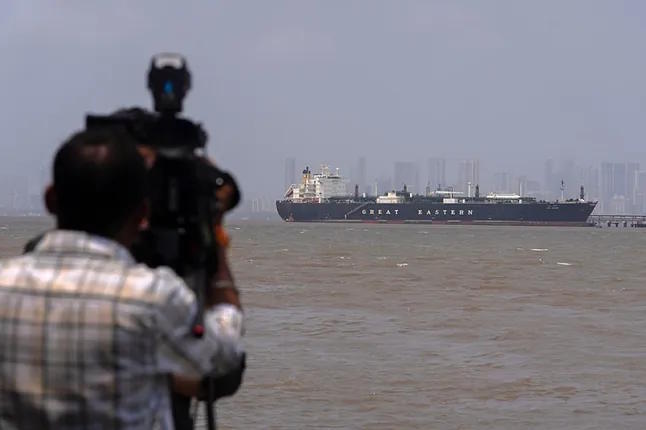
So far, these increases have been theoretical because the war has blocked the Strait of Hormuz, preventing Gulf countries from increasing exports and production. However, since the signing of the Memorandum of Understanding between Tehran and Washington, the Saudis and their neighbors have started to restore shipments, helping to create a surplus in key Asian markets.
With this new increase in pumping, at least on paper, the 1.65 million barrels per day supply cut agreed upon in 2023 has been completed, when the group sought to avoid an oversupply, and still included the United Arab Emirates, which left the organization last May. Excluding the participation of the United Arab Emirates, these restrictions amounted to around 3.5 million barrels per day, although in reality, much less has been reactivated, as technical limitations prevent many countries from increasing production as much as they are allowed.
The implementation of this new increase, which will take effect in September, may be hindered by severe disruptions in crude oil supply to key OPEC+ markets (such as Saudi Arabia, Iran, Iraq, and Kuwait) caused by the war in the Middle East. Transit difficulties through key points like the Strait of Hormuz and the Red Sea have affected the export capacity of these countries.
In addition, a drop in Russian production due to attacks on oil infrastructure aimed at limiting Moscow's ability to finance its aggression by Ukraine has been observed. In fact, the Joint Ministerial Monitoring Committee, an advisory body of OPEC+, expressed concern today about attacks on energy infrastructure and warned that restoring the full capacity of these facilities "is costly and time-consuming, affecting the overall supply availability." They also highlight that these attacks or the disruption of international maritime routes increase "market volatility" and weaken OPEC+'s efforts to support stability "for the benefit of producers, consumers, and the global economy."
Today's agreement establishes quotas for the seven countries, which in some cases are well above the most recent production data. For example, Russia is allocated 9.949 million barrels of oil per day, while its pumping in June, according to data included in an OPEC+ report, was 8.928 million barrels per day.
On the other hand, the quota reserved for Saudi Arabia, of 10.47 million barrels of oil per day, is also much higher than the 6.84 million barrels per day it had in June, according to independent sources mentioned in that report.
Kazakhstan has been forced to reduce production amid a series of attacks on ships loading oil at or near the Caspian Pipeline Consortium (CPC) terminal on the Russian coast of the Black Sea, which handles around 80% of Kazakhstan's crude oil exports. In any case, the country has consistently failed to meet its OPEC+ quota, limiting the relevance of any increase in its formal target.
In today's statement, the seven countries mentioned that they will meet again on September 6 to analyze the market situation, although different analysts believe that after this new pumping increase, OPEC+ will likely lean towards maintaining the official level of supplies frozen during the last quarter of the year.