Starting on January 1, 2027, European Union countries will stop buying gas from Russia due to sanctions imposed for instigating the war in Ukraine. The ban, which has been gradual since the beginning of 2026 and is supported by Regulation (EU) 2026/261, is already impacting the international energy market, according to a report by KPMG.
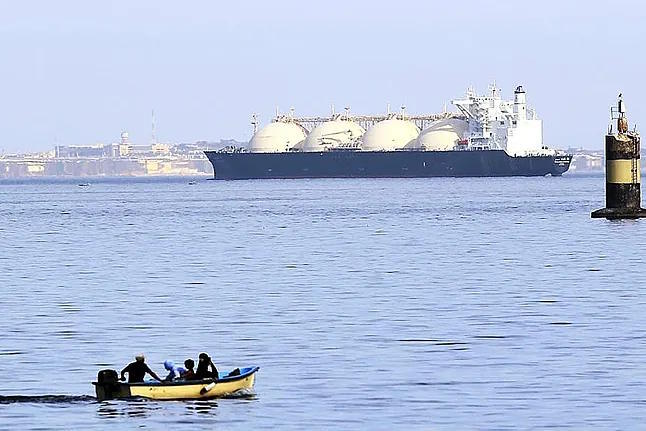
In fact, regulatory restrictions and global tensions are already causing very real and tangible consequences in Spain as well, long before the cold weather sets in. Asia is paying much higher prices for gas purchased from countries like the United States, Qatar, or France compared to Europe. This has led to ships that were supposed to arrive at Spanish ports to unload LNG containers turning around and heading east: during the second quarter of 2026, one out of every four vessels scheduled to arrive in Spain never made it.
In other words, out of 69 expected ships, only 52 unloaded. Additionally, shipments from the main historical supplier of gas transported by ship to Spain, which is the United States, plummeted by 48% in the month of May due to this reason. The horizon without Russian gas supply is filled with uncertainty. Given the bottleneck created by sanctions on Russia, finding other suppliers is becoming increasingly important to avoid entering real-time international auctions that progressively drive up energy prices in Spain: since June 1, 2026, the VAT on gas has returned to 21% after the temporary reduction ended. Furthermore, the Brent oil reference price rose from $71.12 per barrel in the April review to $93.54 in July. In summary: the Last Resort Rate (TUR) for gas has increased by 14% in the second quarter of 2026, according to Europa Press.
Additionally, the escalation of the conflict between the United States and Iran makes it difficult for countries in need of gas to find alternatives to Russia. The closure of Ormuz has severely limited the exit and exports of LNG from major producers in the Persian Gulf such as Qatar and the United Arab Emirates, further tightening the global supply and pushing Europe to depend more on Russian gas since late February 2026. In March 2026, Spain made its largest historical purchase of Russian Liquefied Natural Gas (LNG) in a month, amidst a context where, due to Ormuz, the TTF - the price reference index in Europe - surged to €53/MWh. In February, before the Iran war broke out, it was trading at around €32.5/MWh.
The importance of Russia in Spain's energy structure, with only five months left until the ban, is significant. Throughout the second half of 2026, 22% of all gas purchased by Spain came from Russia, making it the second most important supplier, surpassing the USA. The alternative of Algeria, which supplies gas to Spain (39%) mainly through pipelines, seems challenging as the infrastructure is already operating at 92% capacity. On July 20, the Spanish Prime Minister Pedro Sánchez visited the country in search of increased supply.
Spain's main gas reserves are at 75% capacity (26,845.7 GWh), with an additional 10,414 GWh accumulated in ports. This amount is significantly higher than the initially set target of 64%.
However, the situation in Europe is different. Global reserves are at 51% capacity. Comparing with previous years shows a decrease of nine percentage points from 2025 and 28 points less than in 2024. The forecast is that Europe will reach reserves at 69% of capacity by October to face the winter, far from the European general goal of reaching 90% reserves before December.