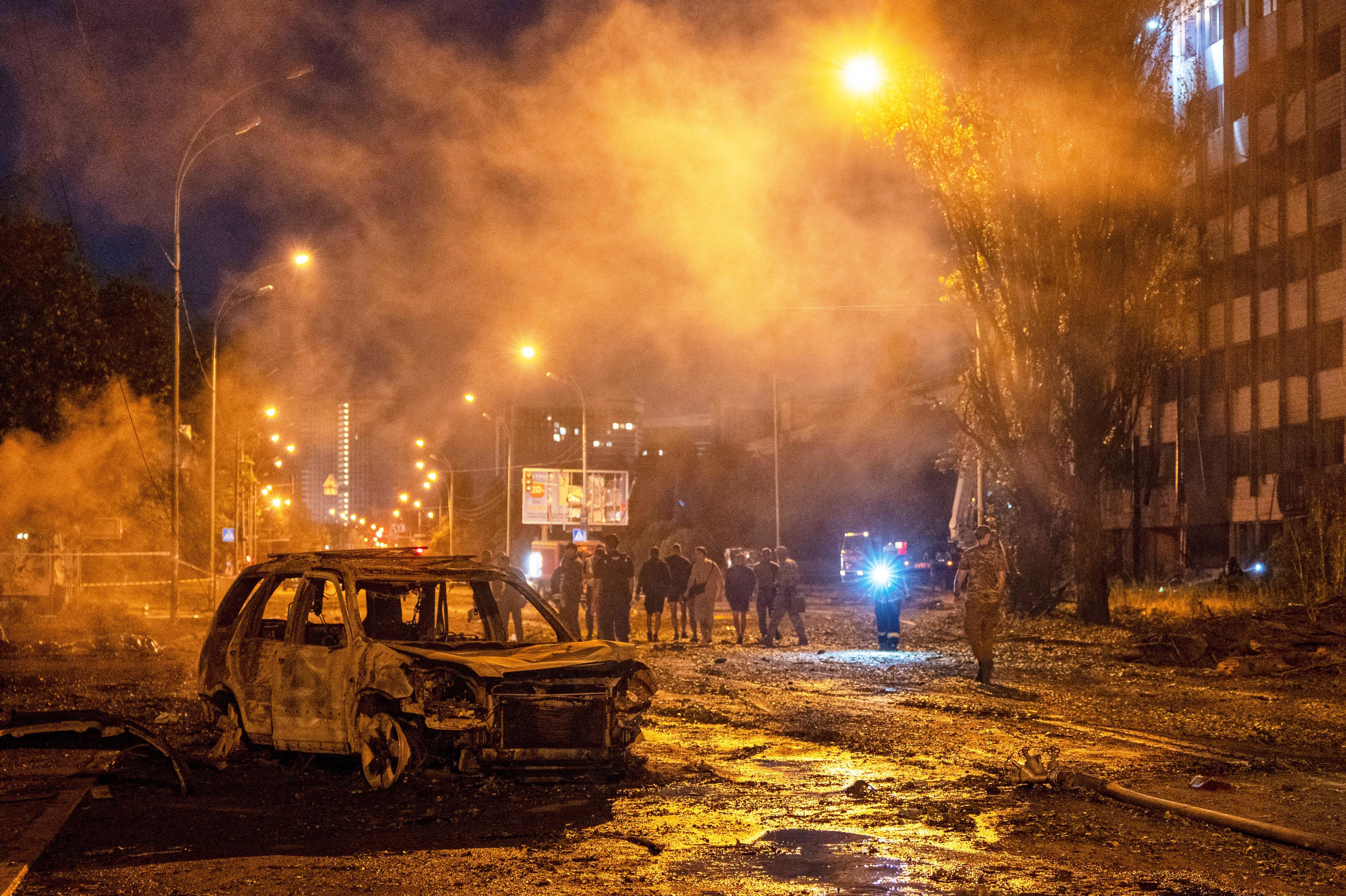
For the first time during the invasion of Ukraine, its army did not shoot down any Russian missiles in the latest attack on its capital yesterday morning (21 dead). There are two reasons for this: the main one is that Kiev has run out of Patriot interceptor missiles, as President Zelenski had been warning for weeks. The second reason is that Russia has started to use ballistic missiles massively, those that require this American-origin armament to be intercepted, confident that they will be unstoppable.
The situation in the Ukrainian capital and its other major cities is now desperate. All the missiles launched by Russia are built just weeks before launching them, as seen in the billing date of their components, indicating that Moscow has already depleted its own reserves. But its weapons factories are making an extra effort to produce all the units they can, knowing that Ukraine has nothing to counter a type of projectile, the Iskander, for which Kiev currently has no defense. To increase terror and damage, the Kremlin is using powerful North Korean ballistic missiles KN-23, purchased from ally Pyongyang, mostly against civilian targets, and sometimes directly against residential blocks.
Weeks ago, Donald Trump promised to provide Ukraine with the license to manufacture its own Patriot missiles to overcome its dependence on the factories producing this expensive component in the U.S. However, he later backtracked, dismissing that option. When it comes down to it, the White House tenant shows much more loyalty to Putin, as demonstrated over the past two years.
Would Ukraine be able to solve the problem with the license? In reality, not immediately either. Because first, they would need access to the component chain and know how to assemble them.
This difficulty explains the current scarcity of such interceptors: Patriot systems are the most eloquent example of why modern anti-aircraft defense is as much an engineering problem as it is geopolitical. Each battery is a complex ecosystem composed of a multifunction tracking radar, a fire control station, electric generators, launch vehicles with up to 16 ready missiles, and an encrypted communication network: in total, between eight and 12 heavy vehicles that need to be deployed, calibrated, and coordinated.
The operators' training process lasts between six months and a year, and the maintenance chain requires spare parts, specialized technicians, and a constant logistical supply that very few countries can sustain autonomously. Added to this is the structural shortage of interceptors: each PAC-3 missile, the most advanced, costs between three and four million dollars, Lockheed Martin and Raytheon production lines have been operating at the limit of their capacity for years (an approximate production of 620 missiles per year), and the demand from Ukraine, Israel, European countries, and Gulf countries competes for the same limited inventory. Ukraine's needs for a whole year are estimated at around 1,500 projectiles, although Zelenski would settle for 300 to protect its cities during this winter.
As a result, even NATO allies who have the money and political will to deploy Patriots find themselves with insufficient batteries, insufficient missiles, and insufficient trained soldiers to operate them.
The war in Iran initiated by the United States and Israel has depleted the arsenals of Gulf countries, as well as Washington. Currently, it is believed that the U.S. army has about 800 units left to defend all its bases and its own territory, a completely ridiculous amount.
Faced with this reality, Ukraine is considering targeting the archer, not the arrow, that is, attacking Iskander missile launchers on land and weapons factories, although they are also limited in their own production missiles (Flamingo) and satellite intelligence to locate targets.
Analyst Dara Massicot (from the Carnegie think tank) believes that "the Russians will not stop their attacks until they are stopped or deterred. Yes, I mean attacking missile launchers. Destroying Iskander launchers is a proportional operational act and is far from nuclear escalation." German military affairs analyst Nico Lange asserts that "the lack of defense against Russian ballistic missiles remains Ukraine's weakness. Putin brutally exploits this and produces more and more civilian casualties. This will not reverse the war for Russia. Europe cannot simply stand by and watch the constant killing of civilians."